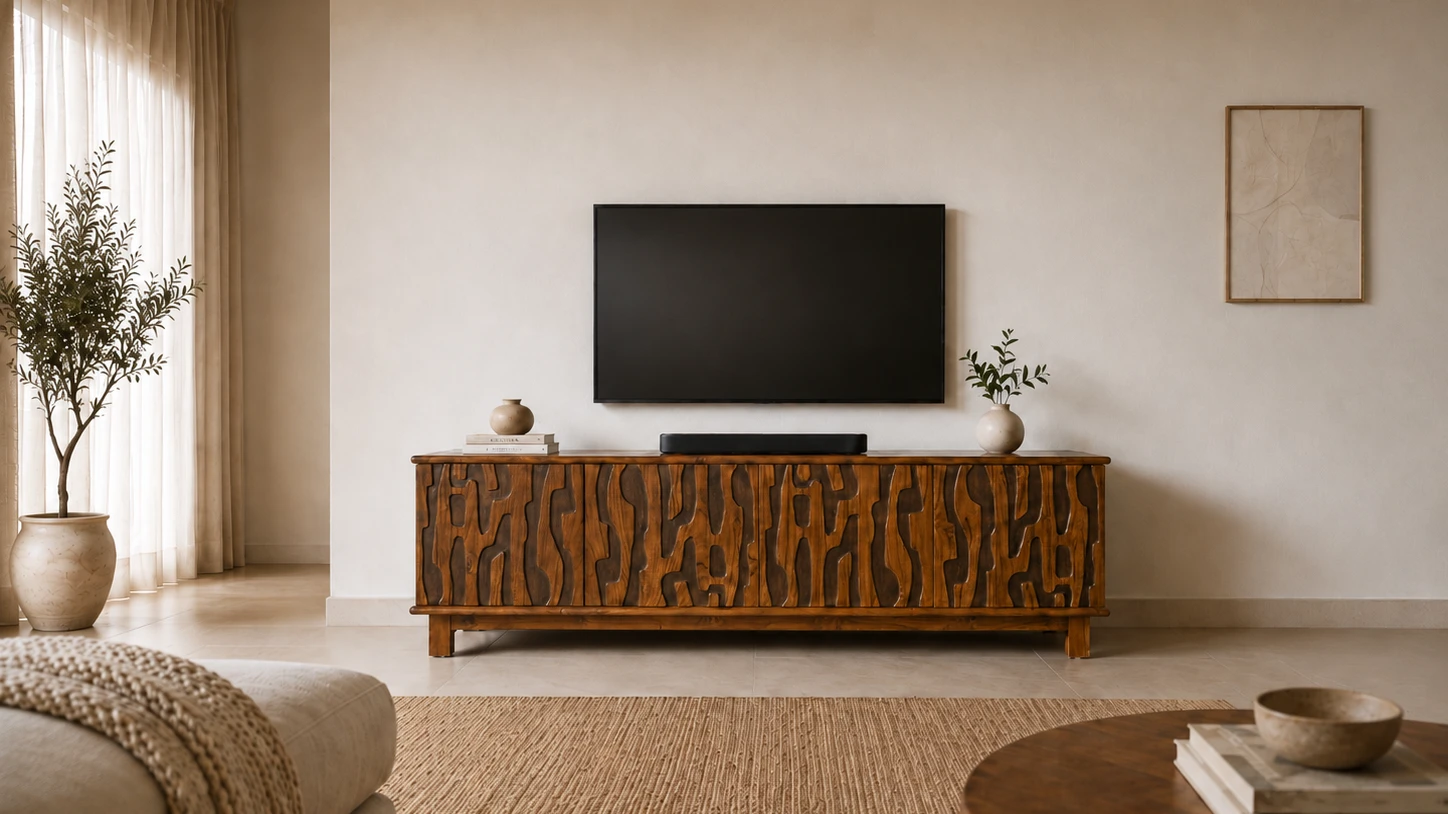
Australian interior design is often defined by a close relationship with nature.
Natural light, open-plan living, indoor-outdoor connections and honest materials are common across many Australian homes, hospitality venues and commercial interiors. Whether the style is coastal, contemporary, tropical or minimalist, timber is frequently used to bring warmth and texture into the space.
Reclaimed teak fits naturally within this design landscape.
Its warm tones, visible grain and understated character complement the relaxed but refined approach seen in many Australian interiors. At the same time, its reclaimed origin gives architects, designers and homeowners an opportunity to choose furniture and cabinetry with a more meaningful material story.
From sculptural dining tables to custom vanities and outdoor furniture, reclaimed teak can work across a wide range of Australian interior design styles.
A Natural Match for Australian Architecture
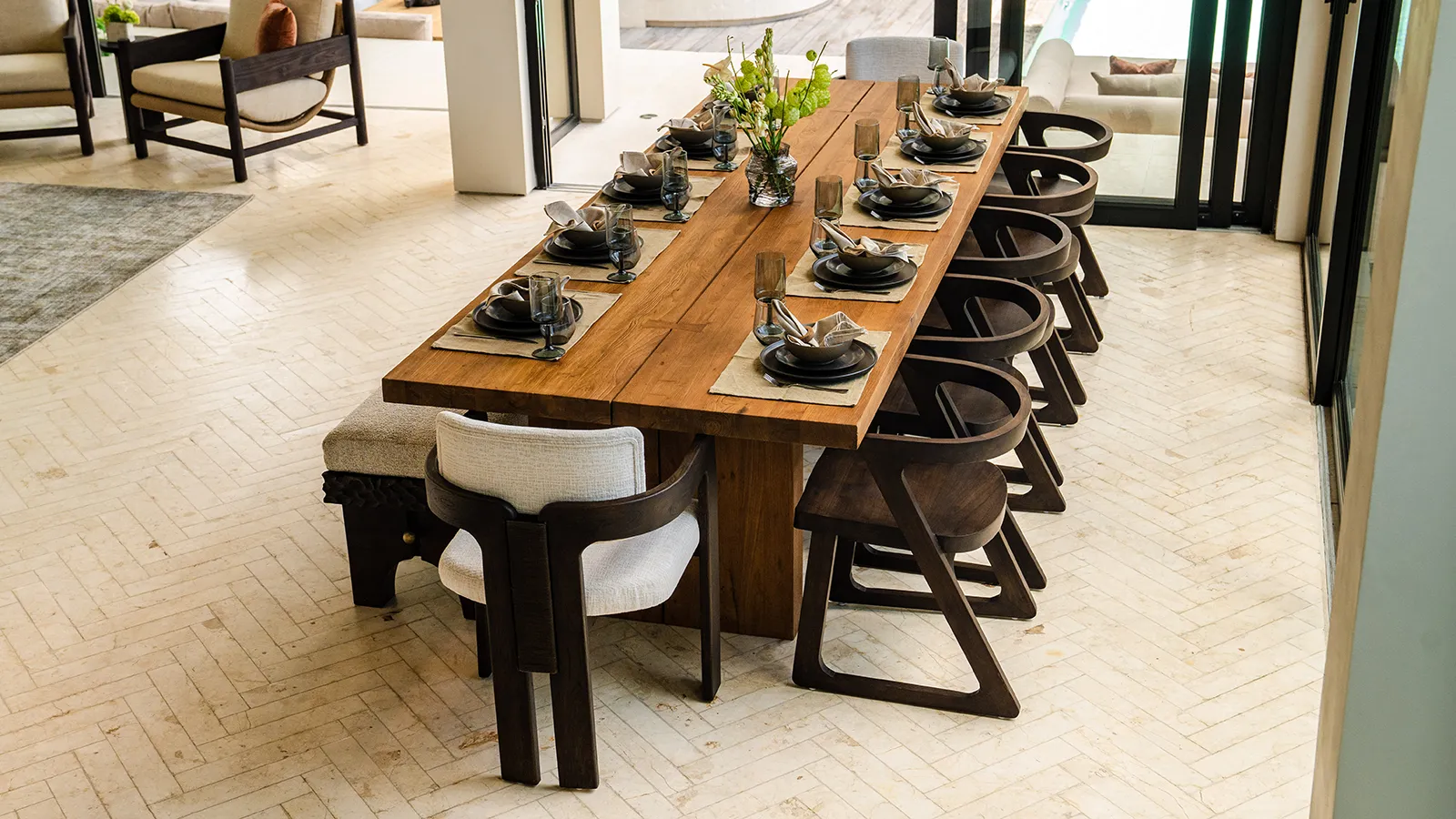
Australian architecture often responds directly to climate and landscape.
Large windows, sliding doors, shaded terraces and open living areas are designed to create a connection between interior and exterior spaces. Materials are usually selected to feel appropriate within this environment.
Stone, concrete, linen, leather, ceramics and timber are regularly combined to create interiors that feel calm, practical and connected to nature.
Reclaimed teak works well within this palette because it adds warmth without appearing overly decorative.
Its natural grain can soften hard architectural surfaces, while its colour can connect indoor rooms with decks, gardens and outdoor entertaining areas.
This makes reclaimed teak particularly suitable for:
- Open-plan living and dining spaces
- Kitchens and custom joinery
- Covered terraces
- Outdoor dining areas
- Bedrooms
- Bathrooms
- Resorts and hotels
- Restaurants and cafés
- Wellness and spa interiors
The material can be used as a subtle accent or as a major feature, depending on the scale and design of the project.
Warmth Without Visual Clutter
Many Australian interiors use a restrained palette of white, sand, beige, grey, charcoal and natural stone.
These colours create light, spacious rooms, but they can also feel cold if the interior lacks warmth or texture.
Reclaimed teak helps balance this.
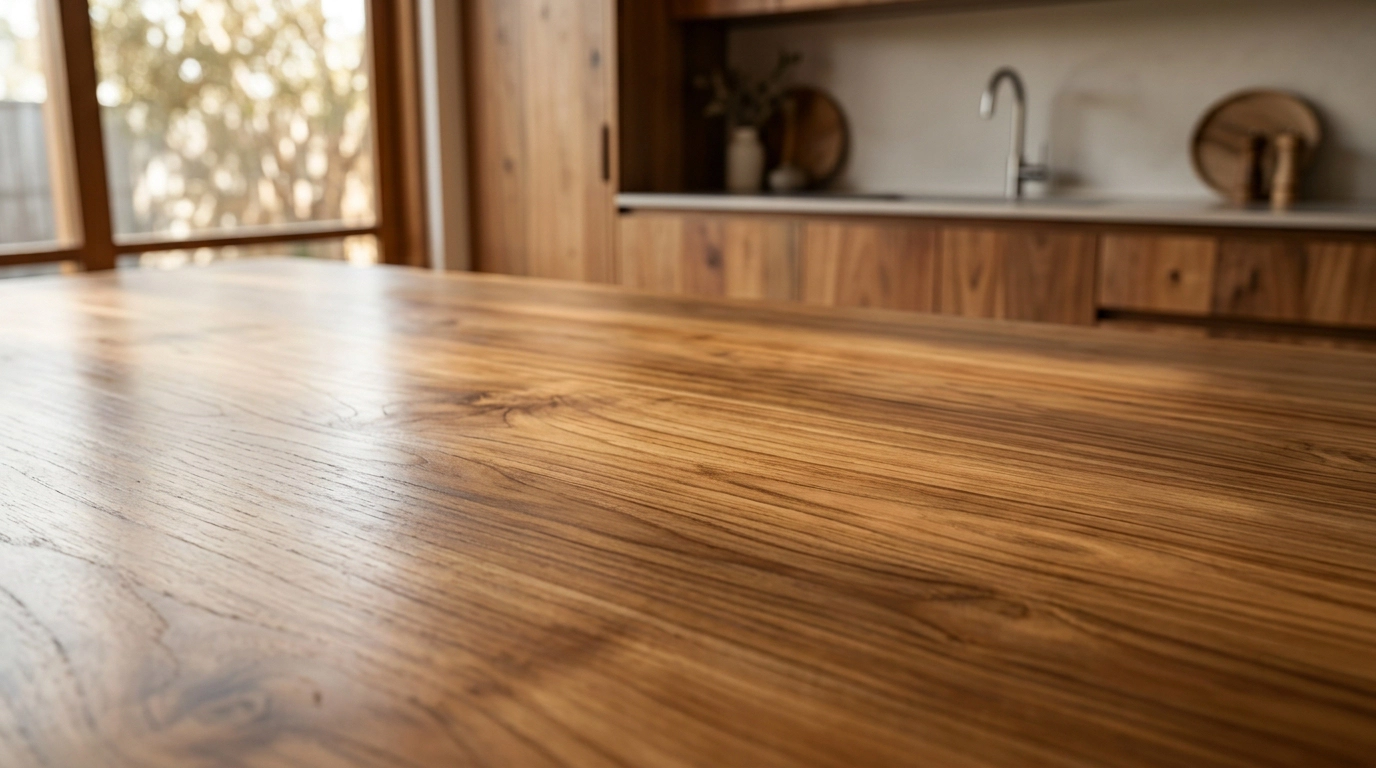
Its brown and golden tones introduce warmth while remaining neutral enough to work with a broad range of materials and colours. The timber can add visual depth without requiring additional patterns, bright finishes or excessive decoration.
A reclaimed teak dining table, for example, can become the main feature in an otherwise simple room. A teak vanity can soften a bathroom dominated by tile and stone. A custom cabinet can add richness to a plain plaster wall.
Because the material already has natural variation, the furniture itself can provide much of the character the room needs.
Reclaimed Teak in Contemporary Australian Interiors
Contemporary Australian interiors often combine clean lines with natural materials.
Rather than feeling clinical, the best contemporary spaces use timber, textured fabrics and handcrafted details to create a more relaxed atmosphere.
Reclaimed teak can be shaped into furniture and cabinetry with simple, architectural forms.
Suitable applications include:
- Minimal dining tables
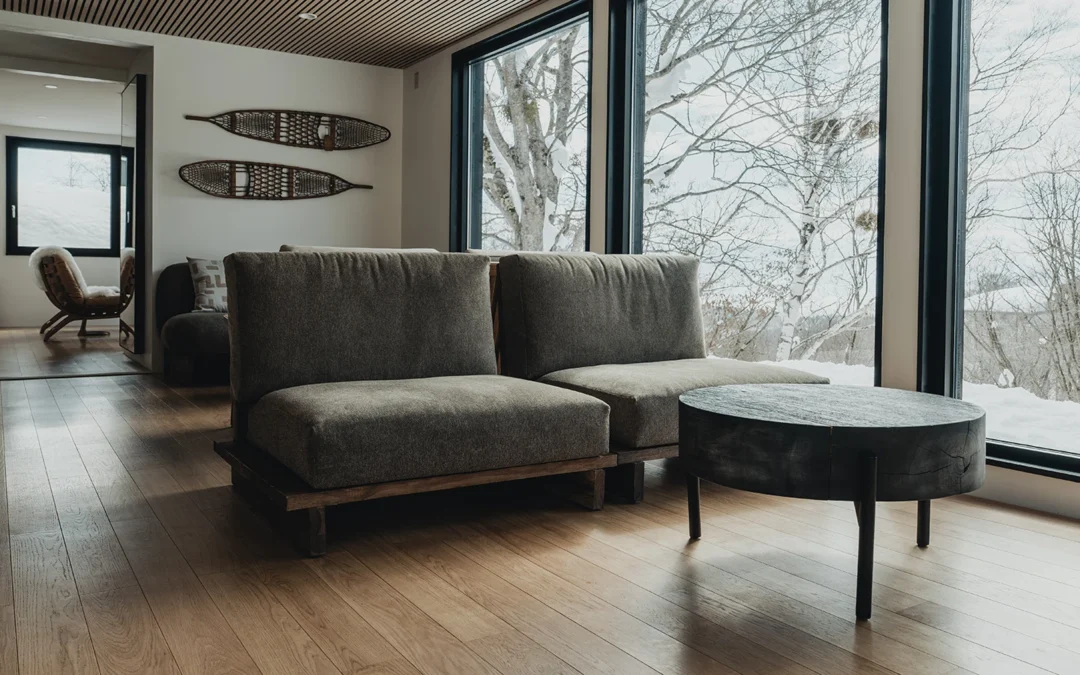
- Low-profile coffee tables
- Floating bathroom vanities
- Handleless cabinetry
- Built-in shelving
- Bedframes
- Large sideboards
- Custom kitchen fronts
In contemporary interiors, the timber does not need to appear heavily weathered.
Reclaimed teak can be carefully processed, sanded and finished to create a refined surface while retaining subtle traces of its previous life. This allows the material to feel sophisticated without losing its authenticity.
The result is furniture that works comfortably alongside polished concrete, large-format tiles, steel-framed windows and modern lighting.
Reclaimed Teak in Coastal Interiors
Australian coastal design is often associated with light colours, natural materials and an easy connection to the outdoors.
However, successful coastal interiors do not need to rely on obvious nautical themes or pale driftwood finishes.
Reclaimed teak provides a warmer and more substantial approach.
Its natural colour pairs well with:
- White or off-white walls
- Linen upholstery
- Pale stone
- Woven materials
- Soft blue-grey accents
- Brushed metal
- Natural ceramics
- Textured rugs
A reclaimed teak dining table can bring depth to a light coastal room, while an outdoor teak setting can connect the interior with a terrace or garden.
The material’s visual weight also prevents the space from feeling overly delicate or temporary.
In higher-end coastal homes, reclaimed teak works especially well when used in a limited number of substantial pieces rather than across every surface.
Reclaimed Teak in Modern Tropical Design
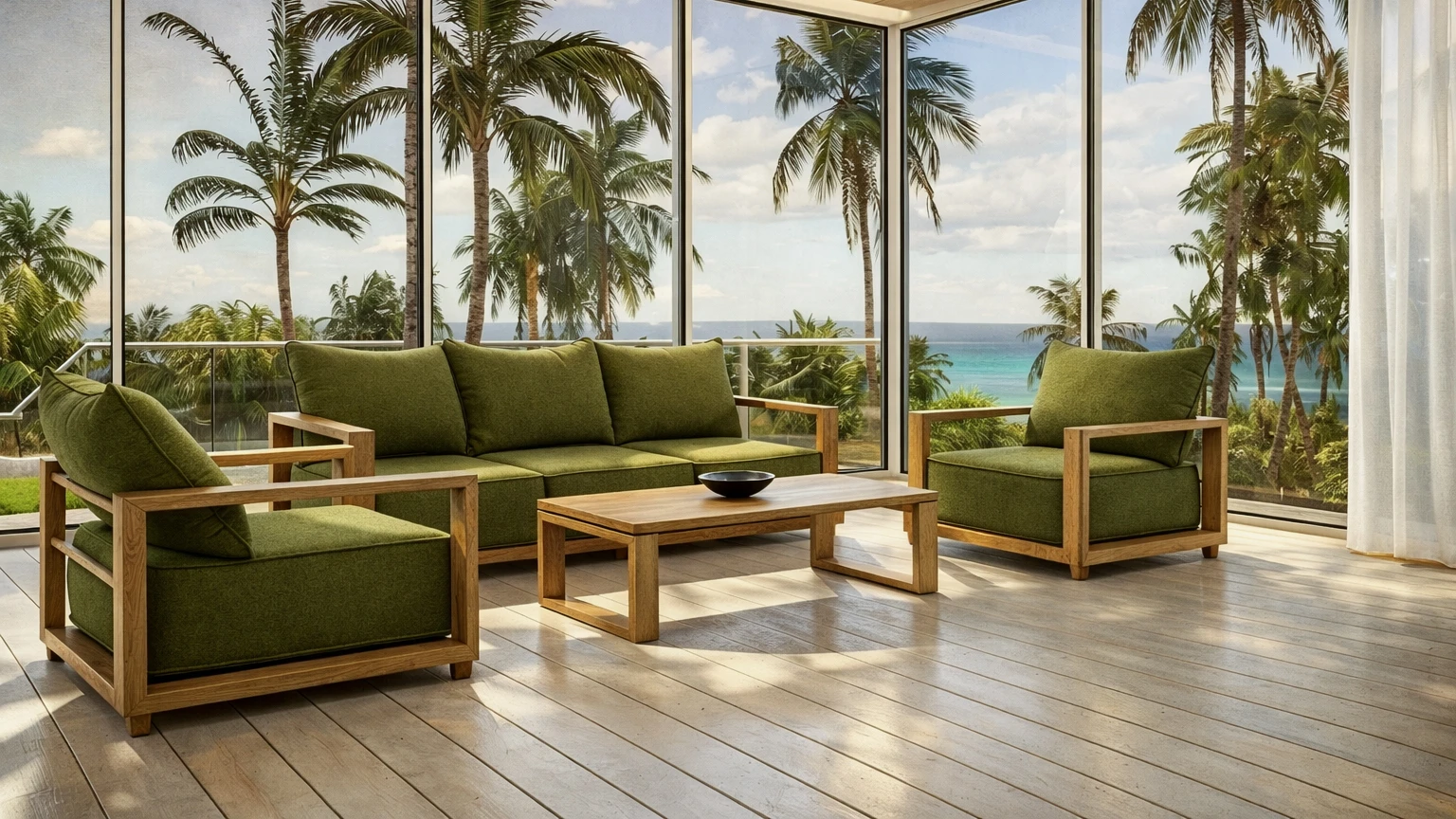
Modern tropical design is particularly relevant to many parts of Australia, including Queensland, northern New South Wales and coastal regions.
This style often includes strong indoor-outdoor relationships, shaded spaces, natural ventilation, greenery and materials that feel appropriate in warm climates.
Reclaimed teak has a clear relationship with tropical architecture and furniture-making traditions.
It works naturally alongside:
- Natural stone
- Lime plaster
- Rattan
- Cane
- Linen
- Handmade tiles
- Tropical planting
- Deep roof overhangs
- Outdoor living spaces
The material can be used for outdoor dining tables, lounge chairs, bathroom vanities, bedframes, cabinetry and feature doors.
Its warmth complements lush surroundings without making the space feel rustic. When designed with clean proportions, reclaimed teak can create a tropical interior that feels contemporary and understated.
Reclaimed Teak in Japandi-Inspired Interiors
Japandi interiors combine elements of Japanese and Scandinavian design.
The style typically values simplicity, natural materials, craftsmanship and visual calm. Furniture is often low, functional and carefully proportioned.
Reclaimed teak fits this approach when the design remains restrained.
A simple bench, low coffee table, dining table or custom cabinet can introduce natural texture without disturbing the quiet atmosphere of the room.
The timber works well with:
- Soft plaster walls
- Neutral fabrics
- Pale stone
- Paper or ceramic lighting
- Clean joinery details
- Low-profile furniture
- Minimal decoration
The natural marks within reclaimed teak can also support the appreciation of age and imperfection that is often associated with Japanese design traditions.
Rather than hiding every irregularity, selected variations can be retained as part of the finished piece.
Reclaimed Teak in Mid-Century-Inspired Homes
Mid-century design remains influential in many Australian homes.
The style is known for simple forms, warm timber, tapered legs and practical furniture that sits comfortably within open spaces.
Reclaimed teak can suit this aesthetic particularly well because teak was widely used in twentieth-century furniture design.
Custom reclaimed teak pieces may include:
- Sideboards
- Dining tables
- Lounge chairs
- Coffee tables
- Bedside tables
- Freestanding cabinets
- Display shelving
The goal does not need to be a direct reproduction of vintage furniture.
Instead, reclaimed teak can be used to create contemporary pieces that reference mid-century proportions and material warmth while meeting modern dimensions and functional requirements.
This approach works especially well in renovated brick homes, post-war houses and interiors that combine vintage pieces with new custom furniture.
Reclaimed Teak in Minimalist Interiors
Minimalist interiors depend heavily on material quality.
When fewer objects are used, each one becomes more visible. Proportion, texture and craftsmanship therefore become more important.
Reclaimed teak can bring enough character to a minimalist room without the need for excessive styling.
A single long dining table may define the entire dining area. A sculptural coffee table may provide the visual centre of a living room. A full-width bedhead may create warmth within a simple bedroom.
The material’s natural variation gives the space depth while allowing the overall design to remain quiet.
For minimalist interiors, the strongest approach is often to use reclaimed teak selectively and give each piece enough space to be appreciated.
Indoor-Outdoor Living
One of the strongest reasons reclaimed teak suits Australian design is its connection to indoor-outdoor living.
Many Australian homes are organised around terraces, courtyards, decks, verandas and outdoor dining areas. Furniture must often work visually across both sides of the building.
Reclaimed teak can help create continuity.
An indoor dining table may relate to an outdoor setting through a shared material. A teak console near a glass opening may visually connect with outdoor benches or lounge furniture. Cabinetry can also carry the warmth of exterior timber elements into the interior.
Teak is commonly selected for outdoor furniture because of its natural oils and durability. However, outdoor performance still depends on appropriate timber preparation, joinery, drainage, finishing and maintenance.
Reclaimed teak should be designed specifically for its final location rather than treated as maintenance-free.
A Strong Material for Statement Pieces
Australian interiors often favour a small number of well-chosen objects over highly decorated rooms.
This creates an ideal setting for reclaimed teak statement pieces.
Suitable designs include:
- Long dining tables
- Sculptural coffee tables
- Large sideboards
- Entry consoles
- Bedroom benches
- Feature cabinets
- Reception counters
- Communal tables
The scale of these pieces allows the grain, repairs and colour variation of the timber to become part of the design.
Because reclaimed teak already has visual depth, the form can remain simple. Strong proportions and careful joinery are often enough to create impact.
This supports the understated approach common in many Australian luxury interiors.
Suitable for Custom Cabinetry and Joinery
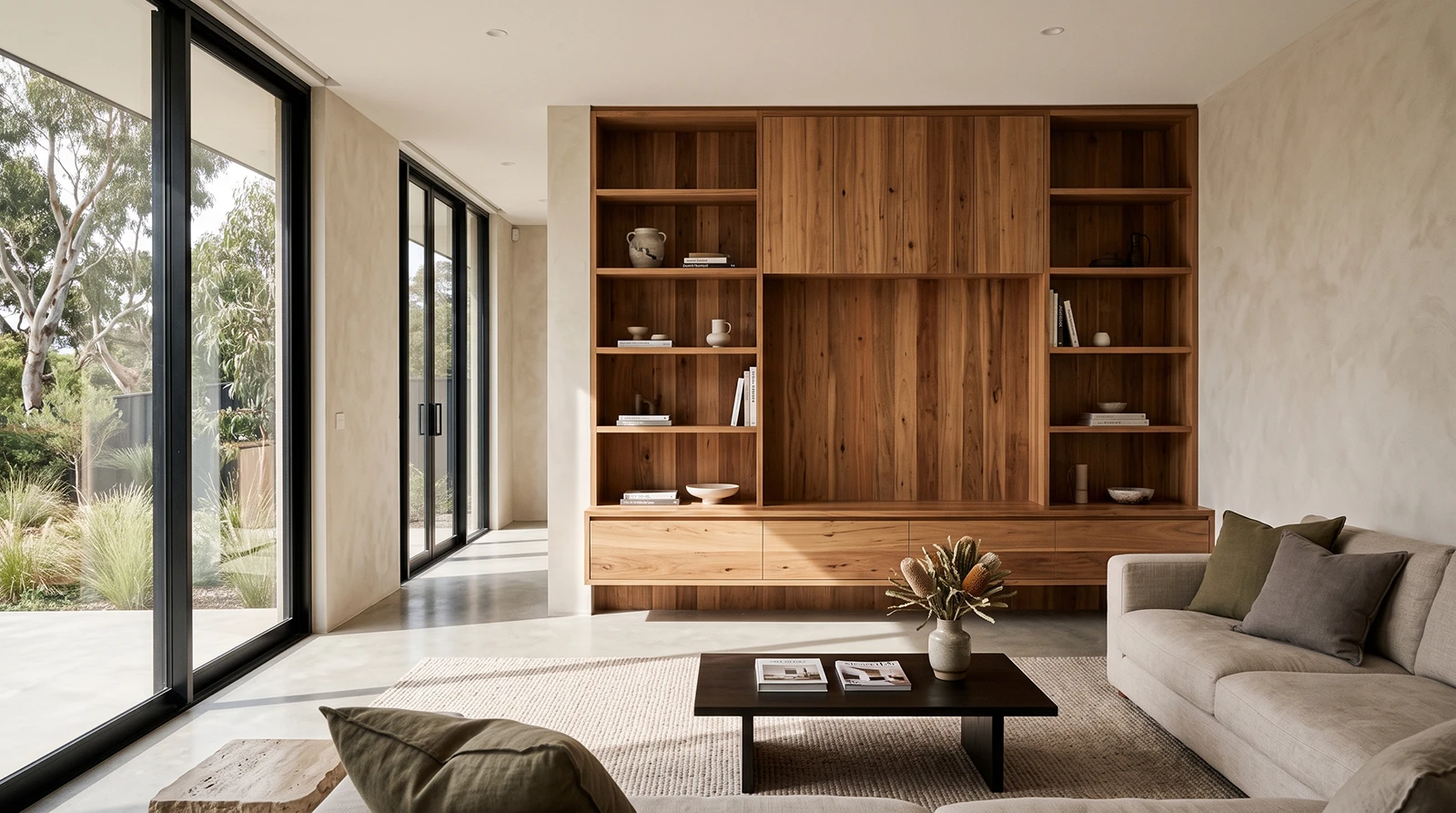
Reclaimed teak is not limited to loose furniture.
It can also be used for custom kitchens, bathroom vanities, wardrobes, shelving, entertainment units and commercial joinery.
In cabinetry, reclaimed teak may be used for:
- Doors
- Drawer fronts
- Open shelves
- Feature panels
- Integrated handles
- Timber trims
- Vanity fronts
- Island cladding
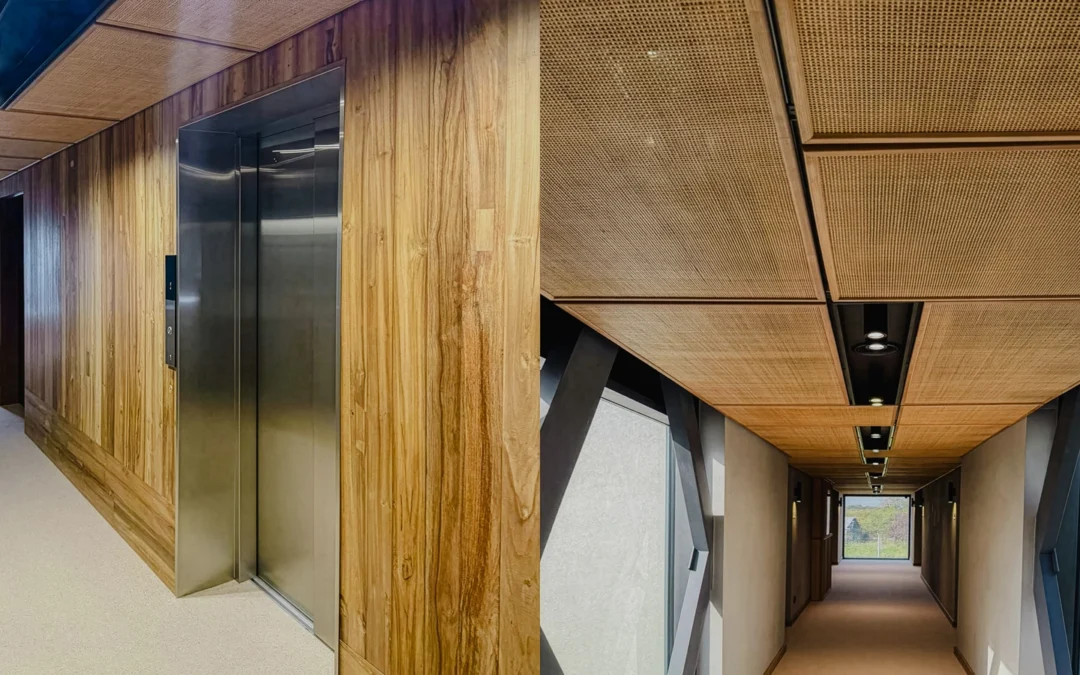
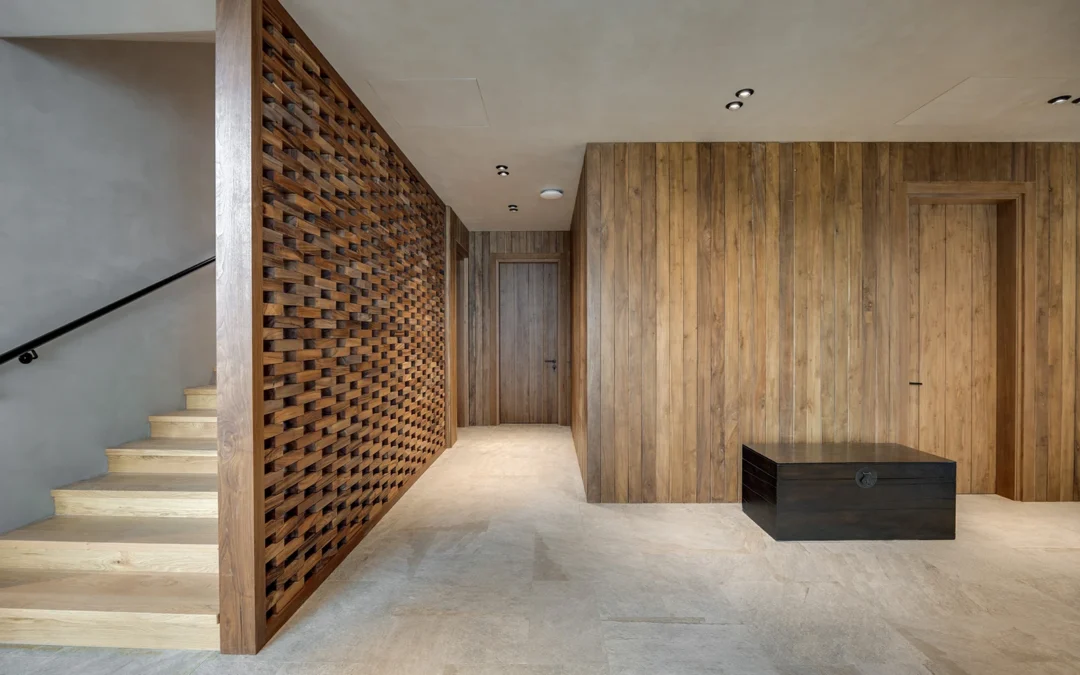
- Wall panelling
It can be combined with engineered cabinet carcasses, natural stone, metal hardware and other suitable materials.
This mixed-material approach can help balance appearance, stability, cost and practical performance.
For Australian projects, careful attention should be given to moisture content, environmental conditions, hardware, installation and the movement of solid timber.
Supporting More Considered Interiors
Australian clients are increasingly interested in understanding where materials come from and how products are made.
Reclaimed teak can support this interest when its sourcing is transparent.
Unlike new timber that is harvested specifically for production, reclaimed teak has already served a previous purpose. Recovering and reusing it keeps existing timber in circulation and reduces the need to treat valuable wood as waste.
However, the reclaimed label should always be supported by credible information.
Clients and designers should ask:
- Where did the timber come from?
- Was it previously used?
- How was it recovered?
- How was it processed?
- Is the source documented?
- Is the timber mixed with new material?
- Is certification available?
- How is the finished product designed to last?
Clear answers help distinguish genuinely reclaimed products from new timber that has simply been distressed to look old.
Traceability and Reclaimed Teak
Traceability is particularly important when reclaimed teak is manufactured overseas for an Australian project.
Nusantara Lifestyle uses its ORIGIN traceability platform to document the journey of reclaimed timber from its previous source through recovery, selection and production.
FSC® certification provides an additional framework for responsible chain-of-custody management across eligible materials and products.
These systems allow architects, designers and clients to understand more about the material behind the finished furniture.
For projects with environmental goals, this creates a more credible foundation than broad sustainability claims alone.
Designed for Longevity
Reclaimed teak fits Australian interiors not only because of its appearance, but also because it can be used to create furniture intended for long-term use.
A well-made dining table, cabinet or vanity can be maintained, repaired and refinished rather than discarded when the surface begins to show age.
Designing for longevity may include:
- Durable joinery
- Replaceable hardware
- Repairable finishes
- Timeless proportions
- Appropriate timber selection
- Clear maintenance instructions
- Construction suited to the final climate
- Careful quality control
This long-term approach aligns with the idea of choosing fewer, better pieces.
Rather than filling a room with short-lived furniture, the interior can be developed around a smaller number of items with lasting function and character.
Reclaimed Teak for Australian Residential Projects
In Australian homes, reclaimed teak can be used across multiple rooms while maintaining a consistent material language.
Typical applications include:
Living areas
Coffee tables, sideboards, entertainment units, shelving and consoles can bring warmth into open-plan spaces.
Dining areas
A reclaimed teak dining table can act as the central gathering point within the home.
Kitchens
Teak can be used for cabinet fronts, open shelves, island cladding or selected feature elements.
Bedrooms
Bedframes, bedheads, benches, wardrobes and bedside tables can create a calm, natural atmosphere.
Bathrooms
Custom vanities and shelving can soften interiors dominated by stone, tile and hard surfaces.
Outdoor areas
Dining settings, lounge chairs and benches can connect terraces and gardens with the interior material palette.
Reclaimed Teak for Australian Hospitality and Commercial Interiors
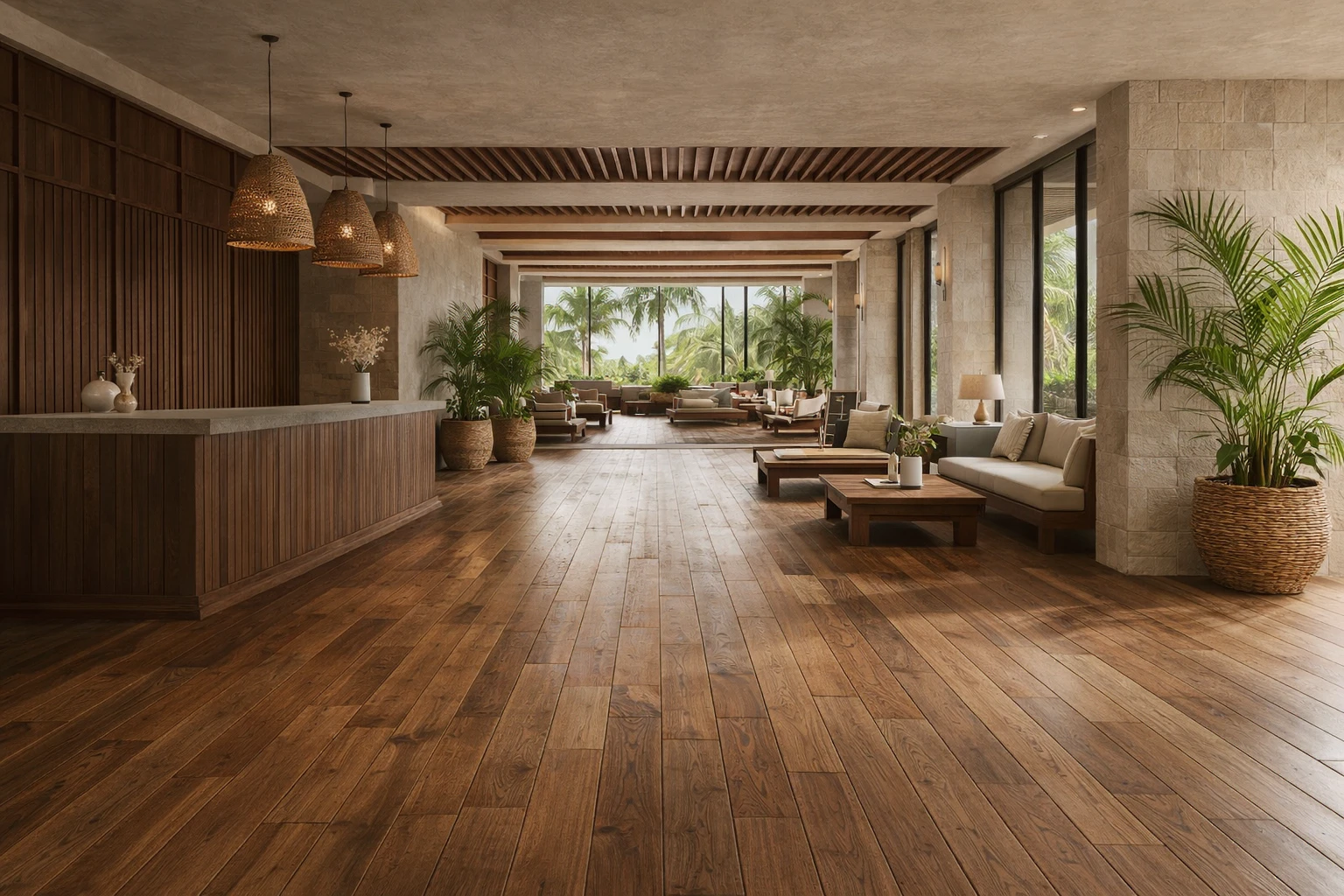
Reclaimed teak also works well in hotels, resorts, restaurants, retail spaces and offices.
It can help create a memorable identity while supporting practical daily use.
Commercial applications may include:
- Hotel room furniture
- Restaurant tables
- Reception counters
- Bar fronts
- Retail displays
- Meeting tables
- Outdoor seating
- Vanities
- Built-in storage
- Feature wall panels
For hospitality projects, the story of the reclaimed material can become part of the guest experience.
A dining table or reception counter is no longer only a functional object. It also communicates something about craftsmanship, material reuse and the values of the project.
Custom Reclaimed Teak by Nusantara Lifestyle
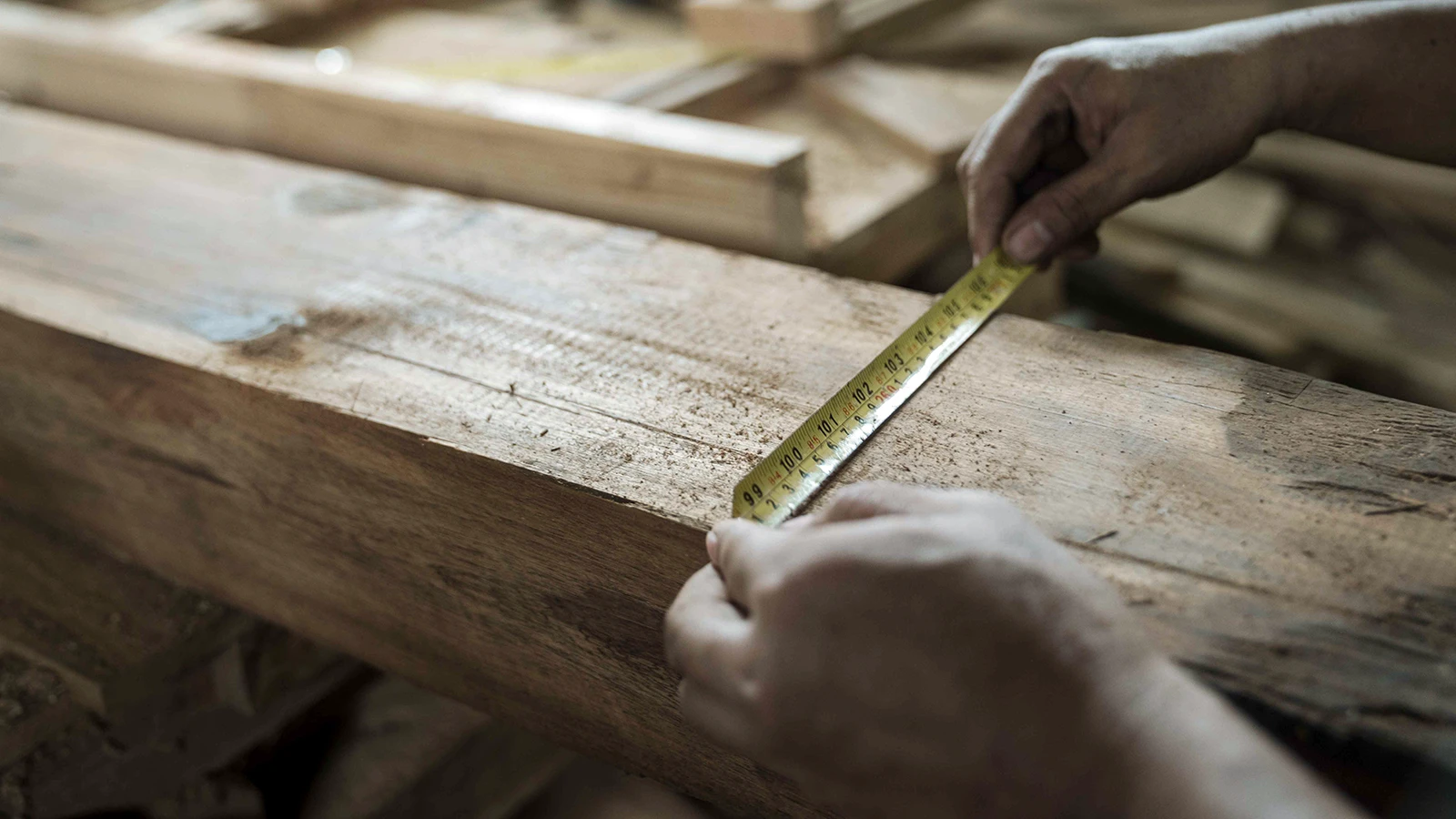
Nusantara Lifestyle produces custom reclaimed teak furniture and cabinetry for Australian residential, hospitality and commercial projects.
From our workshop in Yogyakarta, Indonesia, we support projects through:
- Material selection
- Design development
- Shop drawings
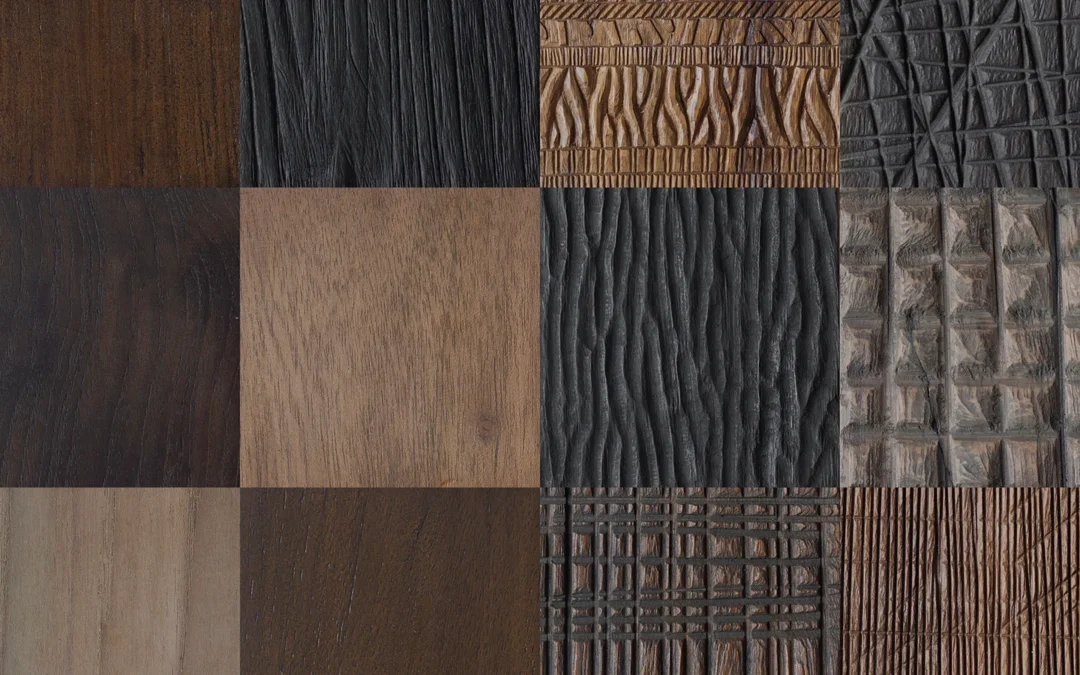
- Finish sampling
- Custom manufacture
- Quality control
- Export packing
- Shipping coordination
- Material traceability
Each piece is developed according to the dimensions, design direction, practical requirements and environmental goals of the project.
Whether the requirement is a single statement table, a complete furniture package or custom reclaimed teak cabinetry, the aim is to create pieces that feel appropriate within the architecture and remain useful for many years.
Why Reclaimed Teak Belongs in Australian Interiors
Reclaimed teak fits Australian interior design because it supports many of the qualities already valued within Australian architecture: natural materials, warmth, durability, craftsmanship and connection to the outdoors.
It can complement contemporary, coastal, tropical, Japandi, minimalist and mid-century-inspired spaces without being limited to one aesthetic.
Most importantly, reclaimed teak offers more than an attractive timber surface.
When responsibly sourced, carefully processed and well made, it gives existing material a new purpose while creating furniture and joinery with long-term value.
For Australian projects seeking natural character, understated design and a stronger material story, reclaimed teak provides a highly adaptable option.