Writing “sustainably sourced timber” into an architectural specification is easy.
Proving what that means can be considerably more difficult.
As Australian construction and interior projects place greater emphasis on responsible products, circularity and Green Star certification, architects increasingly need product suppliers to provide evidence behind environmental claims.
This is particularly important for reclaimed timber.
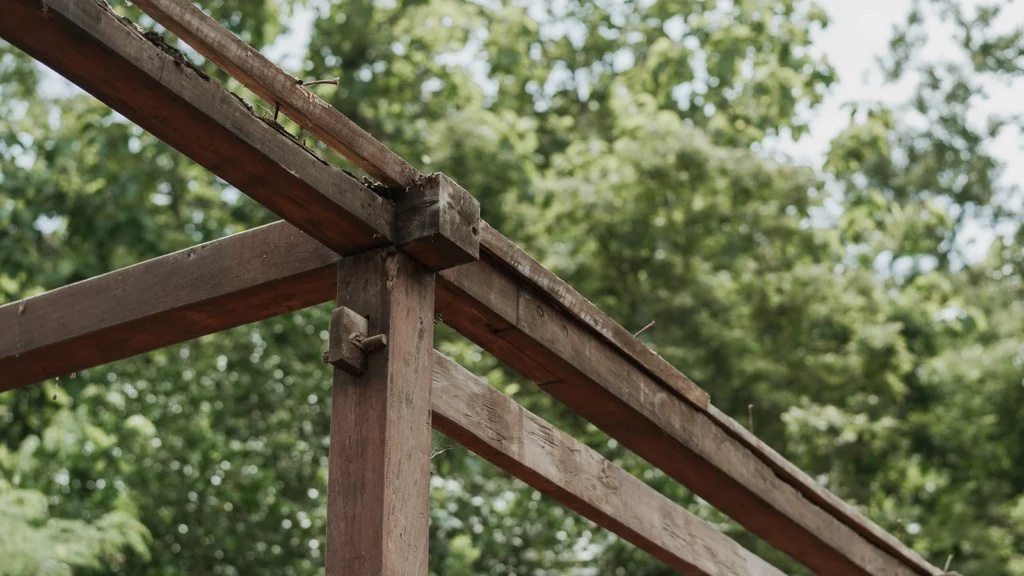
A supplier may genuinely be working with timber recovered from an old structure, but project teams still need a way to identify the product, understand its origin and support the claims being made about it.
At Nusantara Lifestyle, this is why we view documentation as part of the product itself.
Here are the key pieces of information architects, designers and sustainability consultants should consider requesting when specifying sustainable timber.
1. Clear product identification

Start with the basics.
The documentation should make it clear exactly what material is being supplied.
For reclaimed teak, this could include:
| Material | Solid reclaimed teak |
| Species | Tectona grandis |
| Application | Custom table / cabinetry / wall panelling / furniture |
| Manufacturer | Nusantara Lifestyle |
| Manufacturing location | Yogyakarta, Indonesia |
Generic descriptions such as “eco timber”, “sustainable wood” or even “recycled wood” leave too much room for interpretation.
The more specific the product description, the easier it becomes to connect supporting certificates and procurement records to the actual installed item.
2. Evidence that the timber is genuinely reclaimed
If reclaimed content is part of the environmental claim, ask how that status is determined.
Ideally the supplier should be able to provide information relating to the source or recovery process.
Depending on the supply chain, supporting evidence might include:
- supplier records
- reclaimed timber declarations
- source photographs
- purchase records
- recovery records
- chain-of-custody information
- material categorisation
- provenance documentation
FSC’s Chain of Custody requirements specifically address reclaimed forest materials and require certified organisations sourcing non-certified reclaimed inputs to maintain evidence and supplier controls demonstrating that those materials qualify as reclaimed.
This is one reason there is a significant difference between saying timber is reclaimed and having a traceable system that supports the claim.
3. Certification documentation

When certification is specified, the certificate should be supplied and checked.
For FSC® products, relevant information can include:
- certificate holder
- certificate code
- certificate validity
- applicable product scope
- chain-of-custody details
- FSC claim associated with the supplied product
It is important to understand that FSC certified, FSC Recycled and FSC Mix are not interchangeable descriptions.
FSC’s standards define different eligible inputs and rules for each output claim.
The applicable claim should therefore be confirmed for the specific product being purchased rather than assumed from general marketing information.
Nusantara Lifestyle can provide project-specific certification information for applicable products so that designers and procurement teams can establish what documentation accompanies the order.
4. Provenance information
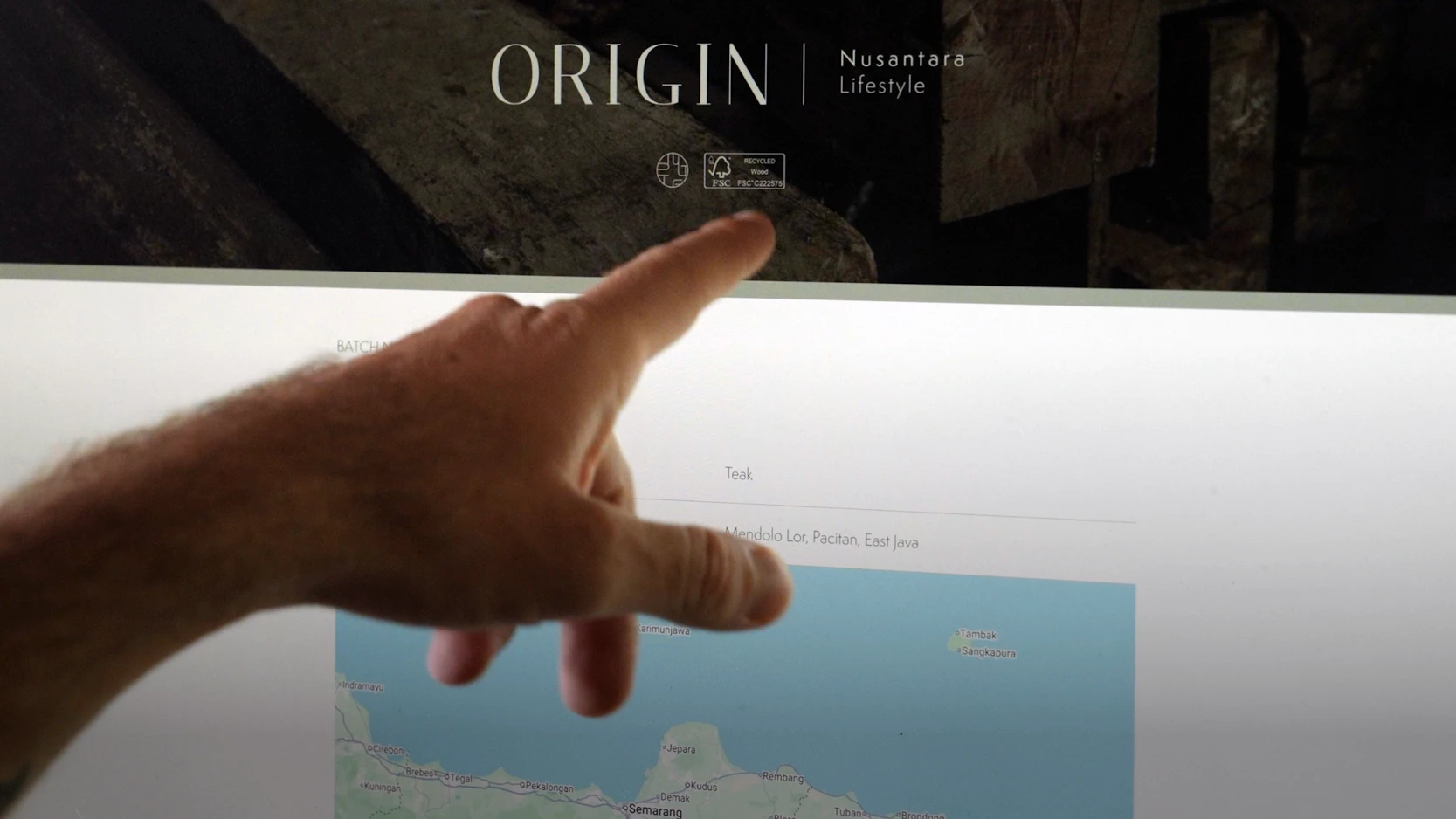
Certification answers one set of questions.
Provenance can answer another.
Where did the physical material actually come from?
For reclaimed timber, this can be one of the most interesting elements of the specification.
Nusantara Lifestyle’s ORIGIN traceability platform has been developed to document the journey of reclaimed timber from its previous structure through recovery and production into its new form.
Depending on the material and project, this can include elements such as:
- source information
- photographs
- location information
- recovery documentation
- timber processing
- production stages
- final piece identification
For architects, provenance provides something certification alone cannot necessarily provide: a connection between the actual material and the history behind it.
This can be particularly valuable on hospitality, workplace and residential projects where material storytelling forms part of the design concept.
5. Manufacturer and supply-chain information
Sustainable procurement increasingly involves understanding more than the raw material.
Who manufactured the product?
Where?
What processes were undertaken?
Which company is responsible for the finished product?
At a minimum, a supplier should be able to clearly identify the manufacturing entity and production location.
For Nusantara Lifestyle furniture, reclaimed timber is processed and manufactured in Yogyakarta, Indonesia.
Providing this information gives designers greater visibility over the supply chain and helps avoid vague product sourcing.
6. Finishing specifications

A responsible timber specification should also identify what is applied to the timber after manufacturing.
The designer may need information on:
- finish type
- coating system
- stain where applicable
- adhesives where applicable
- maintenance requirements
- manufacturer technical information
For projects pursuing Green Star certification, additional evidence may be required for certain products or finishes depending on the relevant credit.
Those requirements should be confirmed against the project’s applicable Submission Guidelines rather than assumed.
GBCA describes its Submission Guidelines as the principal technical resource explaining each credit’s aims, criteria and compliance requirements.
7. Product cost information
This part of sustainable product documentation is sometimes overlooked.
Green Star material assessment can involve more than simply collecting environmental certificates.
Under GBCA’s Responsible Products Framework, project teams may need to assess compliant materials as a proportion of the overall cost of relevant products.
GBCA’s Responsible Products calculator requires project teams to provide information including the overall cost of relevant products, identification of compliant products, applicable certificates and proof of purchase.
This means cost information may form part of the sustainability documentation trail.
It also means supplier documentation needs to remain connected to the actual purchase rather than existing as a separate generic sustainability brochure.
8. Proof of purchase
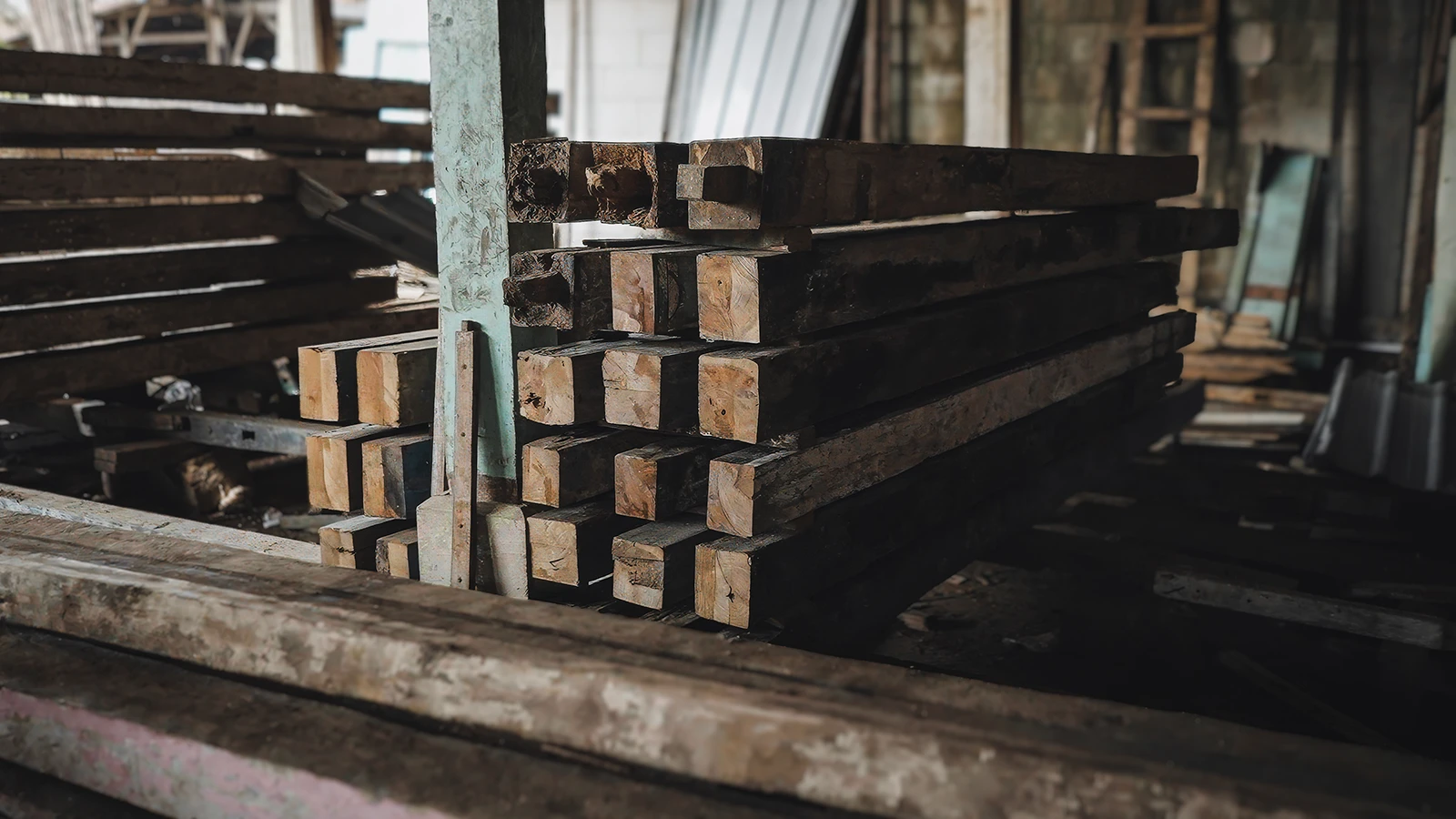
A certificate shows that a product or organisation may meet a particular requirement.
It does not necessarily demonstrate that the certified product was actually purchased for the project.
GBCA’s Responsible Products process includes proof of purchase among the information required for compliant products in the calculator.
Depending on the project, relevant documentation could therefore include:
- quotation
- purchase order
- invoice
- packing list
- delivery information
- product identification
- relevant certification claim
Maintaining this chain from specification → purchase → supply → installation makes the final submission far easier.
9. Design for durability and future reuse
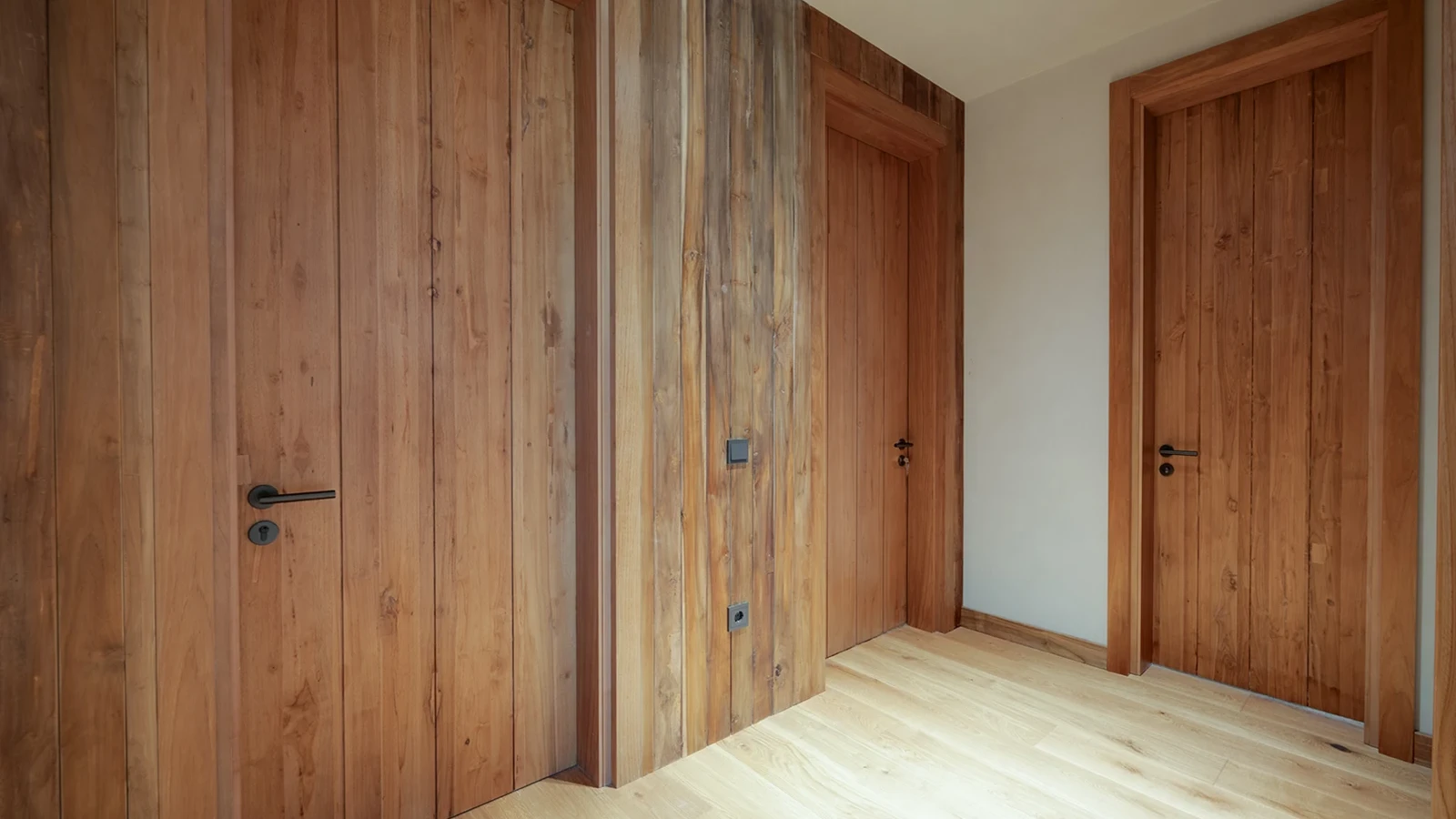
Documentation can also describe what happens after installation.
Green Star Fitouts places much greater emphasis on the future of interior materials.
GBCA’s new tool encourages reuse, adaptability and design for disassembly so that materials can remain in use rather than being discarded during the next refurbishment.
For furniture, useful supporting information may therefore include:
- care instructions
- refinishing recommendations
- repair options
- replaceable components
- demounting information
- assembly instructions
- intended future reuse
- material identification for future owners
This information may not always correspond directly with an individual Green Star credit, but it helps turn circularity from an idea into a practical strategy.
10. Keep the documentation project-specific
Perhaps the most important rule is this:
do not rely only on a general sustainability pack.
A brochure saying that a company works sustainably is very different from documentation showing what was supplied to a particular project.
Where possible, architects should be able to connect:
specified product
↓
material
↓
environmental claim
↓
certificate or evidence
↓
purchase order
↓
invoice
↓
installed product
That creates a much stronger evidence trail.

What should a reclaimed timber specification request?
For a Nusantara Lifestyle reclaimed teak item, a specification could include wording along the following lines:
Material: Solid reclaimed teak (Tectona grandis), recovered from existing structures and processed for reuse.
Supplier: Nusantara Lifestyle.
Certification: Supplier to provide applicable FSC® chain-of-custody and product claim documentation for the materials supplied.
Provenance: Supplier to provide available reclaimed-material sourcing and ORIGIN traceability documentation for the project.
Finish: As approved sample and project specification.
Documentation: Supplier to provide product description, applicable certification, material information and relevant purchase documentation required by the project’s sustainability consultant.
This establishes the expectation before procurement begins.
It is then up to the project’s Green Star Accredited Professional or sustainability consultant to confirm which pieces of evidence satisfy the applicable project requirements.
From sustainability claim to material evidence
Sustainable materials are becoming more sophisticated.
The conversation is moving away from broad claims such as:
“natural”
“eco-friendly”
or
“sustainably sourced”
towards something far more useful:
Show us where it came from.
Show us what it is.
Show us who made it.
Show us the evidence.
This shift suits reclaimed timber particularly well.
A piece of reclaimed teak already has a material history. With the right systems in place, that history can be documented and carried forward into its next use.
For Nusantara Lifestyle, the objective is therefore not simply to provide architects with reclaimed timber.
It is to provide reclaimed timber that they can confidently specify.