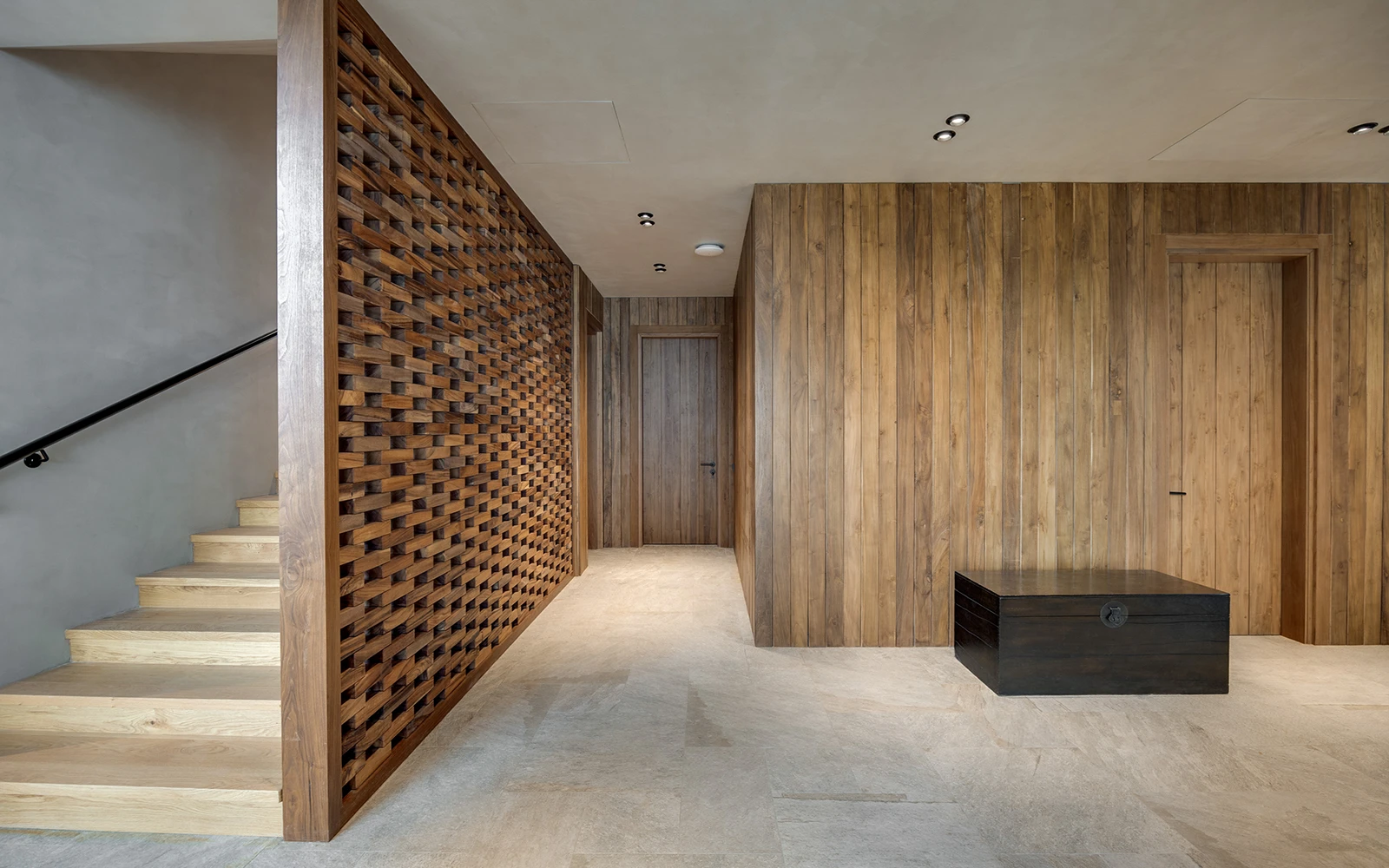
Timber is often one of the first materials designers turn to when creating interiors intended to feel natural, warm and environmentally responsible.
But specifying timber creates another question:
Should the project use newly harvested timber or timber that already exists?
For Australian architects, interior designers and developers looking to reduce the impact of their interiors — particularly those pursuing circular design or Green Star objectives — this distinction is worth considering.
At Nusantara Lifestyle, our approach is centred on reclaimed teak: existing teak recovered from structures in Indonesia and reworked into new furniture and architectural elements.
It offers a fundamentally different material pathway to newly harvested timber.
Neither option should be assessed through simplistic claims. But understanding their differences can lead to better specification decisions.
What is reclaimed teak?
Reclaimed teak is timber that has already completed one previous period of use and is recovered for another application.
In Indonesia, high-quality teak has historically been used for houses and other structures because of its exceptional durability.
When suitable structures are dismantled or timber components become available for recovery, the material can be selected and processed for reuse.
At Nusantara Lifestyle, reclaimed material goes through a process that can include:
recovery → sorting → de-nailing → cutting → moisture assessment → machining → joinery → sanding → finishing
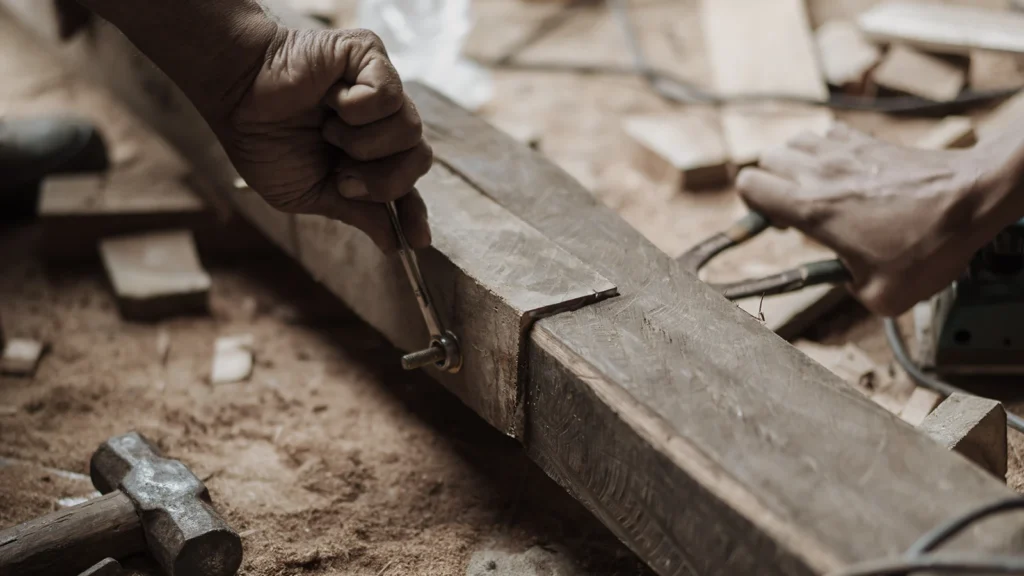
before becoming a new product.
The result is timber entering its second — and potentially third — useful life.
What about new sustainable timber?
New timber should not automatically be considered environmentally problematic.
Well-managed forestry and credible certification can play an important role in responsible material supply.
The key difference is that new timber requires a new resource to enter the material system.
Trees must be grown and harvested before the timber can be processed and manufactured.
Reclaimed timber instead asks whether an existing material can satisfy that need first.
That reflects one of the central ideas of circular design:
keep materials already in circulation at their highest useful value for as long as possible.
GBCA’s Responsible Products Framework similarly identifies reducing demand for virgin resources, keeping products in circulation and considering end-of-life pathways as important elements of circularity.
Reclaimed timber and resource extraction
One of the strongest arguments for reclaimed timber is straightforward.
The timber already exists.
Using an existing teak beam to manufacture a new table does not require another tree to be grown and harvested specifically for that table.
That does not make the production process impact-free.
Reclaimed timber still needs to be transported, processed, manufactured, finished, packed and ultimately delivered to the project.
Those impacts should not be ignored.
Nor should a blanket claim be made that every reclaimed product automatically has a lower carbon footprint than every new timber alternative. A robust carbon comparison would need to consider the complete lifecycle and supply chain of the products being compared.
But from a resource-circularity perspective, there is an important difference:
one approach introduces new timber into the material system; the other extends the life of timber already in it.
Durability: a different way of thinking about sustainability
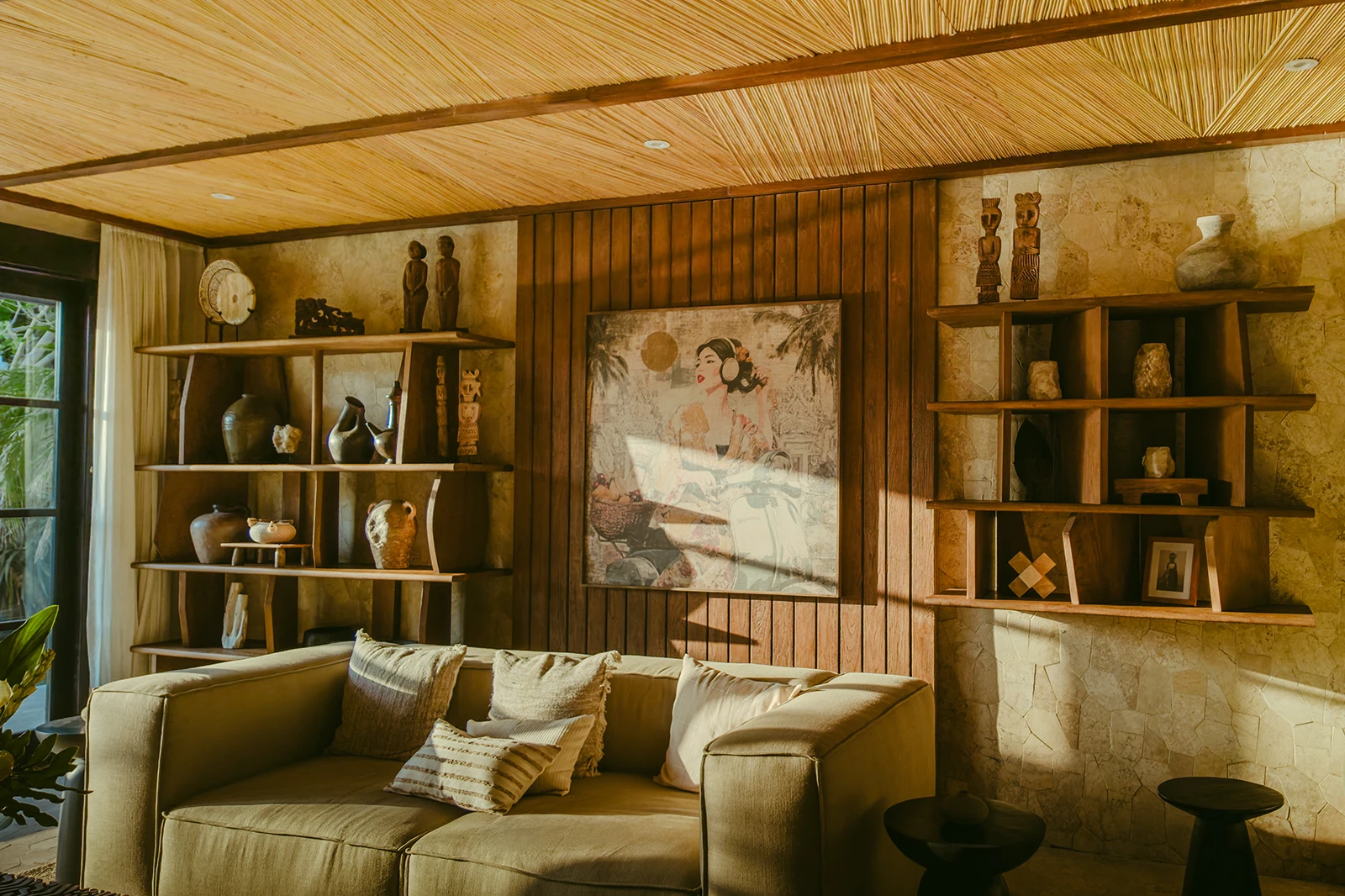
Material sustainability is often discussed primarily in terms of sourcing.
Longevity deserves equal attention.
If one table needs replacing three times while another remains useful for decades, their environmental stories are fundamentally different.
This issue is particularly significant in commercial interiors.
GBCA states that commercial fitouts are typically replaced every five to seven years, causing carbon and waste impacts to repeat throughout a building’s life. Green Star Fitouts has consequently been developed around principles including reuse, reconfiguration, adaptability and design for disassembly.
Reclaimed teak lends itself particularly well to long-life furniture.
The timber Nusantara Lifestyle uses has often already survived decades of previous service.
After recovery and appropriate processing, it can become tables, cabinets, benches, panelling and other elements designed for another long period of use.
Old timber doesn’t have to look old
One of the biggest misconceptions surrounding reclaimed wood is that it necessarily looks rustic.
That may be appropriate for some projects, but it is not an inherent characteristic of the material.
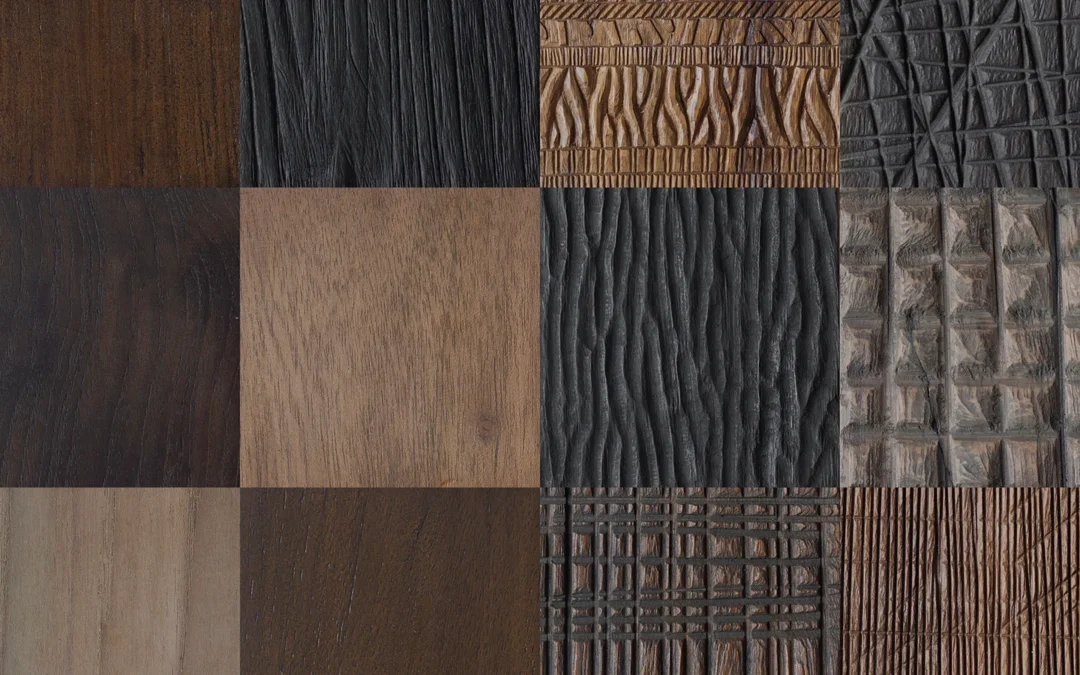
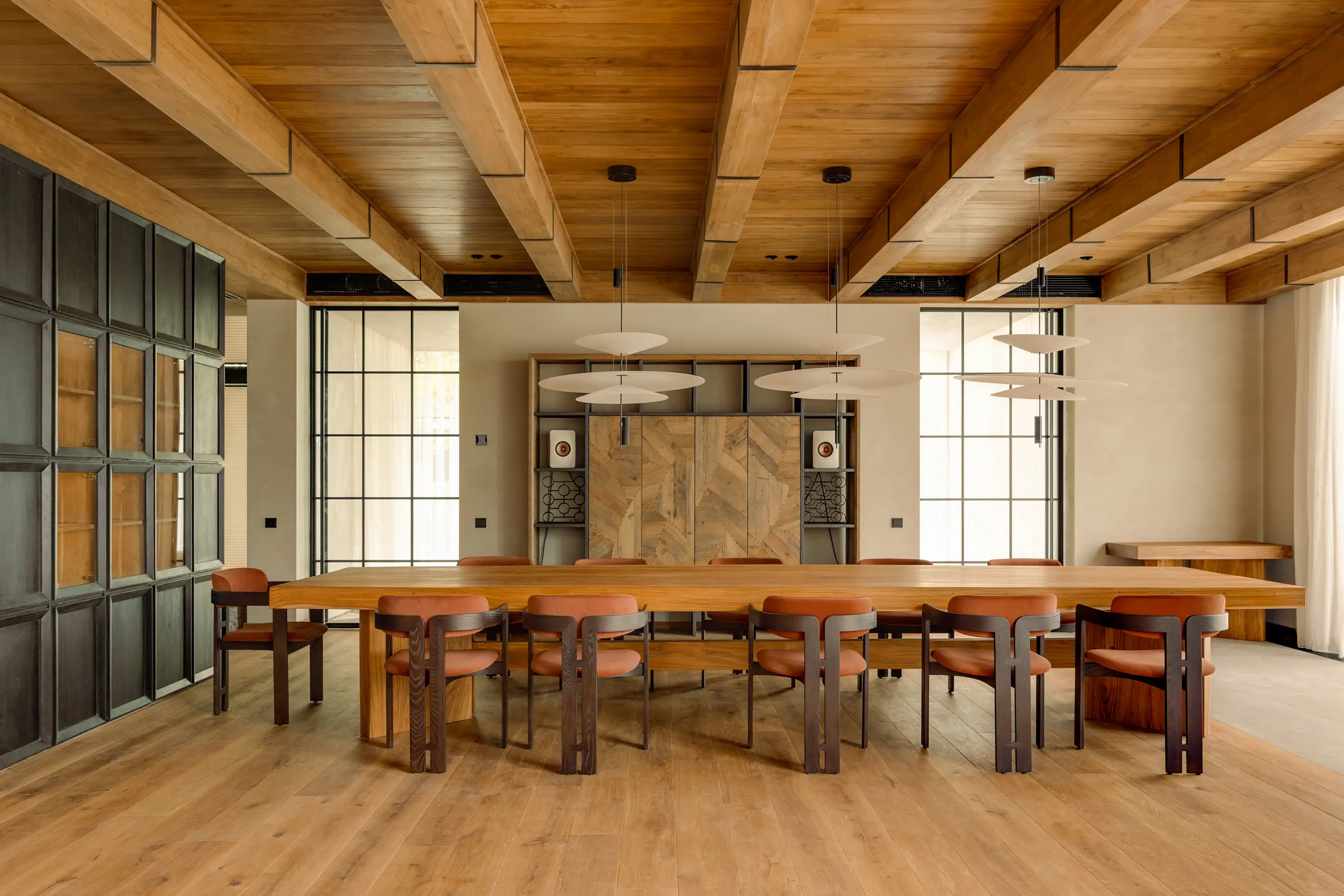
Reclaimed teak can be machined and finished to create:
- clean contemporary surfaces
- refined cabinetry
- precise architectural detailing
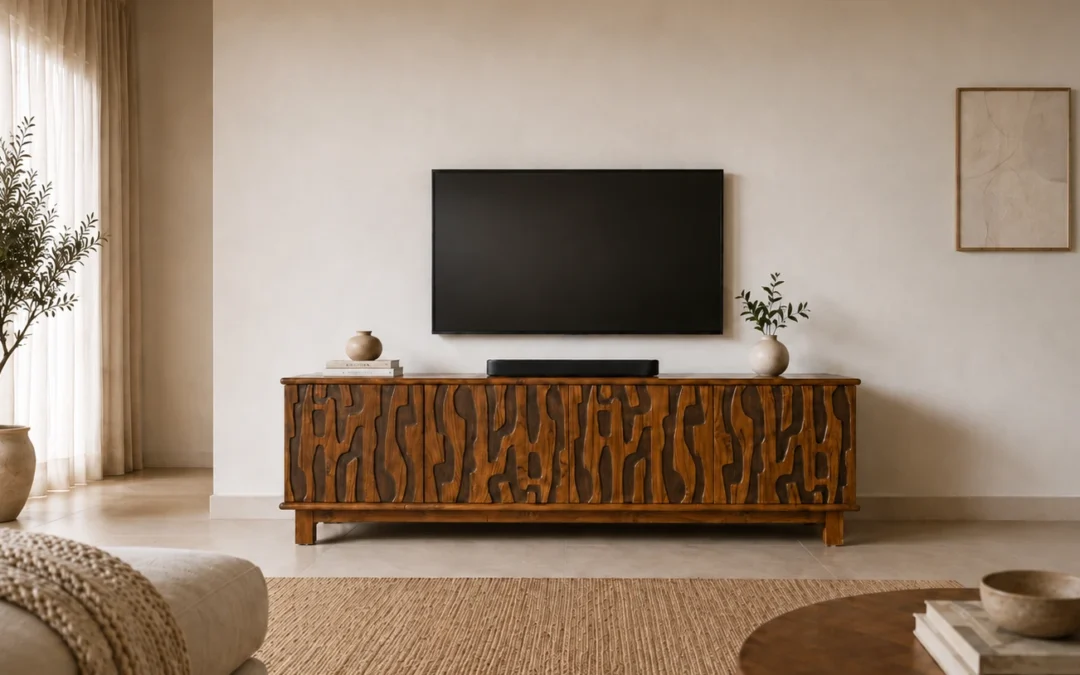
- sculptural furniture
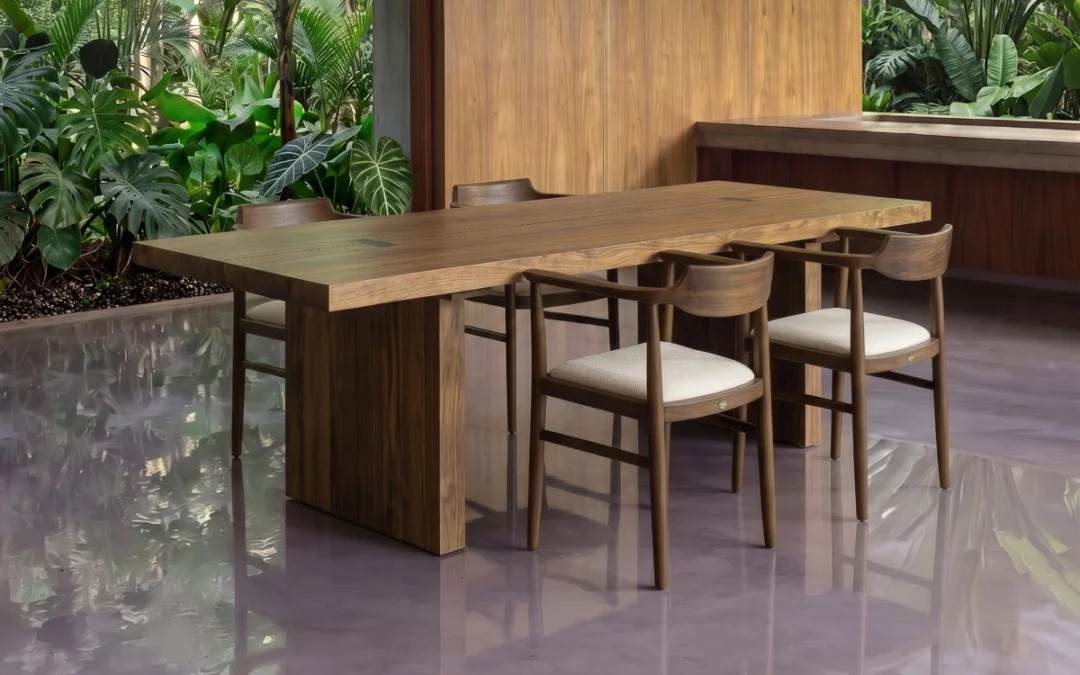
- minimalist tables
- modern wall panelling
- smooth natural finishes
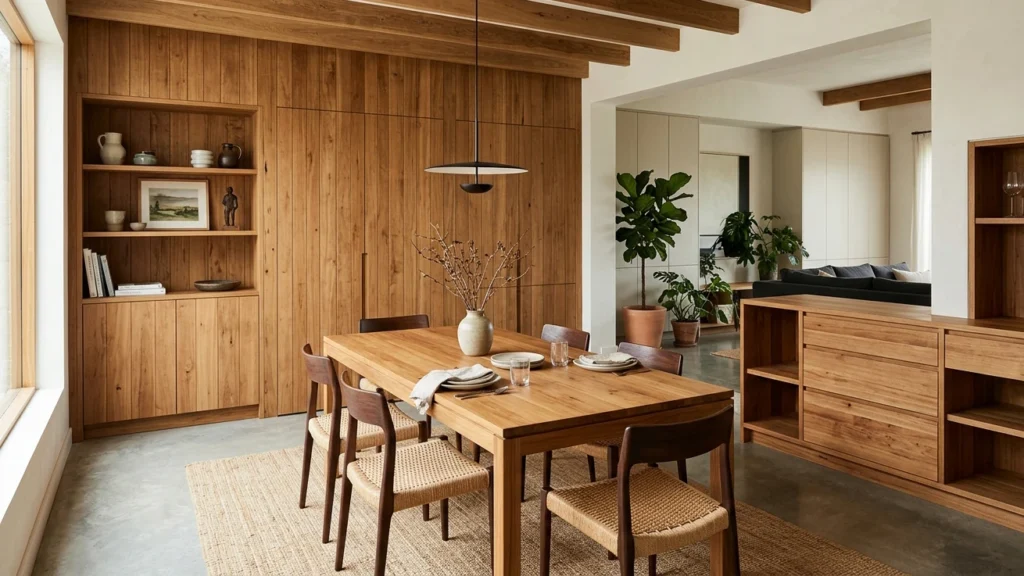
Signs of the timber’s previous life can be retained where desirable or reduced considerably where the design requires a more refined appearance.
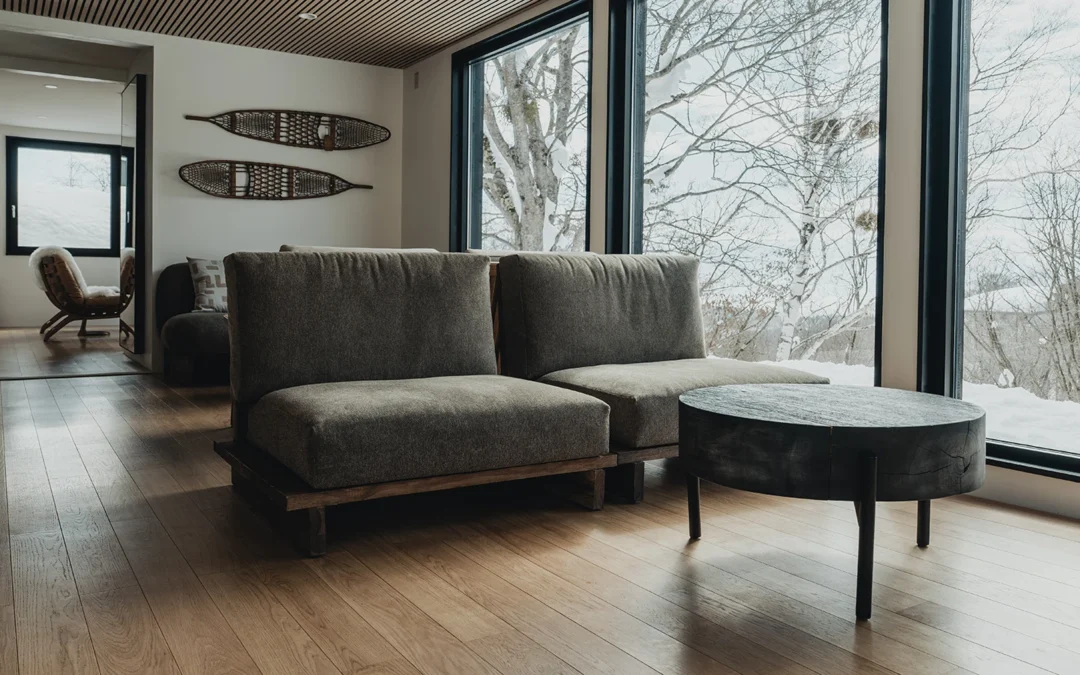
This makes reclaimed teak particularly useful for architects who want the environmental benefits and story of reclaimed material without creating a deliberately rustic interior.
Character versus consistency
There is, however, a genuine difference between reclaimed and newly processed timber.
New timber is generally easier to procure with very consistent dimensions, grain and appearance.
Reclaimed timber is inherently more variable.
Individual boards may contain:
- variations in grain
- old fixing points
- slight colour differences
- previous joinery marks
- evidence of age and use
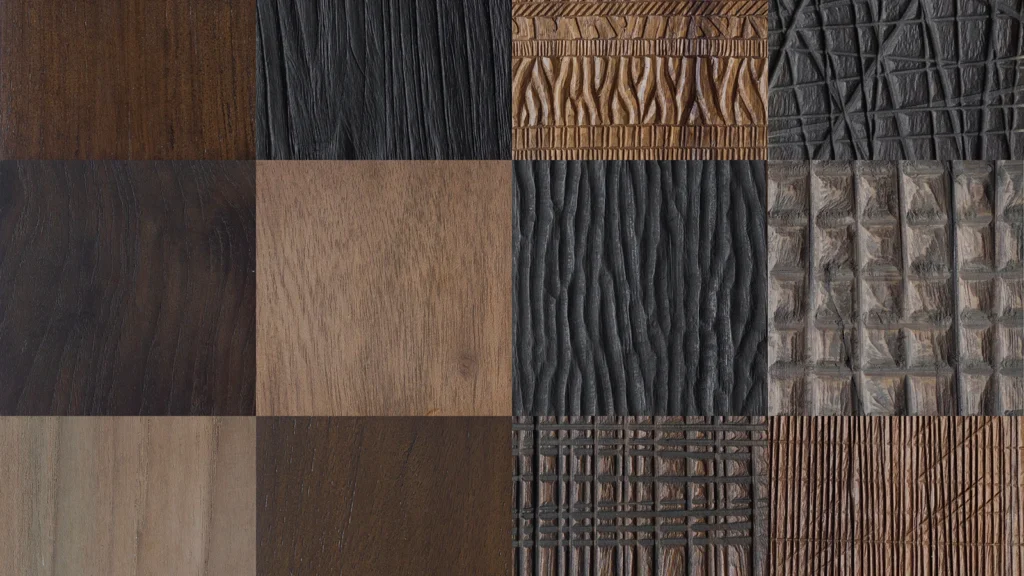
For Nusantara Lifestyle, this is managed through material selection.
Cleaner material can be selected for minimalist cabinetry and highly refined surfaces, while timber with stronger historical marks can be used where more character is desired.
This means the architect should establish the expected visual grade early.
Reclaimed timber works best when natural variation is treated as part of the specification rather than as a defect discovered at the end of production.
Provenance can add another layer to the project
New timber generally begins its product story in a forest or plantation.
Reclaimed timber begins somewhere else.
It may have previously been a beam, post, wall component or part of another structure.
For Nusantara Lifestyle, that history is important enough to document.
Through ORIGIN, we are developing a traceability system that connects reclaimed material with information about its source and subsequent transformation into a finished piece.
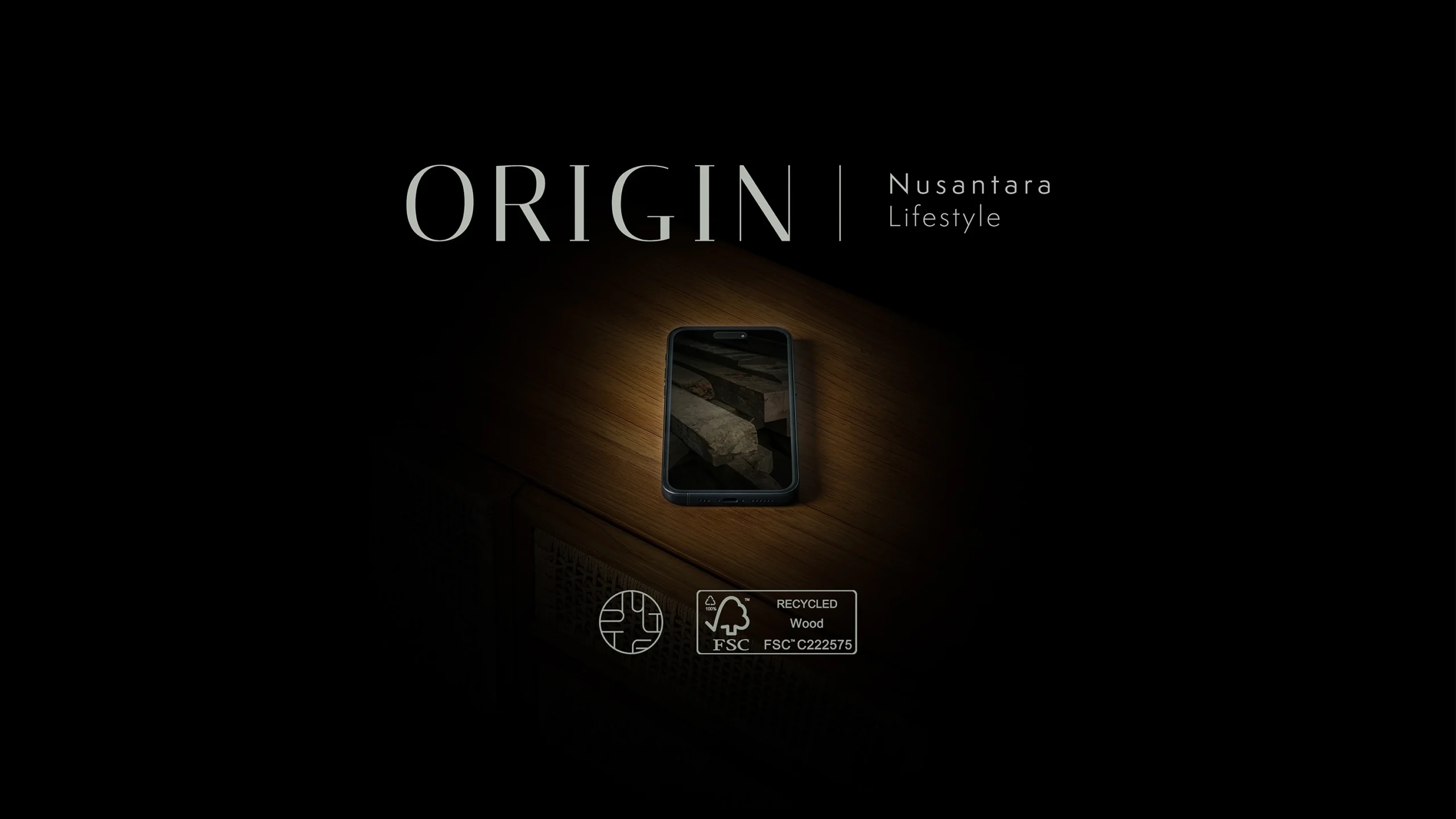
This creates an unusual opportunity for designers.
Instead of a specification reading only:
Solid teak dining table
it can potentially describe a piece manufactured from teak that has already existed in another form for decades.
That history becomes part of the architecture.
How does this relate to Green Star?
Green Star does not work on the principle that simply selecting “reclaimed timber” automatically generates a particular rating outcome.
Certification is assessed across the project and according to the applicable rating tool and credits.
But the direction of Green Star is increasingly aligned with circular resource use.
Green Star Fitouts, launched in 2026, is the first Australian fitout rating tool from GBCA to embed circularity as a core requirement. Its circularity category encourages reuse, adaptability and design for disassembly.
GBCA’s wider Responsible Products Framework also focuses on reducing raw material requirements, keeping products in circulation, incorporating recycled content and considering future end-of-life pathways.
Reclaimed timber can therefore make sense as part of a broader circular project strategy, provided that its use and documentation align with the project’s specific Green Star requirements.
Certification still matters
Reclaimed does not mean undocumented.
Project teams should still understand who has supplied the timber, how it has been classified and what evidence supports the claims being made.
FSC’s chain-of-custody standards contain specific requirements for organisations sourcing reclaimed forest materials, including supplier validation, record keeping and evidence demonstrating the eligibility of reclaimed inputs.
Nusantara Lifestyle can provide applicable FSC® and reclaimed-material documentation for its products according to the particular product and order.
For Australian commercial projects, this provides an important layer of accountability alongside the reclaimed timber story.
So which is better?
There is no single answer for every interior.
Credibly certified new timber can be an excellent material.
But when a suitable reclaimed resource already exists, the question is worth asking:
Do we need to harvest another tree for this application?
For Nusantara Lifestyle, the answer is often no.
Indonesia already contains significant quantities of high-quality teak that have served previous architectural purposes.
Recovering that timber, documenting it and converting it into contemporary furniture allows an exceptional natural material to remain productive instead of beginning the resource cycle again.
For architects pursuing more circular Australian interiors, reclaimed teak therefore offers something beyond the appearance of timber.
It offers the opportunity to design with a resource that already has a past — and give it a much longer future.