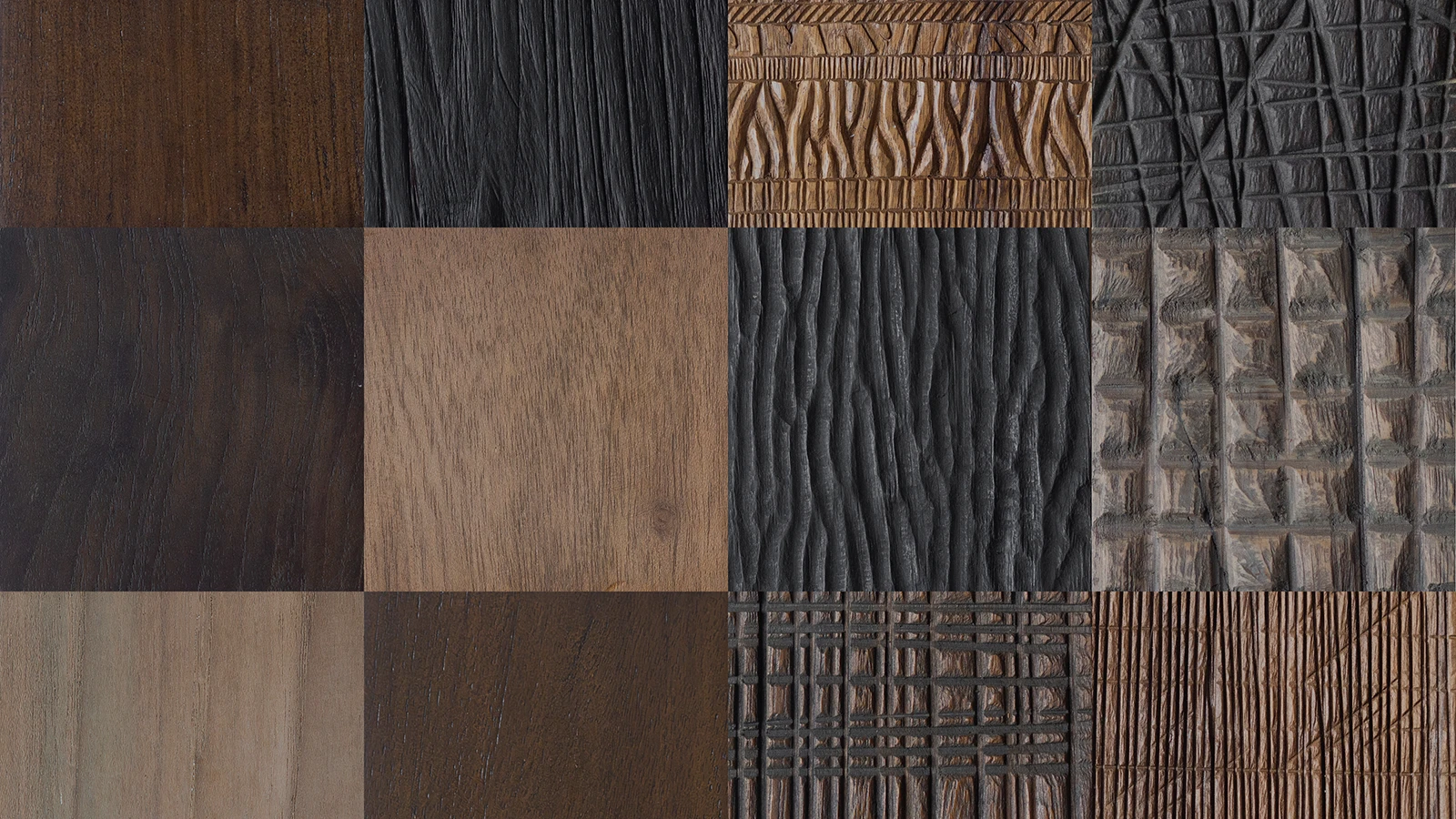
Reclaimed timber can be a natural fit for projects pursuing more circular and responsible interior design. But for architects and interior designers working on Green Star fitouts in Australia, choosing reclaimed wood is only the beginning.
The material also needs to be properly identified, specified and documented.
This is becoming particularly important with the introduction of Green Star Fitouts, launched by the Green Building Council of Australia (GBCA) in March 2026. The new rating tool places circularity at the heart of fitout design and specifically encourages strategies including reuse, adaptability and design for disassembly.
For reclaimed timber suppliers such as Nusantara Lifestyle, this presents an opportunity to work more closely with architects and sustainability consultants from the specification stage rather than simply supplying furniture at the end of a project.
Here are some of the main considerations when specifying reclaimed timber for an Australian Green Star interior project.
1. Start with the project’s Green Star pathway
Before identifying individual products, establish exactly which Green Star rating tool and version the project is working under.
Green Star Fitouts formally launched on 18 March 2026 and is replacing the previous Green Star – Interiors tool. GBCA has indicated that registrations under Green Star – Interiors will close in September 2026, meaning the newer Fitouts framework will increasingly become the relevant pathway for Australian interior projects.
This matters because requirements can differ between Green Star versions.
A material should therefore never be described simply as being “Green Star compliant” without considering the particular credit, rating tool and project.
For project teams, the relevant Green Star Submission Guidelines remain the primary technical reference for credit requirements and compliance documentation.
2. Specify reclaimed timber early
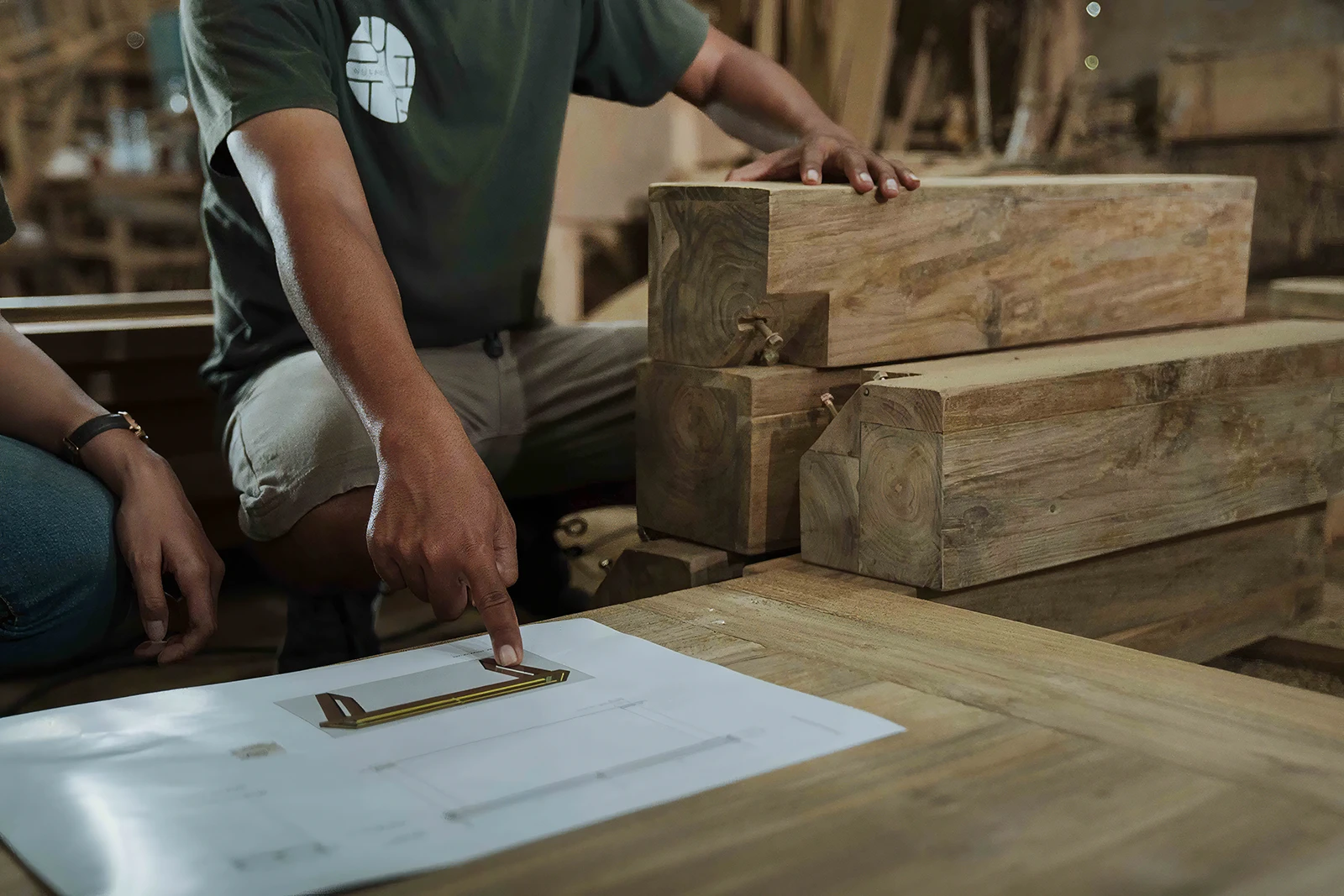
Reclaimed timber is most useful when it forms part of the design strategy from the beginning.
Leaving furniture and timber elements until the final procurement stage can limit opportunities to incorporate reuse, adaptability and material efficiency into the project.
Instead, architects can identify potential applications during design development.
These might include:
- reception desks
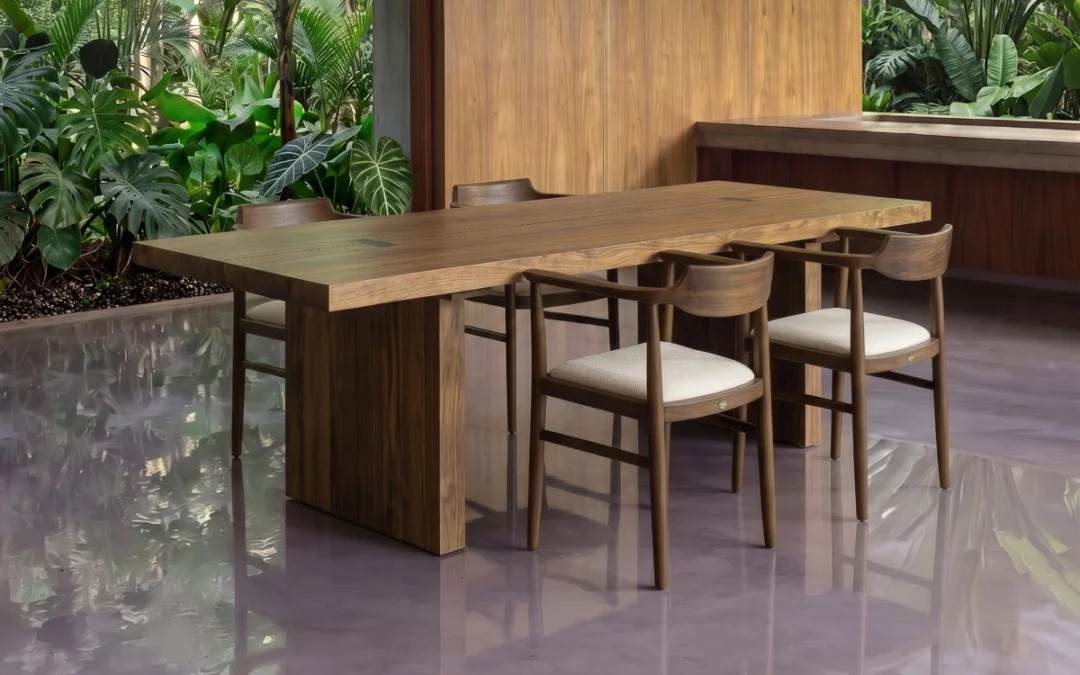
- communal tables
- meeting tables
- work tables
- banquette or built-in seating
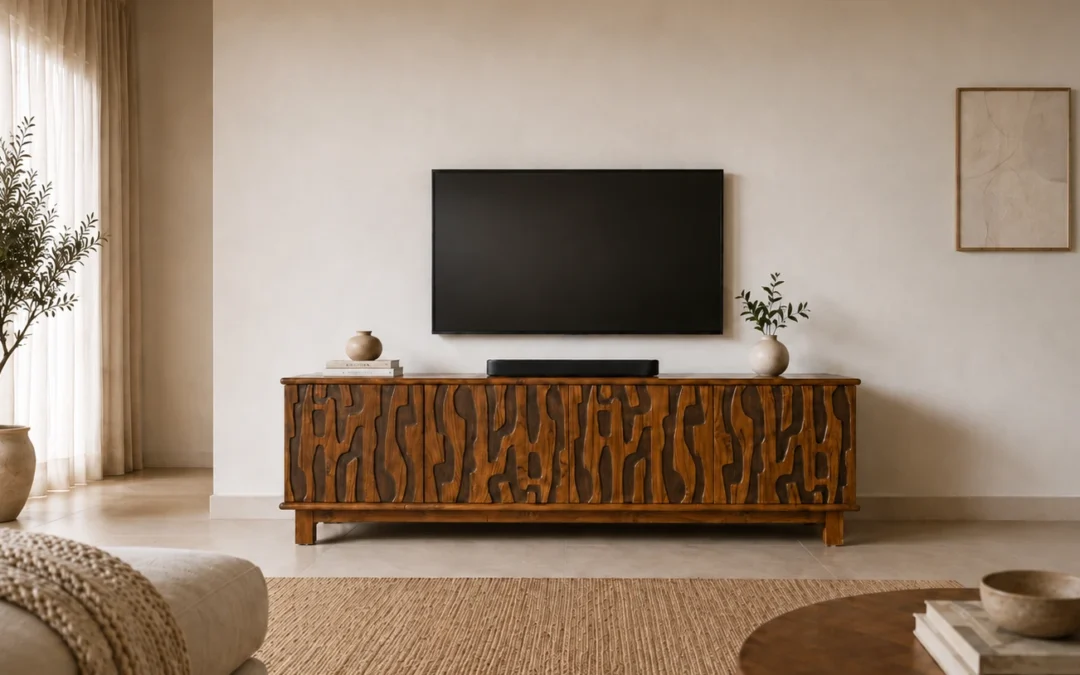
- cabinetry
- shelving
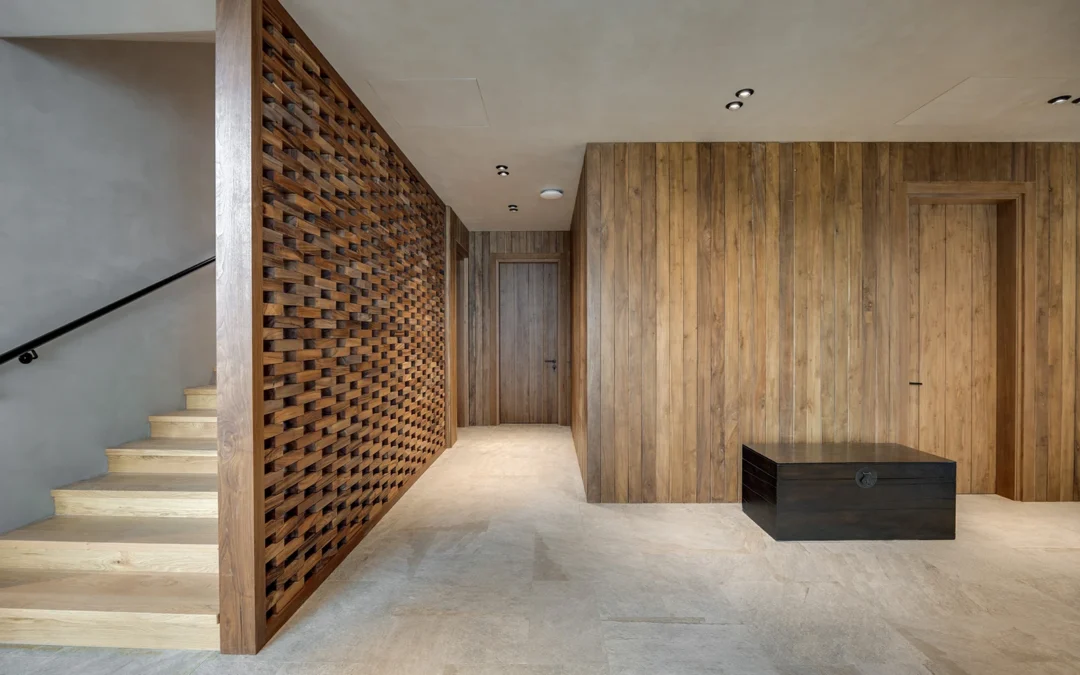
- wall panelling
- screens
- bathroom vanities
- loose furniture
- feature joinery
- statement pieces
This also gives the supplier enough time to select suitable reclaimed timber according to the dimensional, structural and aesthetic requirements of each application.
For Nusantara Lifestyle, most pieces are made specifically for a project rather than selected from a fixed retail catalogue. This allows the material and design to be developed together.
3. Define what “reclaimed” actually means
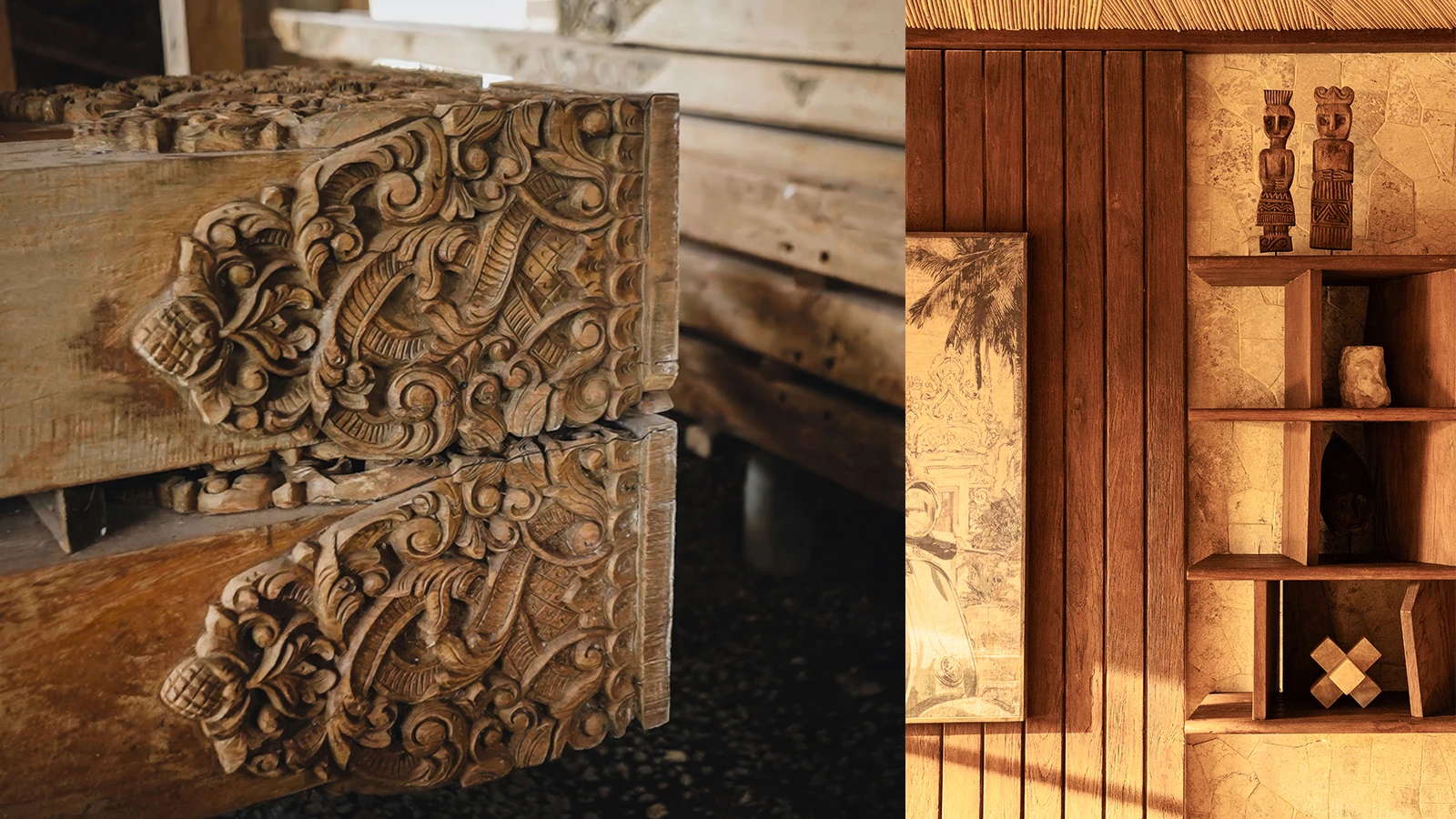
The word reclaimed should not be treated as a decorative description.
The project team should understand what the timber was reclaimed from and how its origin is being verified.
Nusantara Lifestyle works predominantly with reclaimed teak recovered from existing structures in Indonesia. The timber is selected, processed and transformed into new furniture and interior elements rather than being harvested specifically for the new project.
This distinction matters.
FSC standards, for example, contain specific definitions and verification requirements for reclaimed forest-based materials, including requirements around supplier records and evidence demonstrating that reclaimed material meets the relevant category.
When writing the specification, consider identifying:
Species: Teak (Tectona grandis)
Material: Reclaimed teak timber
Source: Recovered existing timber rather than newly harvested timber
Supplier: Nusantara Lifestyle
Certification/documentation: To be supplied for the specific product or order as applicable
This is far clearer than simply writing “sustainable timber”.
4. Ask for evidence, not just sustainability language
Sustainability claims are strongest when they can be substantiated.
For a reclaimed timber product, supporting information could include:
- identification of the timber species
- reclaimed material declaration
- source or provenance information
- FSC® documentation where applicable
- manufacturer information
- photographs of reclaimed material
- production information
- purchase documentation
- product specifications
- finishing information
- project-specific invoices
- supporting traceability records
Nusantara Lifestyle’s ORIGIN traceability platform is designed to take this further by recording information about the source of reclaimed timber and connecting that history with its eventual finished application.
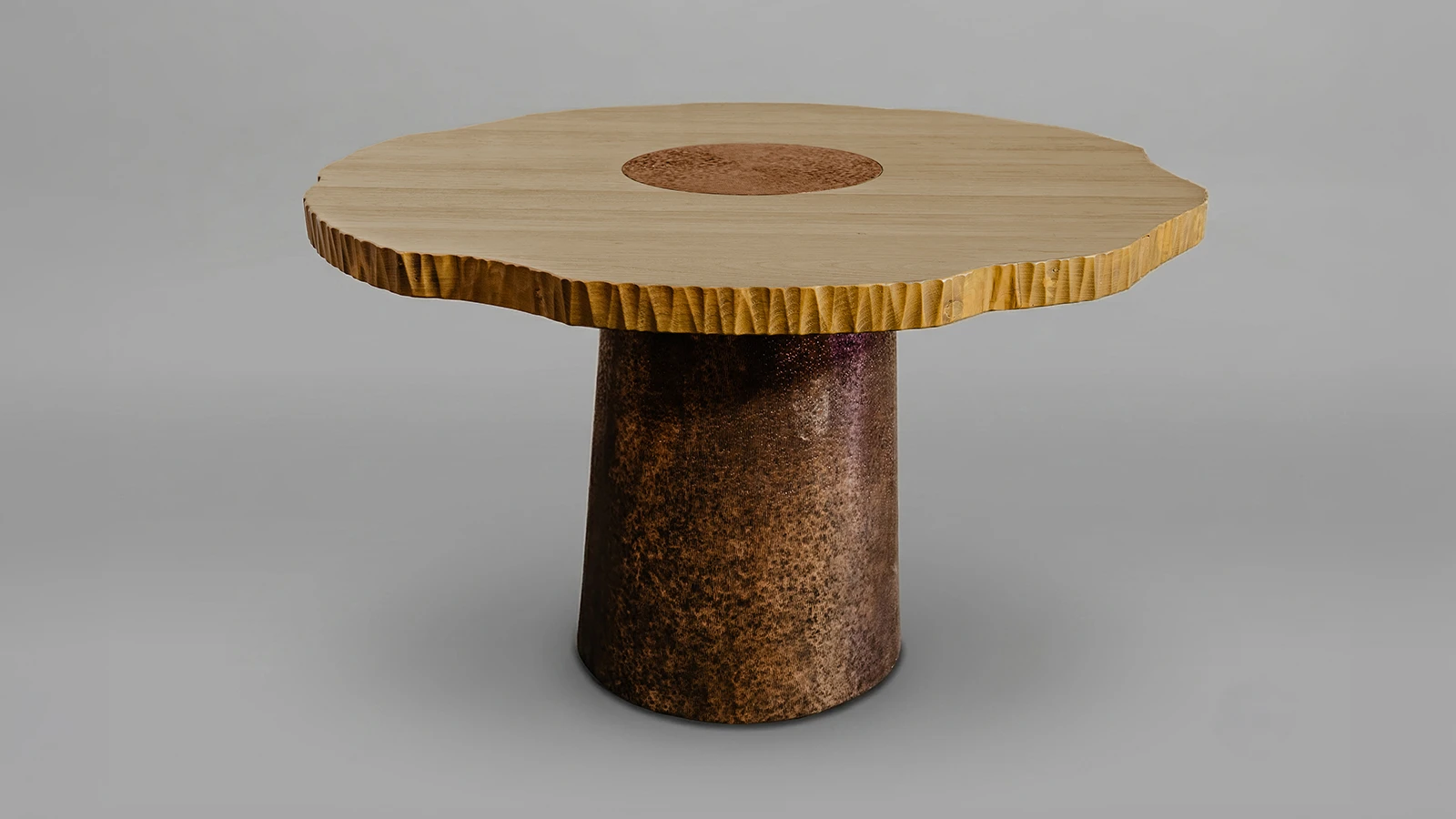
For an architect, that means reclaimed timber can become a documented material choice rather than an unsupported environmental statement.
5. Check certification at product level
Certification can form an important part of responsible timber procurement, but it needs to be checked carefully.
Nusantara Lifestyle operates with FSC® certification covering its relevant reclaimed and mixed timber product pathways. However, the exact FSC claim applicable to a particular order should always be confirmed on the relevant project documentation.
This is important because FSC certification applies through defined chain-of-custody systems and product claims rather than simply attaching broadly to a species or a company name. FSC’s Chain of Custody requirements establish rules governing eligible inputs, reclaimed material sourcing and output claims.
For Green Star projects, the project sustainability consultant should confirm how the applicable certification and product documentation interact with the specific credit being targeted.
6. Consider longevity as part of the specification
A sustainable interior does not necessarily result from choosing products with the most sustainability labels.
How long something lasts also matters.
Green Star Fitouts has been developed partly in response to the significant environmental impact created when commercial interiors are repeatedly stripped out and rebuilt. GBCA notes that fitouts are commonly replaced every five to seven years and has made reuse, reconfiguration and circularity central to the new rating tool.
This makes durability an important consideration when specifying furniture.
Reclaimed teak is particularly useful in this context.
Teak is naturally durable and dimensionally stable, and much of the reclaimed timber used by Nusantara Lifestyle has already spent decades in structural applications before being converted into furniture.
Instead of asking only:
“Is this product sustainable?”
designers can also ask:
“Can this product remain useful for the next 20 or 30 years?”
That can lead to very different material decisions.
7. Design furniture so it can move
The most sustainable table may not necessarily remain in the same room forever.
Commercial tenants relocate. Hotels refurbish. Workplace requirements change. Restaurants reconfigure their layouts.
Furniture and interior elements can therefore be designed with their second use in mind.
A large reclaimed teak table, for example, could be manufactured as a demountable piece that can be transported between locations.
Wall panelling can potentially use installation systems that allow sections to be removed.
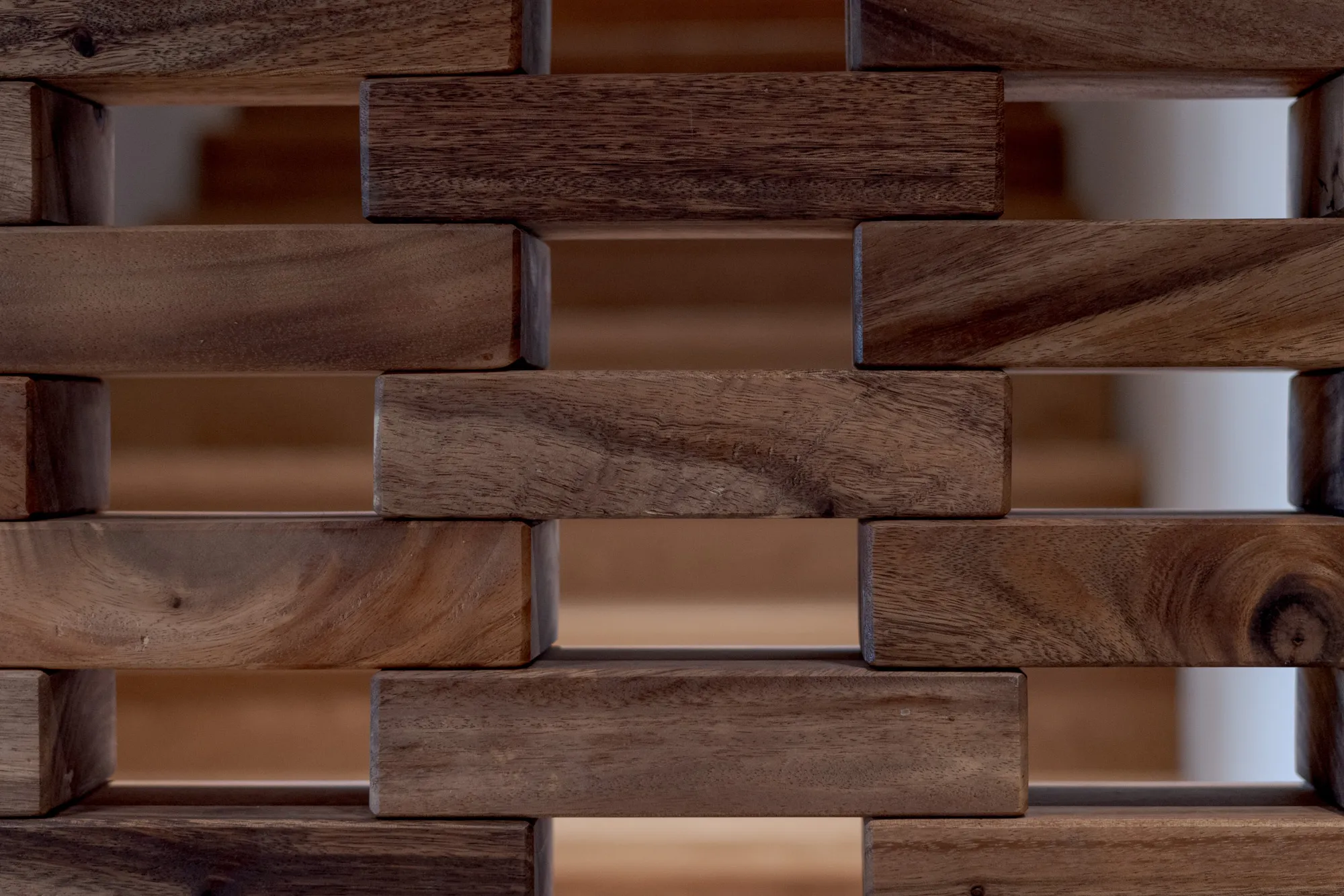
Freestanding cabinetry may be preferable to permanently integrated joinery in some applications.
Green Star Fitouts specifically promotes concepts including adaptability and design for disassembly to keep materials in circulation for longer.
Designing around those principles can turn reclaimed timber from simply a low-impact material into part of a wider circular design strategy.
8. Involve the sustainability consultant
Architects do not need to determine Green Star compliance alone.
GBCA strongly recommends that project contacts have Green Star Accredited Professional expertise, particularly because technical requirements, documentation and points pathways need to be coordinated across the whole project.
For a reclaimed timber supplier, the most productive approach is often therefore a conversation between:
architect + supplier + sustainability consultant + contractor/procurement team
early in the project.
The designer establishes the aesthetic and functional requirements.
The sustainability consultant identifies the evidence required.
The supplier provides the available documentation and develops the product accordingly.
And the procurement team ensures the required information follows the product through purchasing and installation.
Moving from sustainable-looking to specification-ready
Reclaimed timber has an obvious environmental appeal.
But the future of sustainable specification requires more than appearance.
It requires materials whose origin can be explained, whose documentation can be supplied, whose performance suits the project and whose useful life has been considered beyond the opening day.
For Nusantara Lifestyle, this is where reclaimed teak becomes particularly relevant to Australian Green Star projects.
It combines a resource that already exists with contemporary design, traceability and the potential for decades of further use.
That makes reclaimed timber more than an aesthetic choice.
It becomes part of the project’s material strategy.