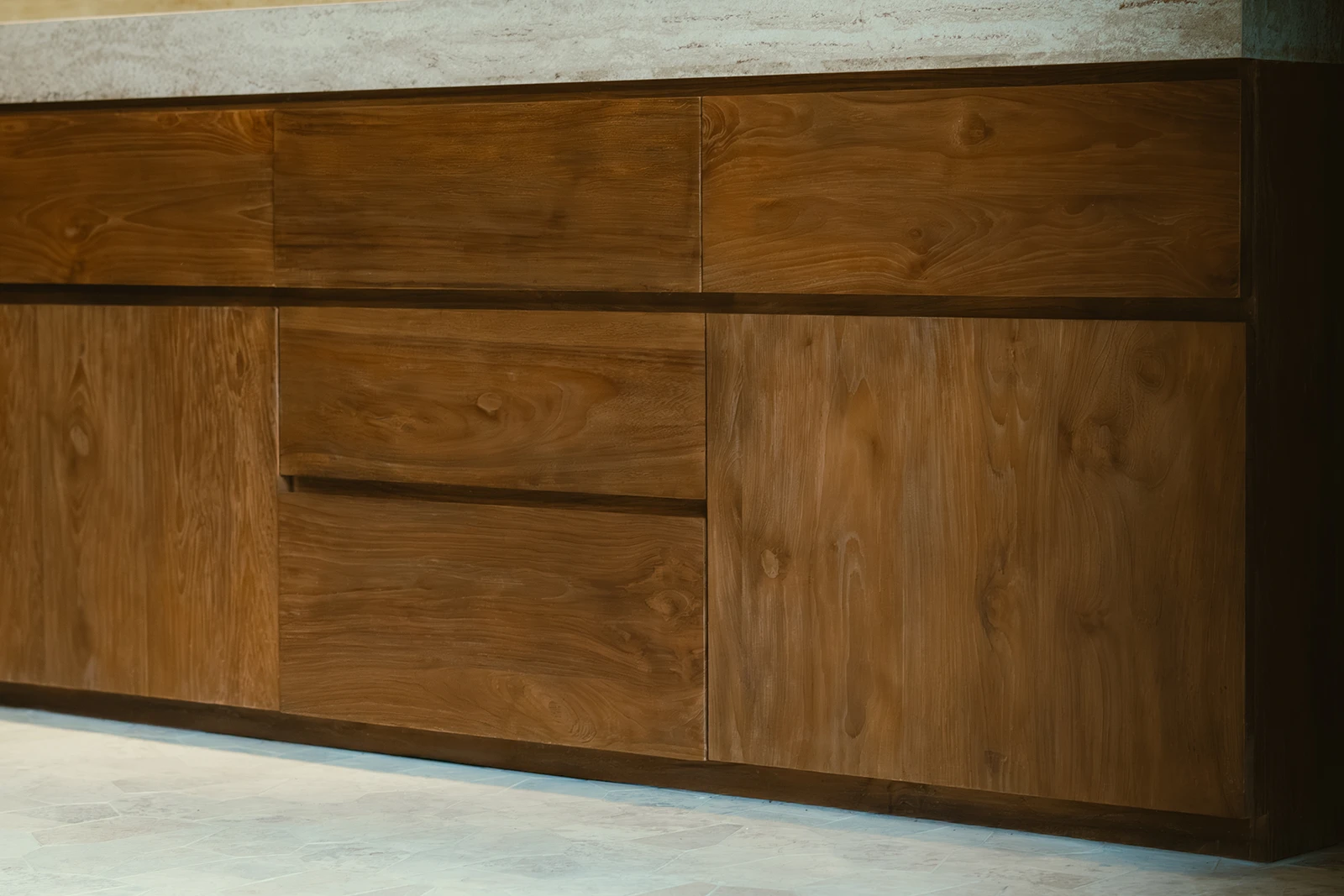
Reclaimed teak custom cabinetry offers Australian homeowners, architects, interior designers and developers an alternative to conventional mass-produced joinery. It combines the warmth and durability of teak with the environmental benefits of reusing existing timber, creating cabinetry that is both functional and distinctive.
At Nusantara Lifestyle, we design and manufacture custom cabinetry from carefully selected reclaimed teak sourced from existing structures in Indonesia. Each project is developed to suit the dimensions, design direction and practical requirements of the space, whether it involves a residential kitchen, bathroom vanity, wardrobe, built-in shelving or a complete commercial interior.
For Australian projects looking for long-lasting materials with a clear provenance, reclaimed teak provides a strong foundation for cabinetry that is made to be used for many years.
What Is Reclaimed Teak Cabinetry?
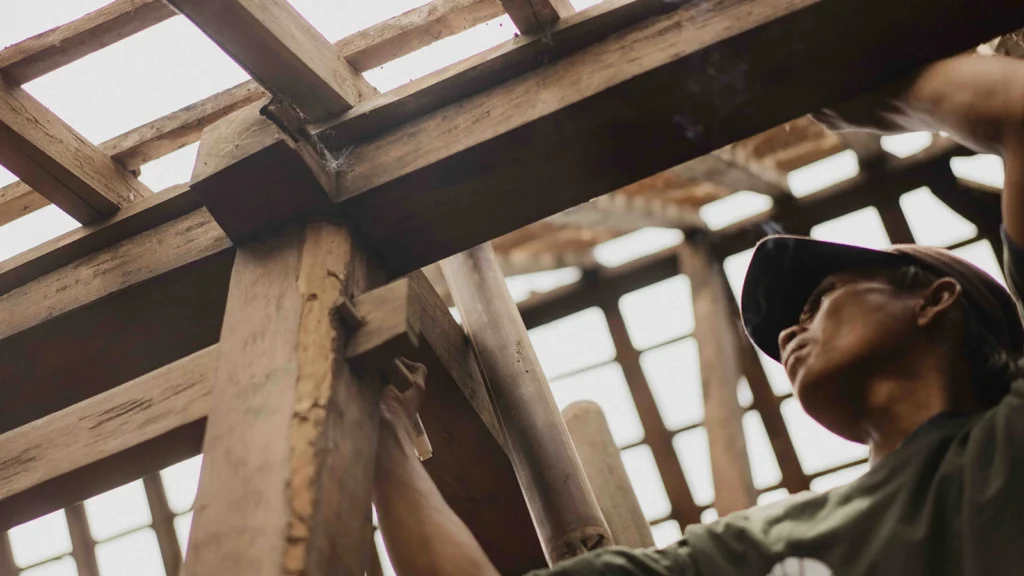
Reclaimed teak cabinetry is made using teakwood recovered from existing buildings, structures and other previously constructed sources.
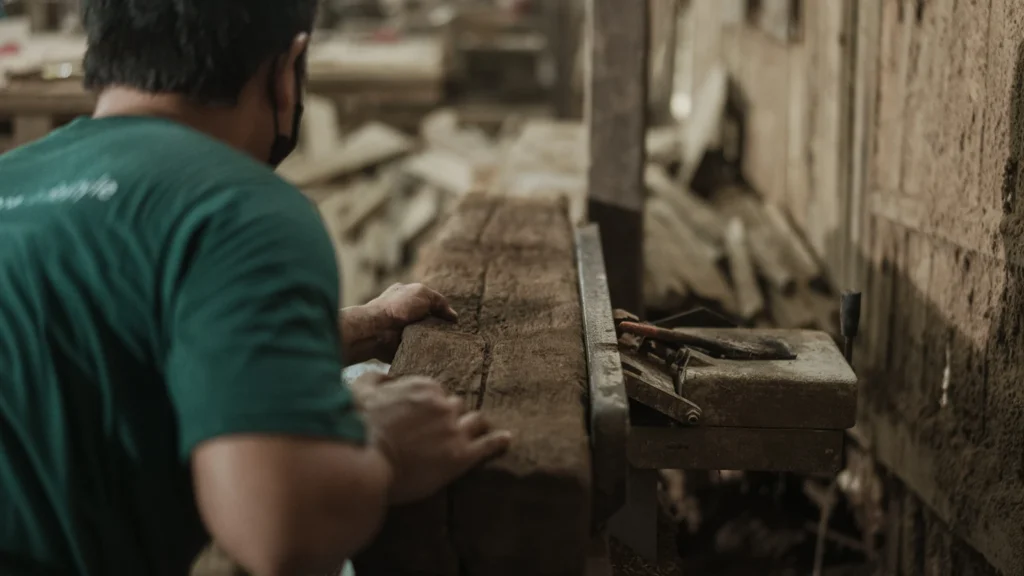
Instead of harvesting newly grown timber, suitable teak components are carefully recovered and prepared for reuse. The timber is then inspected, de-nailed, cleaned, processed, kiln-dried where required and selected according to the needs of the project.
The reclaimed wood can be used for:
- Kitchen cabinetry
- Bathroom vanities
- Wardrobes
- Built-in storage
- Entertainment units
- Home offices
- Display cabinetry
- Shelving
- Wall panelling
- Commercial counters
- Custom joinery details
Every batch of reclaimed timber has its own character. Natural colour variations, grain patterns, small repairs and traces of the wood’s previous use can remain visible within the finished cabinetry.
Rather than being treated as imperfections, these details contribute to the individuality of the material.
Why Use Reclaimed Teak for Custom Cabinetry?
Natural durability
Teak has traditionally been valued for its strength, dimensional stability and natural oil content. When properly selected, dried and constructed, it can perform well in demanding interior applications.
This makes reclaimed teak suitable for cabinetry that experiences regular use, including kitchens, bathrooms, wardrobes and hospitality interiors.
Good performance still depends on more than the timber species alone. Moisture control, joinery, hardware selection, finishing and installation all influence the durability of the finished cabinetry.
A lower-impact material choice
Reclaimed teak makes use of timber that already exists.
By recovering and reworking suitable wood, a project can reduce its reliance on newly harvested material while retaining the performance and visual qualities associated with mature teak.
This supports a more circular approach to interior design, where existing materials are kept in use rather than discarded or replaced unnecessarily.
For architects and designers working on environmentally conscious Australian projects, reclaimed timber can also help communicate a more meaningful sustainability story than materials selected only for their appearance.
Character that cannot be mass-produced
New sheet materials are designed to create consistent surfaces. Reclaimed teak offers something different.
Variations in grain, tone and previous use give the cabinetry depth and individuality. The material works particularly well in interiors that value authenticity, craftsmanship and natural materials.
Reclaimed teak can complement a range of Australian interior styles, including:
- Contemporary coastal architecture
- Modern tropical interiors
- Minimalist homes
- Japandi-inspired spaces
- Luxury villas
- Boutique hotels
- Restaurants and hospitality venues
- Environmentally focused commercial developments
The timber can be used as a dominant feature or introduced more subtly through cabinet fronts, shelving, handles, panels and selected joinery elements.
Custom Cabinetry Designed Around the Project
Custom cabinetry should respond to the architecture rather than forcing the space to accommodate standard-sized products.
Nusantara Lifestyle develops each project according to the approved dimensions, intended use and design specifications. This allows the cabinetry to be coordinated with room layouts, appliances, plumbing, lighting, hardware and surrounding finishes.
Depending on the project, our custom reclaimed teak cabinetry can include:
Kitchens
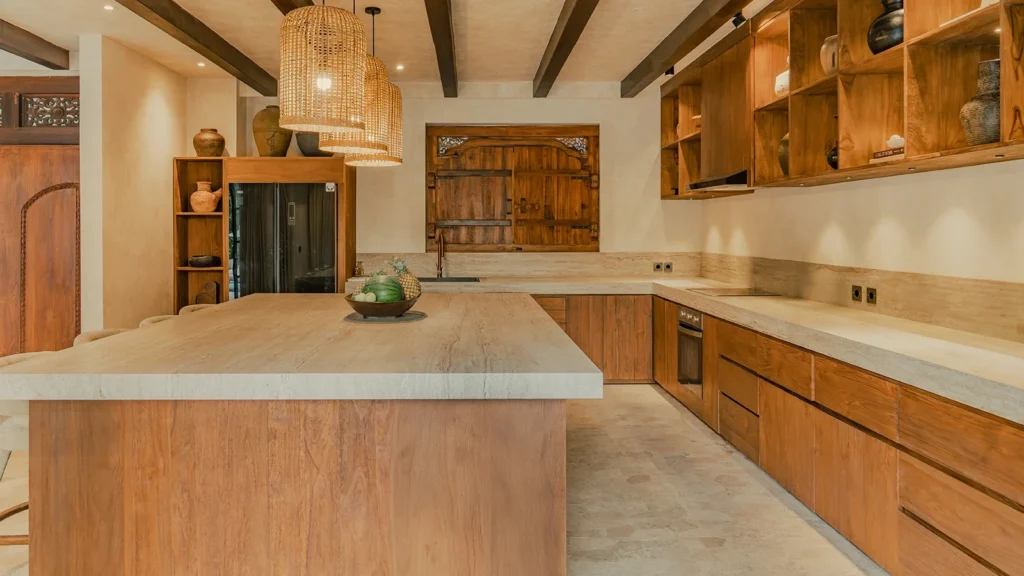
Reclaimed teak can be used for complete kitchens or as a feature material within a mixed-material design.
Applications may include cabinet fronts, island cladding, open shelving, pantry doors, overhead cabinets and integrated handles. The timber works especially well alongside natural stone, stainless steel, lime plaster and neutral architectural finishes.
For areas exposed to water, heat and frequent cleaning, the construction method and finishing system must be selected carefully. Internal cabinet materials may also be specified separately from visible reclaimed teak surfaces to balance appearance, performance and budget.
Bathroom vanities
A custom reclaimed teak vanity can introduce warmth into bathrooms that otherwise rely heavily on stone, tile and concrete.
Vanities can be designed as wall-mounted, freestanding or integrated units, with storage configured around basins, plumbing and electrical requirements.
Appropriate sealing, ventilation and installation details are important in Australian bathrooms, particularly in humid environments and frequently used hospitality spaces.
Wardrobes and bedroom cabinetry
Custom wardrobes allow storage to be planned around the way the room will actually be used.
Internal layouts can include hanging space, adjustable shelving, drawers, shoe storage, luggage compartments and integrated lighting. Reclaimed teak can be used across the full wardrobe or limited to selected doors and external details.
Matching bedside tables, bedheads, benches and dressing tables can also be produced to create a consistent material language throughout the room.
Living-room storage
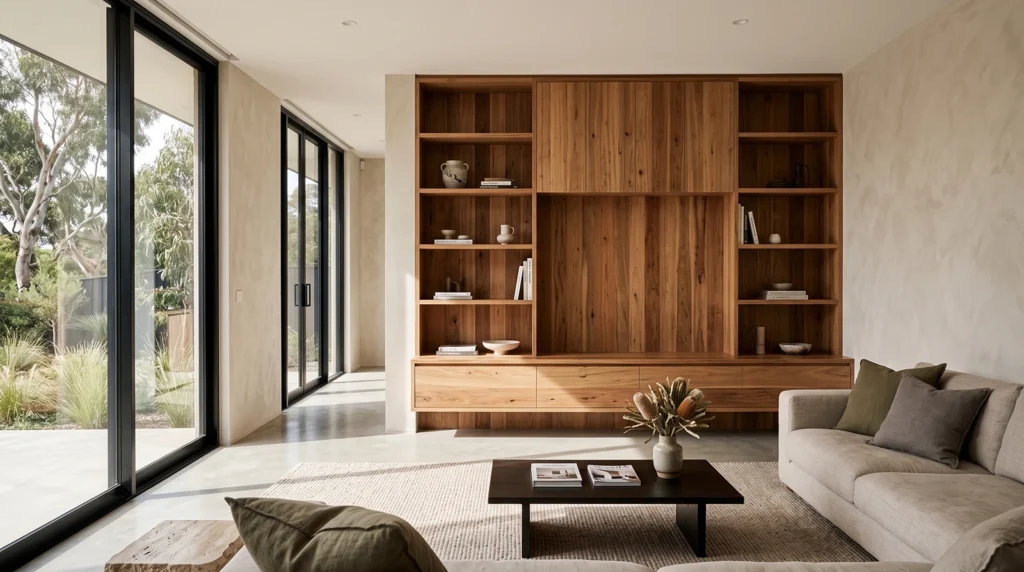
Built-in entertainment units, bookcases, display cabinets and concealed storage can be designed around the proportions of the living space.
Reclaimed teak is particularly effective in large open-plan Australian interiors, where natural timber can soften concrete, stone, glass and painted surfaces.
Commercial cabinetry
For hotels, restaurants, retail spaces and workplaces, custom cabinetry must combine visual impact with practical performance.
Reclaimed teak can be used for reception counters, bars, retail displays, shelving, banquette details and storage. Its natural character can help establish a strong sense of place, particularly in projects centred on sustainability, craftsmanship or connection to natural materials.
From Reclaimed Timber to Finished Cabinetry
Producing high-quality reclaimed teak cabinetry requires more than simply recovering old wood.
The material must be carefully processed before it is suitable for precise joinery.
- Timber recovery and sourcing
The process begins with identifying reclaimed teak that can be responsibly recovered from existing sources.
The origin and condition of the timber should be documented wherever possible. This helps provide greater transparency about where the material came from and how it entered the production process.
- Inspection and selection
Not every recovered piece is suitable for cabinetry.
The timber is inspected for structural condition, dimensions, grain, moisture and any damage that could affect its future use. Different components may be selected for door frames, panels, shelving, trims or structural joinery.
- De-nailing and cleaning
Old nails, screws and other metal elements must be carefully removed before machining.
The timber is then cleaned and prepared while retaining appropriate evidence of its reclaimed origin.
- Drying and moisture control
Moisture content is critical when producing cabinetry for export.
The timber must be dried and checked before manufacture to reduce the risk of excessive movement after installation. This is particularly important when cabinetry is produced in Indonesia and installed in Australia, where environmental conditions may differ.
- Machining and joinery
Once prepared, the timber is cut, shaped and joined according to the approved drawings.
Construction details are selected based on the component, expected use and design requirements. Traditional woodworking knowledge can be combined with modern machinery to achieve accuracy while preserving the handcrafted qualities of the material.
- Sanding and finishing
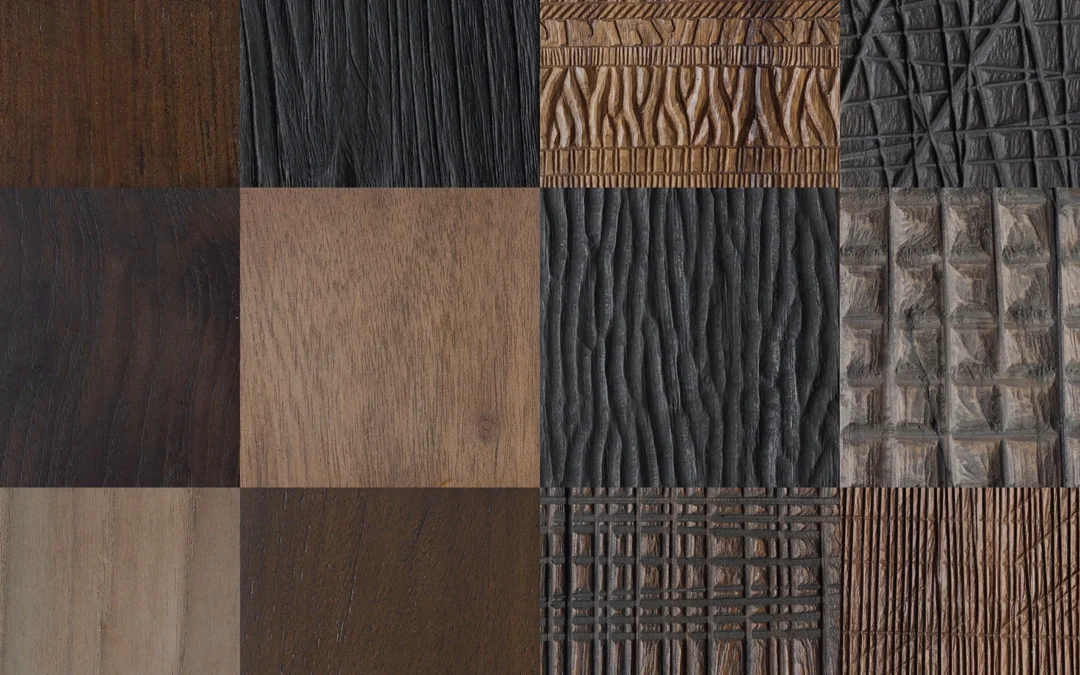
Reclaimed teak can be finished in several ways depending on the desired appearance.
Some projects retain a more textured and visibly reclaimed surface, while others require a cleaner, more refined finish. The final system may be natural, lightly tinted or colour-matched to the broader interior palette.
Samples should be approved before full production because reclaimed timber naturally varies from piece to piece.
- Quality control and packing
Completed cabinetry is checked against the approved drawings, dimensions, finish requirements and hardware specifications.
For Australian projects, packing and crating must also be planned carefully to protect the cabinetry during international shipping and local delivery.
Designing Reclaimed Teak Cabinetry for Australian Conditions
Australia includes a wide range of climates, from tropical and humid regions to dry inland environments and cooler southern cities.
Cabinetry intended for Australia should therefore be developed with its final location in mind.
Important considerations include:
- Local humidity and temperature
- Indoor or semi-outdoor placement
- Air-conditioning and ventilation
- Exposure to direct sunlight
- Proximity to water
- Required moisture content
- Expansion allowances
- Finish maintenance
- Hardware specifications
- Installation methods
A project in tropical northern Queensland may require different detailing from cabinetry installed in Melbourne, Adelaide or Perth.
Early coordination between the manufacturer, architect, interior designer, builder and installer helps reduce uncertainty and ensures that the final cabinetry is appropriate for its environment.
Reclaimed Teak Versus Conventional Cabinetry Materials
Many Australian cabinetry projects use MDF, particleboard, plywood, laminate, veneer or newly harvested solid timber.
Each material has legitimate applications. Reclaimed teak should not simply be viewed as a direct substitute for every component.
Instead, it can be used strategically.
For example, a project may combine stable engineered cabinet carcasses with reclaimed teak doors, drawer fronts, trims and feature panels. Another project may specify predominantly solid reclaimed teak where the design, construction and budget support it.
The right approach depends on:
- Intended use
- Design objectives
- Budget
- Weight
- Available timber dimensions
- Installation requirements
- Environmental priorities
- Desired level of visible natural variation
A considered material combination can provide the appearance and environmental value of reclaimed teak while maintaining practical construction and cost control.
What to Expect From a Custom Cabinetry Process
A typical custom cabinetry process may include:
- Initial project review
- Plans, references and specification assessment
- Preliminary material and construction recommendations
- Budget estimate
- Site dimensions or confirmed architectural measurements
- Design development
- Shop drawings
- Material and finish samples
- Client approval
- Manufacture
- Quality control
- Export packing and shipping
- Delivery and installation coordination
- Final inspection and handover
The earlier the cabinetry manufacturer is involved, the easier it is to coordinate dimensions, material availability, hardware, services and installation requirements.
This is particularly valuable for large residential, hospitality and commercial projects where cabinetry must integrate with multiple trades.
Traceability and Responsible Material Selection
The sustainability of reclaimed timber depends on credible sourcing and transparent documentation.
Simply describing wood as “recycled” or “reclaimed” does not explain where it originated, whether it was legally recovered or how it moved through the supply chain.
Nusantara Lifestyle uses its ORIGIN traceability platform to document the journey of reclaimed teak, from its previous source through recovery, selection and manufacturing.
Our FSC® certification also supports independent standards for responsible material handling and chain of custody.
For Australian architects, designers and developers, this provides more substance behind environmental claims and helps communicate the material story to clients, guests and project stakeholders.
Is Reclaimed Teak Cabinetry More Expensive?
Custom reclaimed teak cabinetry will generally sit above standard flat-pack or mass-produced cabinetry.
Its cost reflects several factors:
- Recovery and sourcing of suitable timber
- Manual de-nailing and preparation
- Timber selection and grading
- Drying and moisture checks
- Greater variation in material dimensions
- Custom design and shop drawings
- Skilled joinery
- Sampling and finish development
- Quality control
- Export packing and international logistics
However, cost should also be considered in relation to expected lifespan, repairability, uniqueness and the environmental value of keeping existing timber in use.
For premium residential and commercial projects, reclaimed teak cabinetry can become a long-term architectural element rather than a short-lived interior product.
Custom Reclaimed Teak Cabinetry by Nusantara Lifestyle
Nusantara Lifestyle works with Australian architects, designers, builders, developers and homeowners to create custom cabinetry and furniture from reclaimed teak.
From our workshop in Yogyakarta, Indonesia, we provide support across material selection, design development, shop drawings, sampling, manufacture, quality control, export packing and shipping.
Our capabilities include both fixed cabinetry and complementary loose furniture, allowing projects to establish a consistent material and design language across the interior.
Whether the requirement is a single feature vanity, a full kitchen, custom wardrobes or joinery for an entire hospitality project, each piece is developed around the specific needs of the space.
Discuss Your Australian Cabinetry Project
Reclaimed teak custom cabinetry offers a combination of durability, natural character, craftsmanship and more responsible material use.
When supported by careful sourcing, appropriate drying, detailed shop drawings and quality construction, it can provide a distinctive solution for Australian homes and commercial interiors.
To discuss a custom cabinetry project, send Nusantara Lifestyle your architectural plans, reference images, preferred finishes, project location and expected timeline. Our team can review the requirements and recommend an appropriate material and production approach.