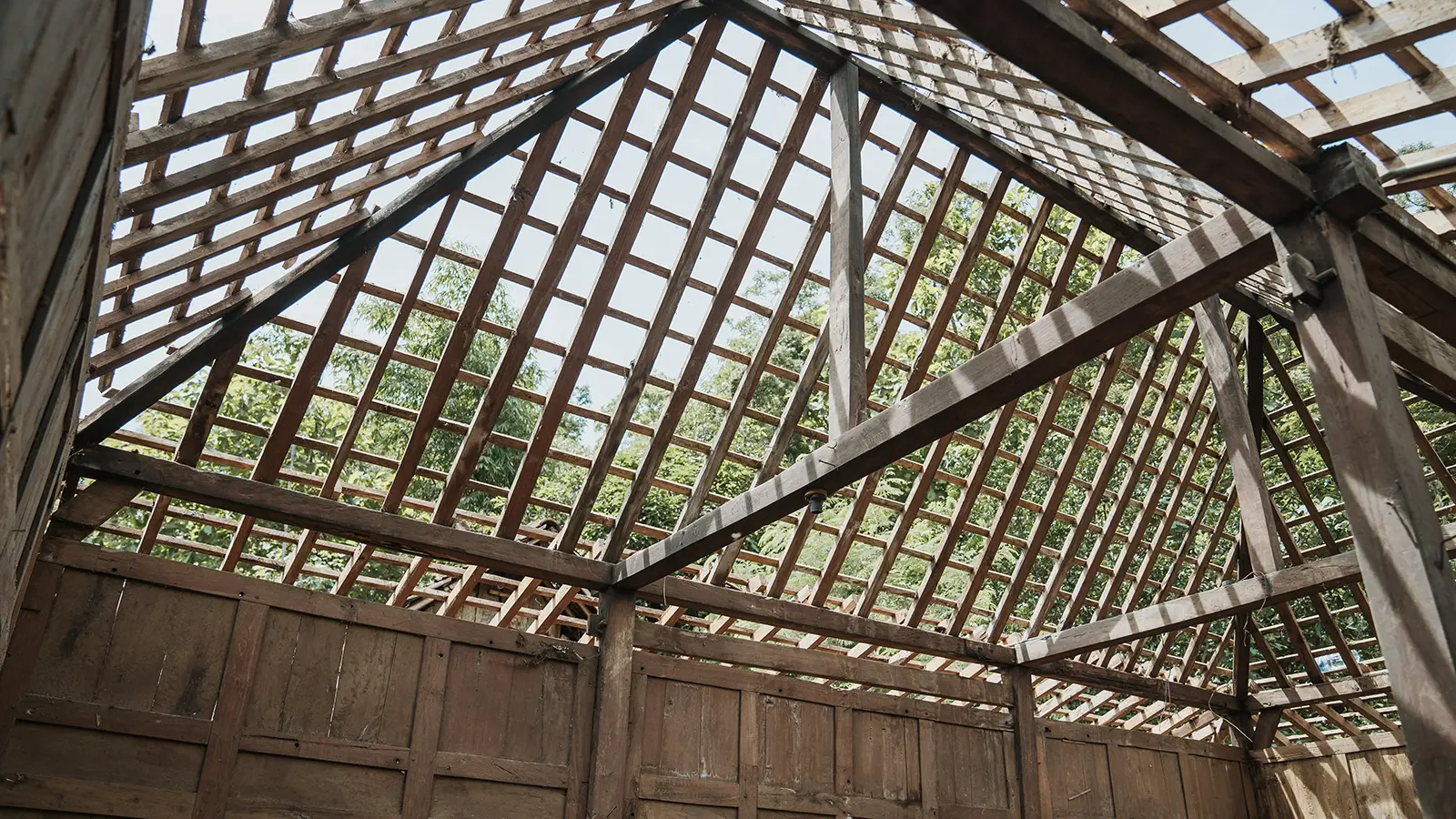
Reclaimed teak furniture begins long before a product reaches the workshop.
The process starts with finding existing timber that can be responsibly recovered, carefully documented and assessed for future use. Unlike newly harvested wood, reclaimed teak has already served a purpose—often as part of a house, warehouse or traditional structure.
Recovering this timber allows a valuable material to begin a new life as furniture, joinery or an architectural element.
However, not every piece of old wood is suitable for reuse. Responsible reclaimed teak sourcing requires traceability, careful selection, skilled processing and a clear understanding of the material’s condition.
What Is Reclaimed Teak?
Reclaimed teak is teakwood recovered from an existing application rather than harvested specifically for a new product.
Sources may include:
- Traditional houses
- Warehouses
- Agricultural buildings
- Structural beams
- Doors and windows
- Flooring
- Bridges
- Decommissioned public buildings
- Other dismantled timber structures
The timber may have been in use for decades.
Once recovered, it must be de-nailed, cleaned, sorted, dried and prepared before it can be used in furniture production.
Reclaimed teak should not be confused with timber that is simply made to look old through artificial distressing.
Why Reclaim Teak?
Teak is a valuable hardwood known for its strength, stability and natural durability.
When an existing teak structure reaches the end of its original use, the timber may still contain substantial material value. Discarding it would waste a resource that can often remain useful for many more years.
Reclaiming teak can:
- Extend the useful life of existing timber
- Reduce demand for newly harvested material
- Divert usable wood from disposal
- Preserve material with cultural and historical character
- Support circular production
- Create furniture with a distinctive provenance
- Encourage more careful use of high-value hardwoods
The environmental value of reclaimed timber depends on whether its origin and processing can be credibly explained.
Where Does Indonesian Reclaimed Teak Come From?

Across Indonesia, teak has historically been used in houses, warehouses, railway structures, furniture and other long-lasting applications.
As buildings are renovated or dismantled, usable timber can sometimes be recovered rather than destroyed.
The sourcing process may involve relationships with:
- Building owners
- Demolition teams
- Local timber collectors
- Material recovery specialists
- Community suppliers
- Reclamation partners
The aim should not be to encourage the unnecessary demolition of valuable structures. Reclamation should occur where timber is already being removed, replaced or made available for legitimate reuse.
Why Traceability Matters
The term “reclaimed” can be used loosely.
Without documentation, it may be difficult for a customer to understand whether timber is genuinely recovered, where it came from or how it entered the supply chain.
Traceability helps answer questions such as:
- What type of structure did the timber come from?
- Where was the structure located?
- Why was the material removed?
- Who recovered the timber?
- How was it transported?
- When did it enter production?
- Which finished product contains the material?
Clear records help reduce the risk of unsupported sustainability claims.
They also make it possible to tell a more meaningful material story.
The Reclaimed Teak Sourcing Process
Although each source is different, the process generally includes several important stages.
1. Identifying the source
The first stage is to identify an existing structure or stock of timber that is legitimately available for recovery.
The source should be assessed before purchasing or dismantling begins.
Information may include:
- Location
- Building type
- Ownership
- Approximate age
- Timber application
- Reason for removal
- Estimated recoverable volume
- Available documentation
Photographs can help establish a visual record of the source.
2. Reviewing the timber
Not all material within an old structure will be teak, and not all teak will be suitable for furniture.
The timber should be inspected for:
- Rot
- Insect damage
- Deep cracking
- Excessive movement
- Chemical contamination
- Fire damage
- Embedded metal
- Dimensions
- Grain
- Structural condition
Only suitable material should continue into production.
3. Careful dismantling
Where possible, timber should be removed carefully to maximise recovery.
Aggressive demolition can break boards, split beams and reduce the amount of usable material.
Careful dismantling also makes it easier to record where different components came from.
4. Sorting and documentation
Once recovered, the timber is sorted by species, dimensions, condition and likely application.
Source records, photographs and transport information can be linked to the material batch.
This creates the foundation for later traceability.
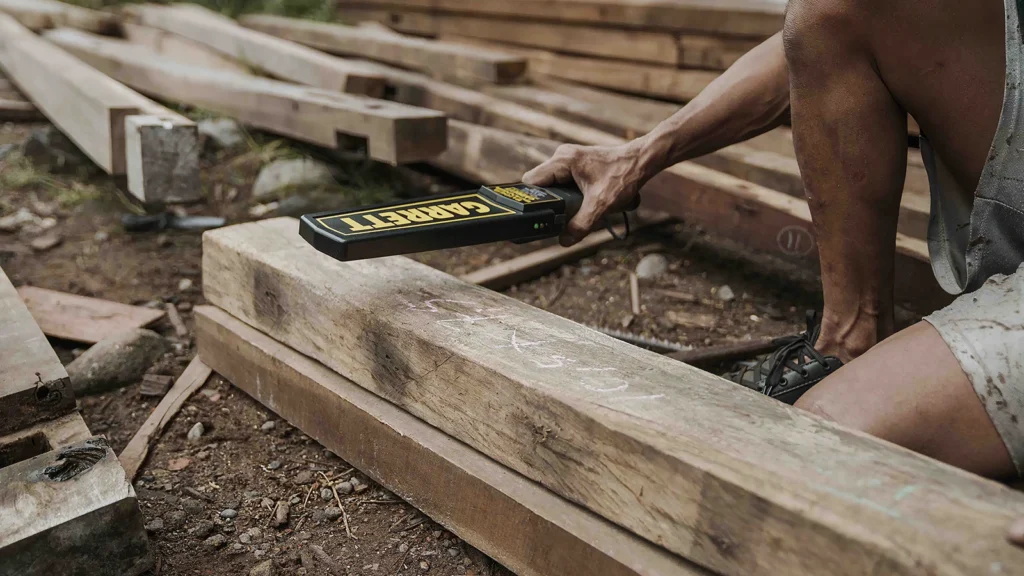
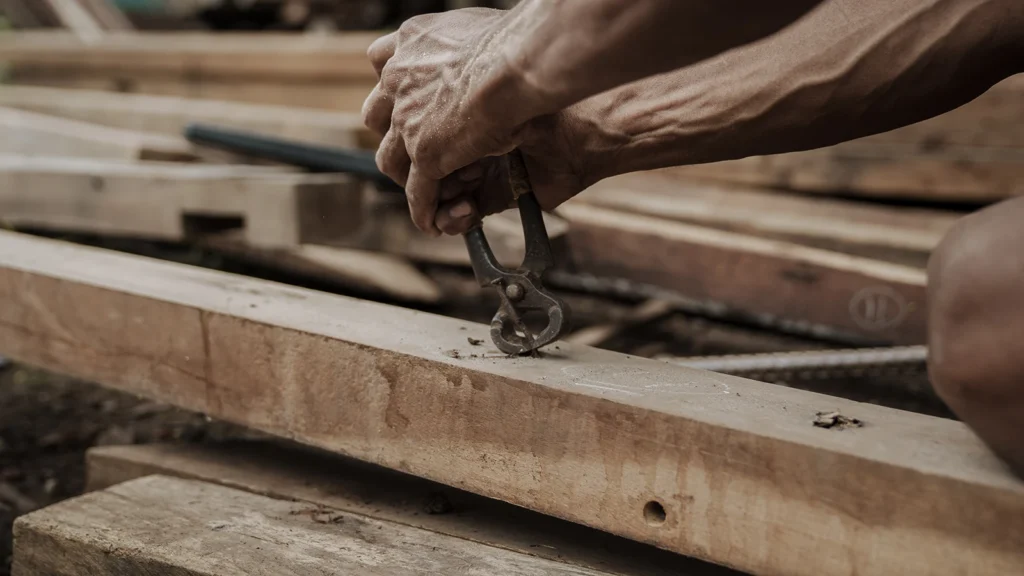
5. De-nailing and metal detection
Old timber often contains nails, screws, bolts and other metal fittings.
These must be removed before machining. Hidden metal can damage saw blades and machinery and may create safety risks.
Visual inspection is usually supported by metal detection.
6. Cleaning and initial processing
Surface dirt, old coatings and loose material are removed.
The outer surface may be lightly processed to reveal the condition of the timber beneath.
At this stage, the workshop can better assess cracks, previous fixing marks, colour and grain.
7. Moisture control
Even old timber needs to be checked for moisture.
Its moisture content may have changed during storage, transport or exposure to rain. Timber intended for furniture production should be dried and stabilised according to the intended application.
Moisture control helps reduce unnecessary movement after manufacturing.
8. Grading and selection
The timber is graded according to how it can be used.
For example:
- Long, stable sections may be selected for table components
- Straight-grained boards may be used for frames
- Smaller pieces may be suitable for panels or accessories
- Character-rich material may be selected for visible surfaces
- Structurally unsuitable pieces may be rejected
This stage requires judgement and experience.
Natural Character Versus Structural Defects
Reclaimed teak often includes marks from its previous life.
These may include:
- Nail holes
- Peg holes
- Colour variation
- Surface checking
- Old joint lines
- Saw marks
- Minor repairs
- Areas of weathering
Some of these characteristics can be retained as part of the visual story. Others must be removed or stabilised to protect the quality of the finished product.
The distinction between character and defect depends on:
- The furniture design
- The component’s structural role
- The expected finish
- The location of the mark
- Client preferences
- Safety and durability requirements
Luxury reclaimed furniture should not simply use old timber without selection. It should combine the authenticity of the material with disciplined craftsmanship.
Yield and Material Efficiency
Reclaimed timber does not arrive in standard, perfectly uniform dimensions.
A recovered beam may contain cracks, fixings or worn areas that reduce the amount of usable material. As a result, the usable yield can be lower than the total volume purchased.
Designers and manufacturers must account for:
- Cutting losses
- Defective sections
- Metal damage
- Inconsistent thicknesses
- Shorter usable lengths
- Colour matching
- Grain selection
- Prototype requirements
Efficient cutting plans and product design can help maximise the value of each board.
Smaller offcuts may also be reused for accessories, samples, handles or other components.
How Reclaimed Teak Influences Furniture Design
Reclaimed material can shape the way furniture is designed.
Rather than forcing every board into a standardised system, the designer may respond to the available dimensions and character.
This can influence:
- Tabletop construction
- Timber thickness
- Edge details
- Panel layout
- Joint placement
- Visible repairs
- Grain direction
- Colour variation
The best results balance material efficiency with visual refinement and structural performance.
FSC® Certification and Reclaimed Timber
FSC® certification provides an internationally recognised framework for responsible forest products and chain-of-custody management.
For reclaimed material, certification can help verify how timber is categorised, documented and controlled as it moves through the supply chain.
Certification alone does not replace good sourcing practice, but it can strengthen the systems used to manage material claims.
Nusantara Lifestyle’s reclaimed teak furniture is supported by FSC® certification alongside our own internal traceability process.
ORIGIN: Tracking the Timber Journey
Nusantara Lifestyle developed ORIGIN to provide clearer information about the journey of reclaimed teak.
The platform is designed to connect the finished furniture with stages such as:
- Original source
- Recovery
- Material selection
- Processing
- Manufacturing
- Quality control
This helps move sustainability communication beyond broad claims.
For clients, designers and project teams, traceability can add value by supporting:
- Material schedules
- Project sustainability reports
- Client presentations
- Hospitality storytelling
- Product provenance
- Internal environmental documentation
A piece of furniture can therefore be understood not only as a finished object, but as the next stage in a longer material life.

Questions to Ask a Reclaimed Timber Supplier
Before specifying reclaimed teak, consider asking:
- Where does the timber come from?
- How is the source documented?
- How is the species verified?
- How is the timber inspected?
- Is embedded metal removed and checked?
- How is moisture content managed?
- What defects are rejected?
- How is the material stored?
- Is the product independently certified?
- Can the material be traced to the finished item?
- How are sustainability claims supported?
Suppliers should be able to provide clear, realistic answers.
Be cautious of claims that are broad, vague or impossible to verify.
From Recovered Structure to Outdoor Furniture
Once the reclaimed teak has been sourced and prepared, it can be transformed into furniture designed for a new setting.
For outdoor applications, additional attention must be given to:
- Timber stability
- Drainage
- Exterior joinery
- Weather exposure
- Corrosion-resistant hardware
- Suitable finishes
- Cleaning and maintenance
- Outdoor upholstery
The sourcing story is important, but the final product must also perform.
Responsible material selection and high-quality construction should work together.

Reclaimed Teak by Nusantara Lifestyle
Nusantara Lifestyle creates custom reclaimed teak furniture for Australian and international projects.
Our approach combines:
- Reclaimed material sourcing
- FSC® certification
- ORIGIN traceability
- Design development
- Skilled manufacturing
- Moisture control
- Quality inspection
- Export packing
- Shipping coordination
By documenting where the timber came from and carefully preparing it for its next use, we aim to create furniture with both environmental value and long-term practical value.
To see how reclaimed teak can be used in exterior environments, read our guide to luxury reclaimed teak outdoor furniture for Australia.