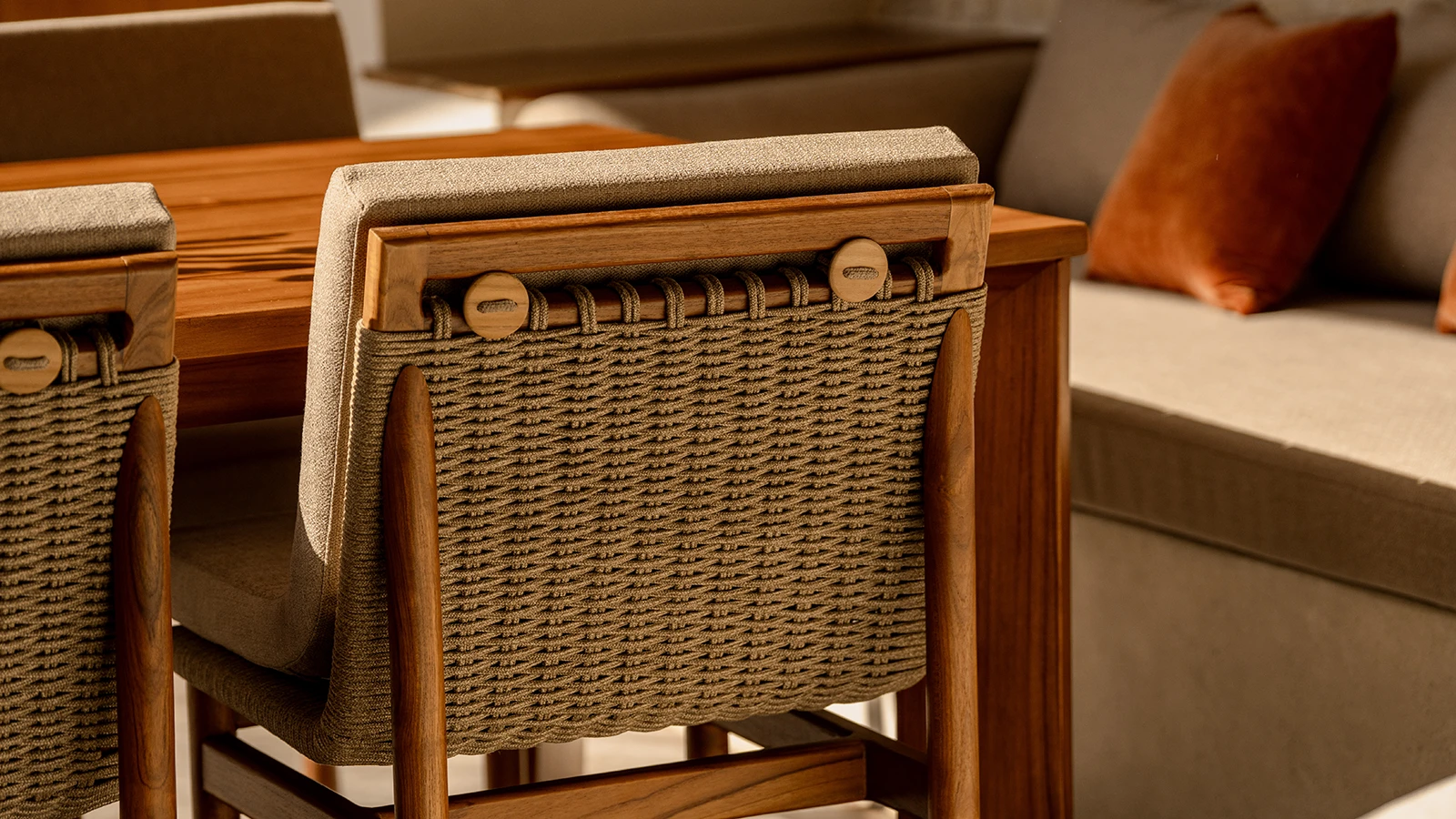
Outdoor furniture plays an important role in how guests experience a hotel, resort, restaurant or hospitality venue.
It must support the design concept, provide comfort and withstand repeated daily use. It may also need to cope with strong sunlight, rain, humidity, food and drink spills, frequent cleaning and regular movement by staff.
For Australian hospitality projects seeking a more distinctive and responsible material approach, reclaimed teak offers a combination of natural durability, warmth and long-term character.
Nusantara Lifestyle develops custom reclaimed teak commercial outdoor furniture for hotels, resorts, restaurants, villas and other design-led projects.
What Makes Commercial Outdoor Furniture Different?
Furniture designed for a private home does not always meet the demands of a commercial environment.
Hospitality furniture may be used by hundreds of different guests. Chairs are regularly moved, tables are cleaned several times a day, and lounge furniture may remain outdoors for long periods.
Commercial outdoor furniture therefore needs to consider:
- Frequency of use
- Guest comfort
- Structural strength
- Stability
- Ease of cleaning
- Weather exposure
- Maintenance requirements
- Upholstery performance
- Replacement components
- Delivery and installation logistics
- Consistency across larger quantities
A visually attractive product may still be unsuitable if it is difficult to maintain or cannot withstand operational use.
Why Reclaimed Teak Works for Hospitality Environments
Teak has a long history of use in exterior furniture and architectural applications.
Its dense grain and natural oil content help it perform in outdoor environments. When properly selected, dried and constructed, reclaimed teak can be suitable for covered terraces, restaurant courtyards, pool decks, resort gardens and other exterior areas.
Reclaimed teak also brings visual depth to hospitality spaces. Each board may include subtle variation in colour, grain and previous use, creating furniture with a stronger sense of material authenticity.
This can support projects that aim to create:
- A connection with natural surroundings
- A relaxed but high-quality guest experience
- A warmer alternative to metal or plastic furniture
- A distinctive local or regional material story
- A more environmentally considered design concept
- Furniture that develops character over time
Common Applications for Reclaimed Teak Commercial Furniture
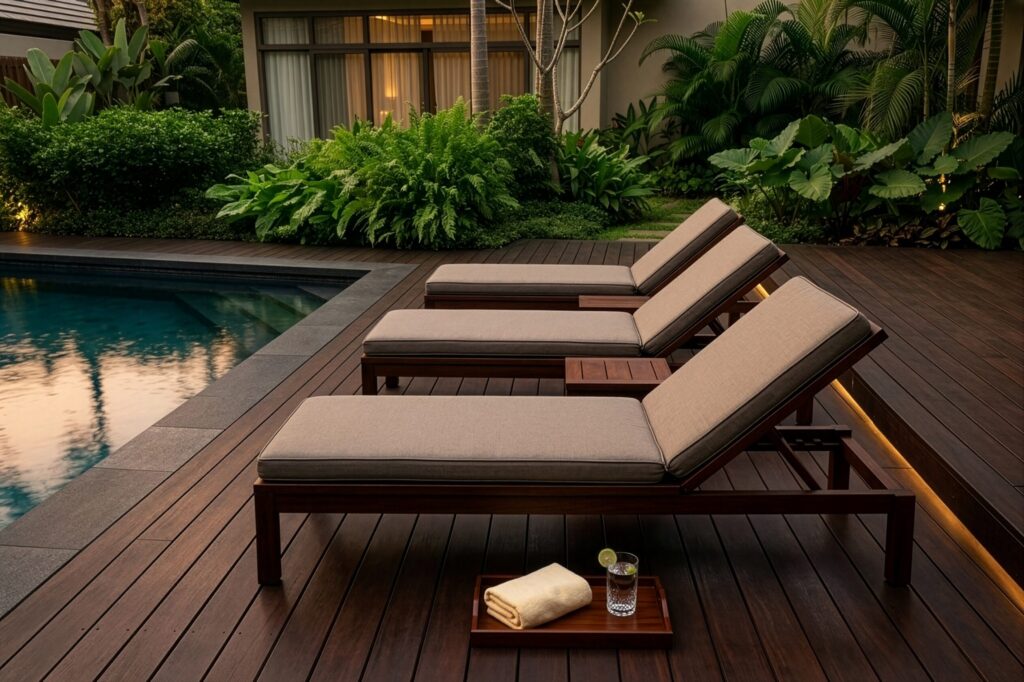
Custom reclaimed teak can be used across many areas of a hospitality project.
Restaurants and cafés
Possible items include:
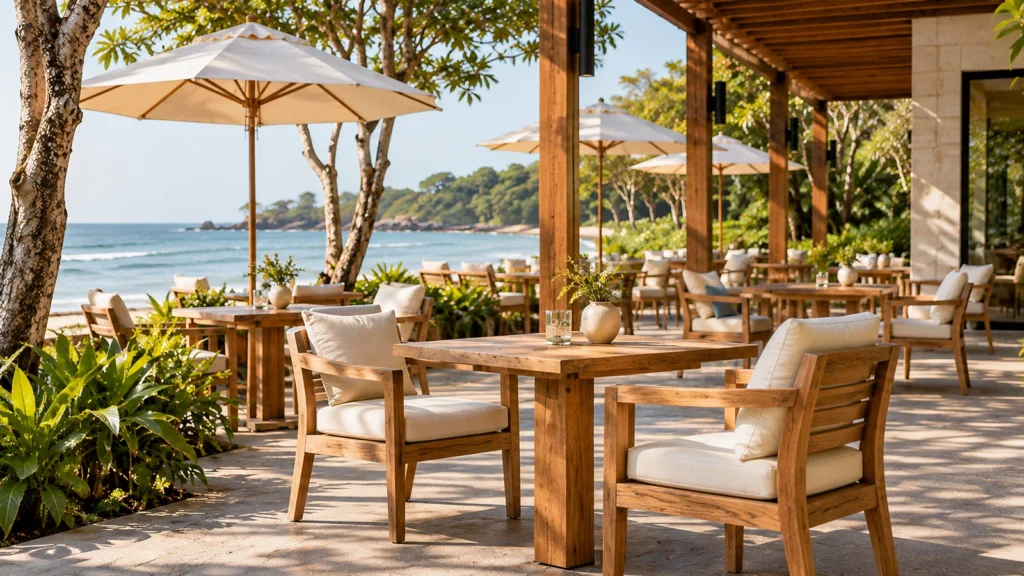
- Outdoor dining tables
- Two-person café tables
- Communal dining tables
- Dining chairs
- Carver chairs
- Benches
- Bar tables
- Bar stools
- Host stands
- Service stations
Hotels and resorts
Common furniture types include:
- Poolside loungers
- Daybeds
- Lounge chairs
- Coffee tables
- Side tables
- Outdoor sofas
- Balcony furniture
- Dining settings
- Reception terrace furniture
- Spa and wellness furniture
Villas and serviced accommodation
Reclaimed teak can be used for:
- Private outdoor dining areas
- Pool decks
- Bedroom terraces
- Rooftop spaces
- Garden lounges
- Built-in benches
- Outdoor kitchens
- Custom storage
A consistent furniture language can help connect the different spaces throughout a hospitality property.
Designing for Commercial Durability
Commercial durability begins during the design stage.
A chair intended for a high-volume restaurant may require different proportions, joints and reinforcement from a chair used occasionally on a residential balcony.
Important design considerations include:
Structural joinery
Traditional timber joints can be combined with carefully designed reinforcement where required. Connections should account for repeated movement, weight loading and the natural expansion and contraction of solid timber.
Stable proportions
Furniture should feel stable without appearing unnecessarily heavy. Table bases, chair legs and armrests must be appropriately dimensioned for the intended use.
Drainage
Outdoor furniture should not trap water unnecessarily. Slatted seats, appropriate gaps and carefully considered construction can help water drain and surfaces dry more efficiently.
Replaceable components
Cushions, glides, hardware and selected furniture parts may eventually need to be replaced. Designing with future maintenance in mind can extend the service life of the overall product.
Appropriate hardware
Hardware must be selected according to the environment. Coastal or poolside settings may require stainless steel or other corrosion-resistant fittings.
Comfort and Guest Experience
Commercial strength should not come at the expense of comfort.
Guests may sit at a restaurant table for several hours or spend much of the day on a resort lounge chair. Seat height, depth, back angle, armrest position and cushion density all contribute to the experience.
Before full production, prototypes can be reviewed for:
- Seat comfort
- Back support
- Dining height
- Arm clearance
- Cushion thickness
- Ease of sitting and standing
- Stability on the intended floor surface
- Overall visual proportion
Prototype development is especially useful for custom hospitality collections or larger orders.
Outdoor Upholstery and Cushion Selection
Upholstery must be selected according to the project environment.
Considerations include:
- UV resistance
- Water resistance
- Colourfastness
- Mould and mildew resistance
- Ease of cleaning
- Stain resistance
- Foam drainage
- Removable covers
- Replacement availability
No outdoor fabric is completely maintenance-free.
Cushions may still need to be removed during heavy rain, cleaned after spills and stored during long periods of non-use. The project’s operational team should understand the recommended care routine before installation.
Designing for Housekeeping and Operations
Furniture should work for the people who maintain and operate the property, not only for the design presentation.
During development, project teams should consider:
- How often furniture will be moved
- Whether chairs need to stack
- Where cushions will be stored
- How tables will be cleaned
- Whether products can pass through lifts and doorways
- Whether components can be replaced locally
- How damaged items will be repaired
- Whether furniture needs to be stored seasonally
A beautiful design that creates unnecessary operational problems may not perform successfully over time.
Reclaimed Teak for Australian Coastal Projects
Many Australian hospitality projects are located close to the ocean.
Coastal environments can expose furniture to salt air, high winds, humidity and intense sunlight. Timber, hardware and upholstery should all be specified for these conditions.
For demanding coastal locations:
- Use corrosion-resistant hardware
- Select suitable exterior-grade fabrics
- Allow for regular salt removal
- Avoid construction details that trap moisture
- Establish a clear maintenance schedule
- Consider breathable furniture covers
- Inspect joints and fittings periodically
The project location should be discussed before production so that the material and construction details can respond appropriately.
Custom Furniture Versus Standard Catalogue Products
Catalogue furniture can provide quick purchasing and predictable dimensions. However, it may not fully respond to a project’s architectural language, brand identity or operational needs.
Custom commercial furniture allows the design team to refine:
- Dimensions
- Timber thicknesses
- Seat comfort
- Finish colour
- Upholstery
- Hardware
- Joinery
- Branding details
- Quantities
- Modular layouts
- Packing requirements
Customisation is particularly useful for boutique hotels, luxury resorts and restaurants that want a recognisable guest experience rather than a generic furniture package.
Samples and Prototypes
Samples and prototypes reduce risk before larger-scale production.
A sample process may include:
- Reviewing the initial concept or reference
- Developing technical drawings
- Selecting the reclaimed teak
- Producing finish samples
- Creating a full-size prototype
- Reviewing comfort and construction
- Revising the design
- Approving the production standard
Approved samples can then be retained as references for quality control during manufacturing.
Quality Control During Production
Consistency is essential for commercial orders.
Although reclaimed timber naturally varies, the overall furniture collection should remain balanced in dimensions, finish, construction and visual character.
Quality control may assess:
- Product dimensions
- Joint construction
- Surface preparation
- Moisture content
- Stability
- Finish consistency
- Hardware
- Cushion fit
- Packaging
- Approved sample compliance
Quality reporting can also be provided during longer production programmes.
Packing, Shipping and Installation
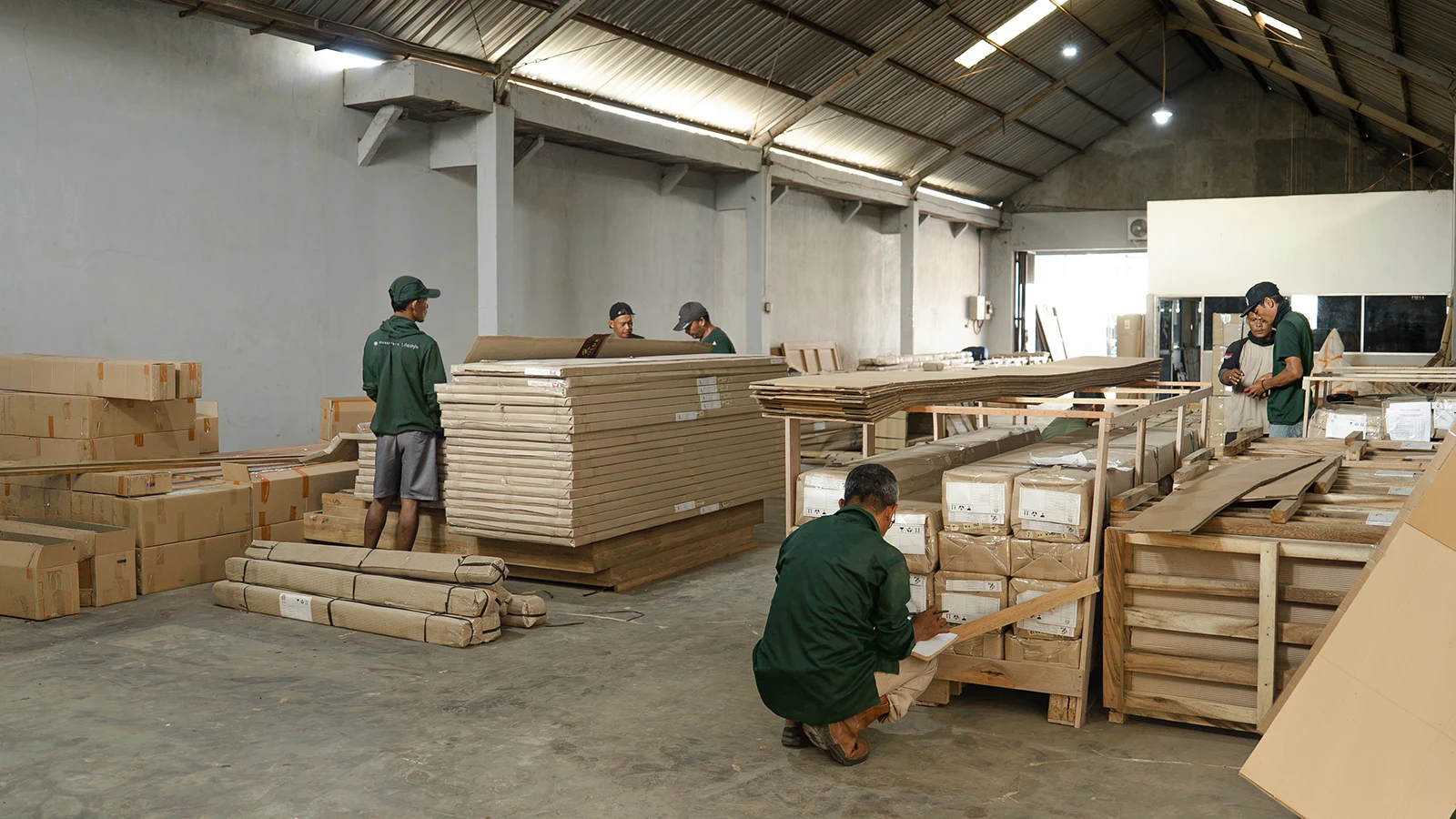
Commercial furniture planning should include more than manufacturing.
For Australian projects, the delivery process may involve:
- Export documentation
- Protective wrapping
- Custom crating
- Container planning
- Freight coordination
- Customs and import procedures
- Local transport
- Site access
- Assembly
- Placement
- Final inspection
Large tables, modular lounges and fixed outdoor elements should be checked against access routes before shipping.
Furniture may need to be designed in sections to simplify transport and installation.
Maintenance Planning for Hospitality Furniture
Outdoor furniture should be supported by a practical maintenance plan.
This may include:
- Routine cleaning
- Cushion storage
- Inspection of joints and hardware
- Surface refreshing
- Reapplication of a protective finish
- Replacement of glides or fittings
- Repair of damaged components
- Annual condition reviews
Allowing timber to develop a natural silver-grey patina may reduce colour-maintenance requirements, although regular cleaning will still be necessary.
For detailed care guidance, read our article on outdoor teak furniture maintenance in Australia.
Traceability and Responsible Material Selection
Sustainability claims should be supported by clear material information.
Nusantara Lifestyle works exclusively with reclaimed teak and other properly sustainable materials. Our furniture is supported by FSC® certification and ORIGIN, our internal traceability platform.
ORIGIN is designed to provide greater visibility into the timber’s journey—from the original structure through recovery, selection and manufacturing.
For commercial clients, this can support project storytelling, sustainability communication and material documentation.
Custom Reclaimed Teak Furniture by Nusantara Lifestyle
Nusantara Lifestyle works with architects, interior designers, developers and hospitality operators to develop custom reclaimed teak furniture.
Our project support can include:
- Design development
- Technical drawings
- Material and finish samples
- Prototype production
- Custom manufacturing
- Quality control
- Packing and crating
- Export documentation
- Shipping coordination
- Installation planning
By combining reclaimed materials with project-specific design and commercial construction, we create outdoor furniture intended to support both the guest experience and the long-term operation of the property.
To understand more about the material itself, read our guide to luxury reclaimed teak outdoor furniture for Australia.