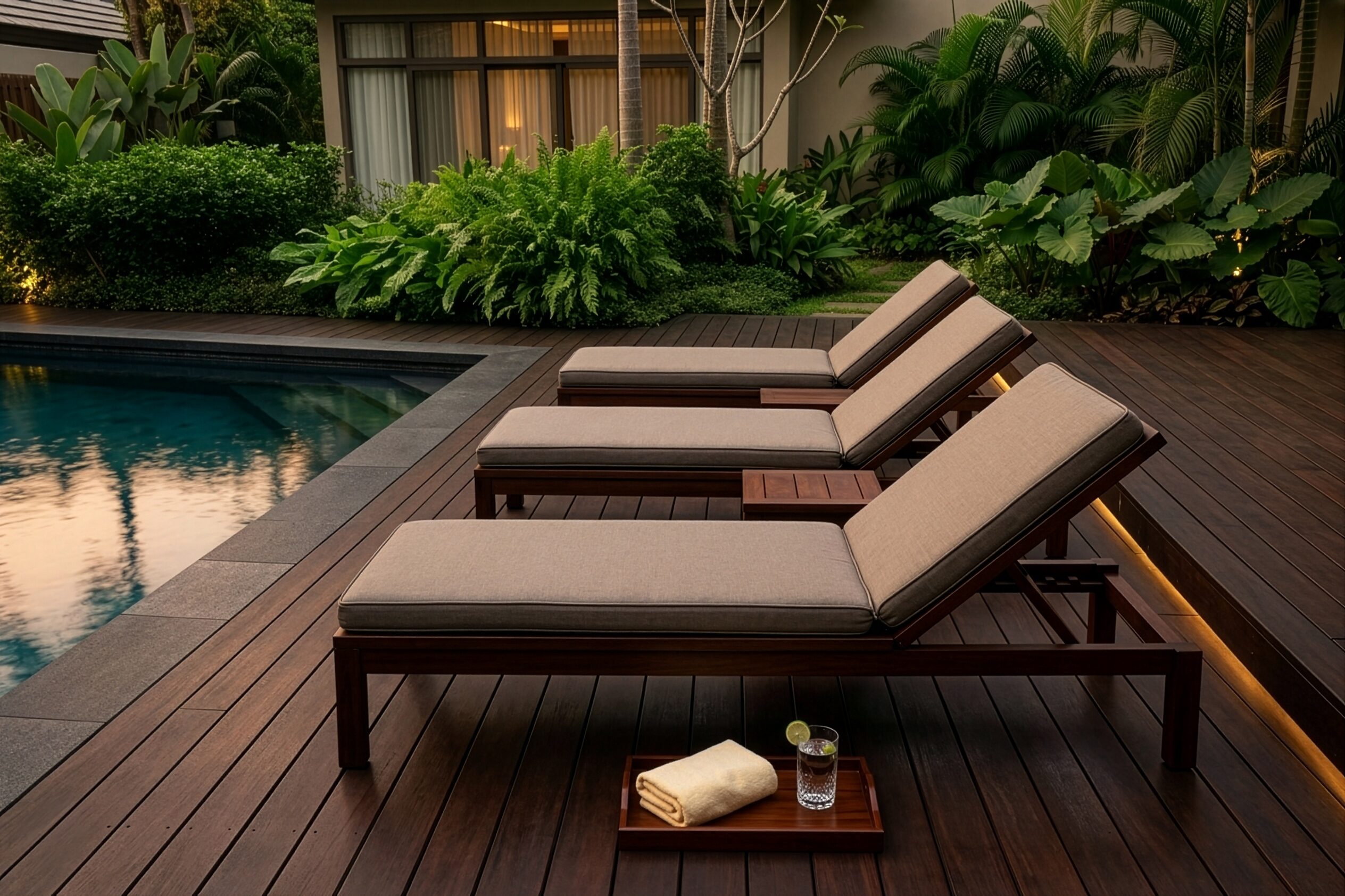
Walk through any commercial outdoor furniture showroom and you’ll hear the same things:
Weather resistance. Durability. Commercial grade. “Sustainable materials.”
That all sounds great, doesn’t it? But here’s the question that rarely gets a straight answer:
How much of it is actually built to last — and how much of it is built to be replaced?
Because in commercial settings, that’s the whole game: the replacement cycle.
What is the most sustainable material for commercial outdoor furniture?
Reclaimed timber — especially reclaimed teak — is one of the most sustainable options for commercial outdoor furniture. It avoids new logging, requires less processing, and lasts significantly longer in real-world conditions, reducing replacement cycles and overall environmental impact.
In simple terms, the replacement cycle is how often something gets replaced with something new. In hotels, offices, and restaurants, that can often mean replacing furniture every few years — not because it’s broken, but because it’s started to look worn, dated, or wasn’t built to last in the first place.
A lot of commercial furniture is made to simply fulfill a brief and stay on budget, not to age well. So the cycle repeats: discard, replace, repeat.
It’s easy to see this is a constant drain on materials, time, and cost — not to mention the environmental impact.
But if you refuse to be a part of that cycle, you start creating heavy-traffic environments that actually hold up, instead of needing to start over every few years.
What is commercial outdoor furniture?
Commercial outdoor furniture is designed for high-use environments such as hotels, resorts, restaurants, and public spaces. It needs to handle constant use, weather exposure, and operational wear while maintaining structural integrity over time.
In other words — it gets absolutely hammered. Sun, rain, salt, people dragging it around, spilling things on it… every single day.
So yeah, materials matter. A lot.
Why teak is used in commercial outdoor furniture
Teak earns its reputation. It’s naturally loaded with oils, which makes it:
- Resistant to moisture
- Less prone to rot and insects
- Stable in humid and coastal environments
That’s why you see it everywhere from beach clubs to five-star resorts. But here’s where most suppliers stop talking — right when it gets interesting.
Is all teak sustainable?
No — not even close. Reclaimed teak, which is the only wood we use at Nusantara Lifestyle, is far more sustainable than plantation or newly harvested teak because it already exists, meaning it avoids the numerous environmental impacts of new logging and processing.
There’s a big difference between:
- Plantation teak
- Freshly cut teak
- Genuinely reclaimed teak
Reclaimed teak has already done decades of hard work. It’s naturally dried over all this time, sometimes even close to a century, and doesn’t require weeks in an energy-intensive kiln like new teak does. This makes it stronger, more stable, and a hell of a lot more reliable.
And importantly — no forests need to be cleared to access it.
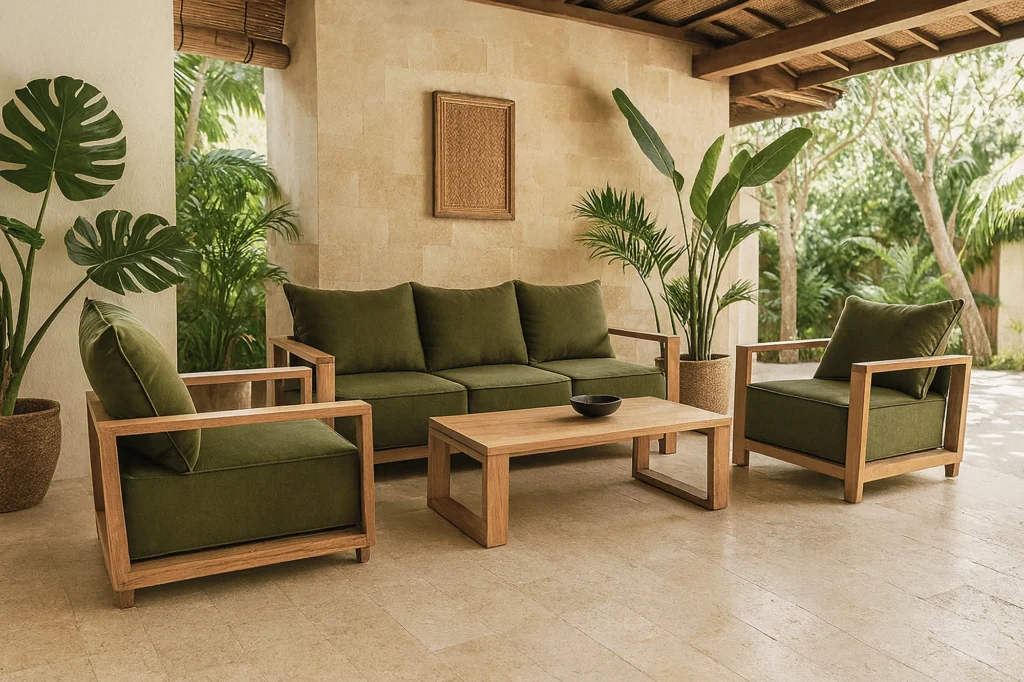
How long should commercial outdoor furniture last?
High-quality commercial outdoor furniture should last 10 to 20 years or more with proper maintenance. Materials like reclaimed teak significantly extend lifespan compared to engineered or plantation-based alternatives, reducing the need for frequent replacement.
If you’re replacing furniture every few years, it’s not sustainable. Simple as that.
What “commercial grade” doesn’t tell you
You’ll hear a lot about:
- Joinery
- Stainless steel hardware
- Load ratings
- Factory capacity
All good things. But none of it answers the real question:
How long will this actually stay in use before it starts showing its wear and tear? How long until the replacement cycle kicks in?
Because you can build something “commercial grade” … and still end up replacing it way too soon.
Where “sustainable outdoor furniture” starts to smell a bit off
A lot of furniture gets labelled “sustainable” simply because it uses wood — sometimes even reclaimed timber — rather than materials such as plastic or synthetic wicker.
Apart from the fact that these days most wood used for outdoor commercial furniture comes from plantations, we urge you to look closer at the other elements of those deckchairs and day beds:
- Synthetic outdoor fabrics
- Petrochemical foam inserts
- Plastic-based coatings
Right. So, if it’s reclaimed, the wooden frame might be doing the right thing … but everything sitting on top of it isn’t.
Let’s not dress it up — that’s not fully sustainable. That’s a mixed bag that falls too close to the greenwashing basket. Calling the whole thing “eco-friendly” is therefore doing some pretty heavy lifting.
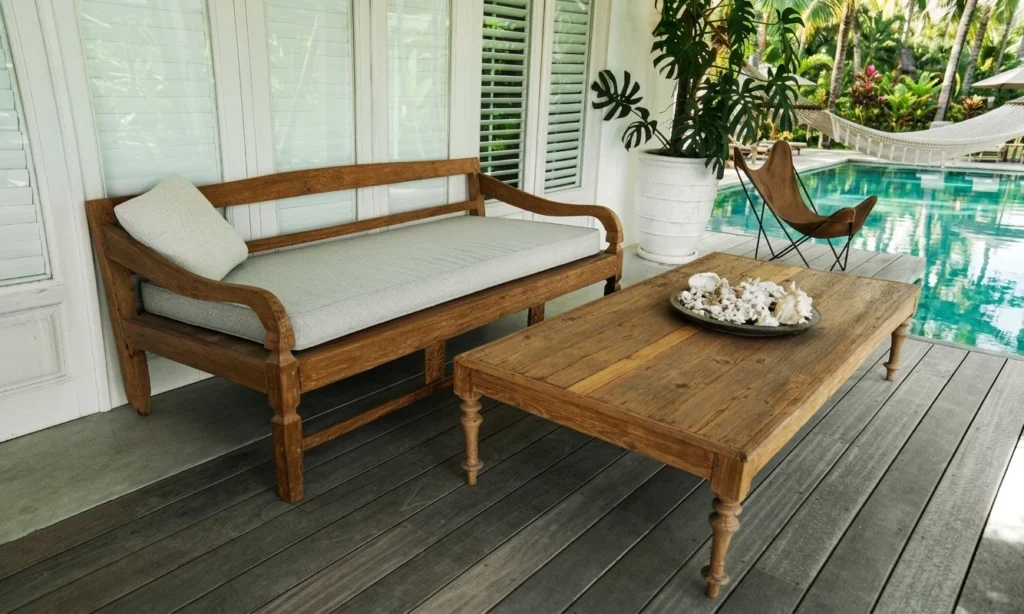
Not all outdoor cushions are the same
This is a huge blind spot in the industry, as most “commercial grade” cushions use:
- Quick-dry foam
- Solution-dyed acrylic fabrics
They perform well. No doubt. But they’re also:
- Petrochemical-based
- Hard to recycle
- Not biodegradable
- Likely to be replaced before the wooden frame
At Nusantara Lifestyle, we’ve gone a different way. We use natural latex instead of synthetic foam — a renewable material that’s breathable, durable, and doesn’t rely on petroleum.
For upholstery, we use recycled fabric from Texstyle, made from post-consumer plastic bottles.
Is it perfect? No. Is it better? Absolutely.
Because we’re not just ticking a box on the timber — we’re looking at the whole product.
Walk the walk, don’t just talk the talk.
Design matters — but real life matters more
Sure, it needs to look good. But reality soon kicks in:
- Sun exposure
- Rain cycles
- Salt air
- Constant use
That’s when you find out what you actually paid for.
Maintenance vs replacement
All outdoor furniture needs maintenance.
With teak, you can:
- Let it weather naturally (looks bloody good, by the way)
- Or seal it to keep the original tone
Either way, the key difference is this:
You’re maintaining it — not constantly replacing it.
Big difference.
So what actually counts as sustainable?
Strip it back:
- Are you using new materials or existing ones?
- How much work did it take to make them usable?
- How long will they stay in use?
- How often will they be replaced?
If you can’t answer those properly, it’s probably greenwashing.
The bottom line
Commercial outdoor furniture is a long-term investment.
And while the industry loves talking about specs, performance, and scale, it doesn’t always talk honestly about:
- Replacement cycles
- Real material impact
- Where sustainability claims fall short
Reclaimed teak — when it’s genuinely reclaimed — solves a big part of that. As do non-greenwashing practices such as sourcing recycled materials for cushions, like we do at Nusantara Lifestyle.
Everything else?
Yeah… worth questioning.
If you’re keen to learn more, check out the Custom page on our website. Or, if you want to get straight into being serious about the sustainability of your space, we would love to have a chat.