Walk into any showroom or scroll through options online, and it becomes obvious pretty quickly… furniture or flooring made from reclaimed teak sits at the higher end of the price range. We’re not going to pretend otherwise.
People usually assume the same thing: it’s higher because of branding, profit margins, maybe a bit of “green tax”.
But that’s not really what’s going on.
Because with reclaimed teak, you’re not just paying for a material. You’re paying for everything that had to happen before that material even became usable again.
In simple terms: reclaimed teak costs more upfront, but it lasts significantly longer — making it a lower-cost option over time.
Why is reclaimed teak furniture more expensive?
Reclaimed teak is more expensive because it must be sourced from old structures, carefully dismantled, cleaned, and reprocessed, and uses older, denser timber that is more durable and stable than newly harvested wood.
It Starts With Salvaging — Not Supply Chains
Reclaimed teak doesn’t come from a plantation or a catalogue.
It comes from old houses, boats, or other structures that were built decades ago, often using old-growth teak that simply isn’t available anymore.
Unlike cheap furniture that’s slapped together in factories, that means:
- No consistent supply
- No standard sizing
- No large-scale harvesting
Every plank of wood is sourced, not produced.
It’s easy to see why that alone changes the economics completely.
You’re Not Just Buying Timber
Before the reclaimed teak we use at Nusantara Lifestyle becomes furniture or flooring, or other things like decking, cladding or homewares, it goes through a multi-stage, hands-on process.
It’s not on an industrial scale, it’s not automated, and it’s entirely manual.
This includes:
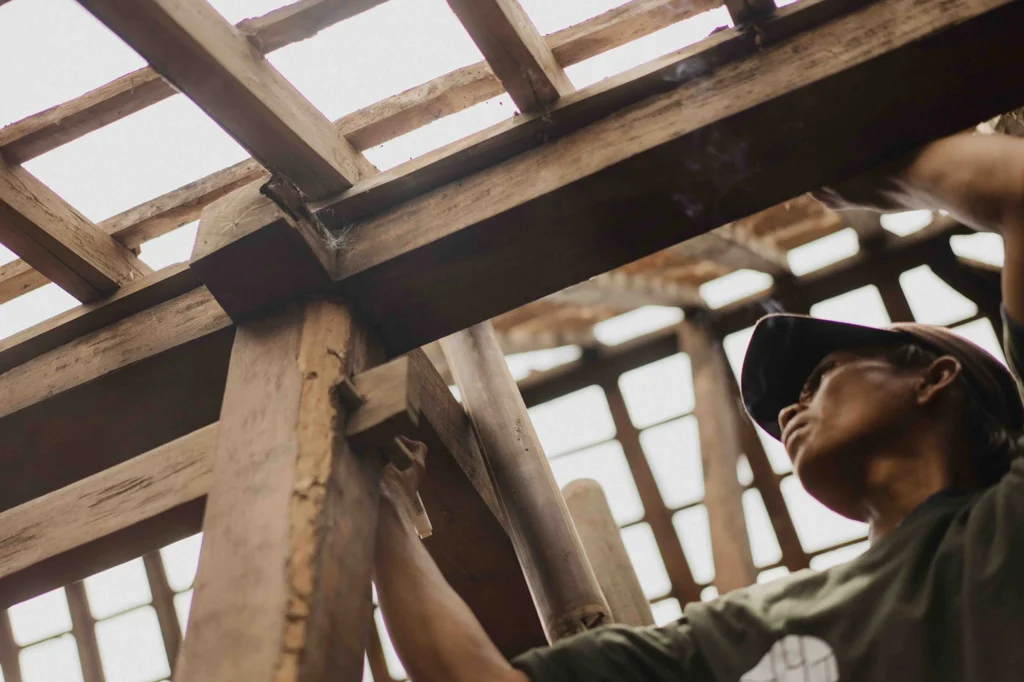
- Careful dismantling of old structures
- Grading the usable timber
- Removing nails, screws, and embedded debris
- Re-cutting and shaping into workable material
By the time it’s ready to be turned into furniture or something else, it’s already gone through more handling than most new timber ever will.
So you can easily see why this processing adds to the upfront cost. But remember, if you are willing to think big picture and weigh up the costs over the long-term, reclaimed teak will always come out on top.
(If you’d like to see exactly how we reclaim our teak at Nusantara Lifestyle, check out this short film we made in Yogyakarta, Central Java.)
Old Teak Performs Differently
This is the part that often gets overlooked.
Older teak — especially from decades-old structures — is denser, with a tighter grain and higher natural oil content than younger plantation-grown timber.
In practical terms, that means:
- Better resistance to moisture and humidity
- Greater dimensional stability (less warping and movement)
- Longer lifespan, especially in outdoor or coastal environments
How long does reclaimed teak last?
Reclaimed teak will last decades due to its dense grain, natural oil content, and resistance to moisture, making it more durable than most plantation-grown timber.
If you’d like to learn about all the reasons why it’s so much more durable, check out this post.
Handmade Not Factory-Made
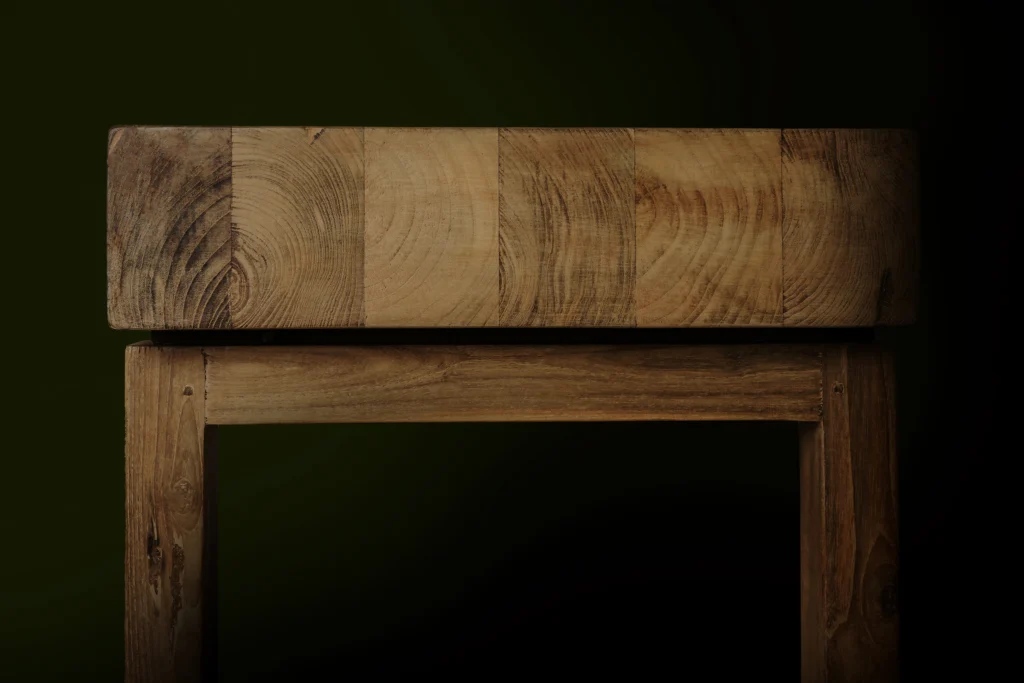
With reclaimed teak, there’s no such thing as perfectly uniform boards. Each piece is slightly different in grain and density.
Which means:
- More precise joinery is required
- More time is spent selecting and matching pieces
- Less reliance on automated production
You can’t shortcut that without compromising the end result, which is why labour becomes a bigger part of the equation, so it’s easy to see how this also contributes to cost.
The Hidden Cost of Cheaper Alternatives
This is where things get a bit less obvious.
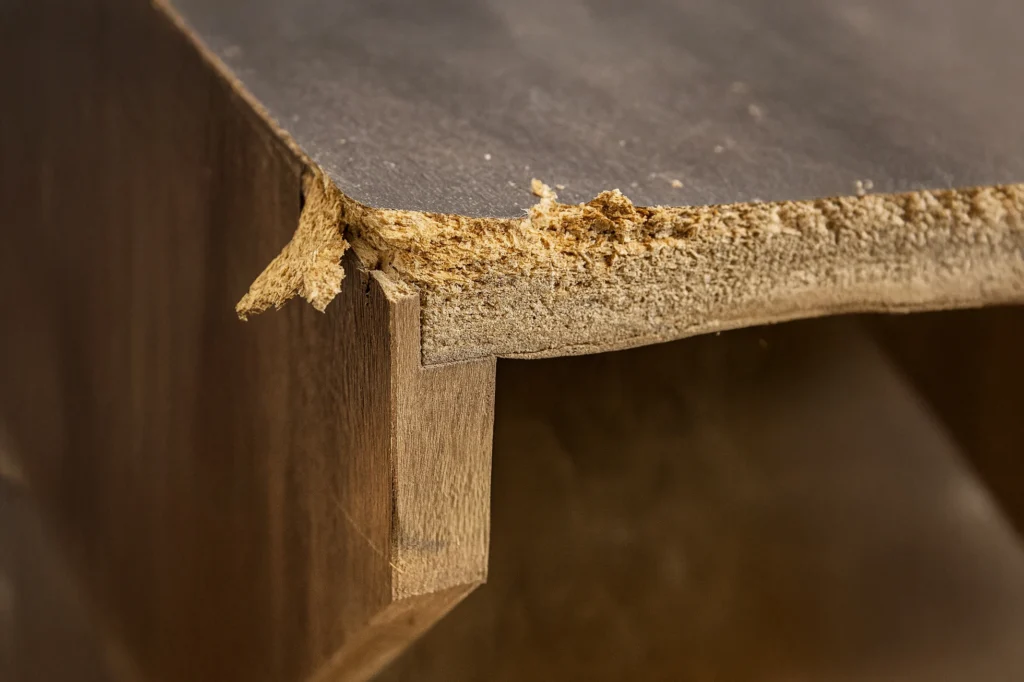
Lower-cost options — whether it’s plantation teak, veneers, or synthetic materials, you know, the kind of cheap factory-made furniture you find at big furniture stores — are typically designed around efficiency and scalability.
In simpler terms, they’re built to prioritise faster tree growth cycles, standardised production, and automation wherever possible, which all equals a lower upfront cost.
But often:
- Lower density timber wears out faster
- Veneers chip and warp easily and can’t be repaired once damaged
- Synthetic materials degrade quickly over time
Which feeds into something most buyers don’t think about upfront: the replacement cycle.
Furniture that needs to be replaced every few years isn’t cheaper — it’s just cheaper at the start. And there’s a term for this! It’s false economy.
Cost Per Year vs Upfront Cost
This is the shift that changes how reclaimed teak is perceived by sceptics.
Instead of asking: “How much does it cost?”
It’s more useful to ask: “How long will it last?”
Reclaimed teak furniture and flooring, when properly made, can last decades. When you spread that cost over time, the cost per year often ends up lower than repeatedly replacing lower-cost alternatives.
Yes, There’s Shipping — But Here’s the Reality
For buyers in places like Australia, there’s another question that comes up: transport.
Our reclaimed teak furniture is produced in Indonesia, so yes, if you’re not here too, it needs to be shipped.
But compared to:
- Plantation timber harvesting
- Industrial processing
- Kiln drying
- Mass manufacturing
- Fast furniture that can’t be fixed quickly ending up in landfill
…the overall environmental impact is much lower.
Plus, at Nusantara Lifestyle, our reclaimed teak is FSC Recycled certified, which means its independently verified as responsibly sourced.
So, Is Reclaimed Teak Worth It?
If any of these are on your list:
- Long-term durability
- High-traffic environments
- Outdoor or coastal conditions
- Reducing the need for replacement
- Minimising environmental impact
- Genuine sustainability
Reclaimed teak makes a lot more sense over time.
No, it’s not cheaper now, but it is in the long-term. It’s not only an entirely different material — reclaimed teak is also built on an entirely different set of priorities.
Frequently Asked Questions
Is reclaimed teak stronger than new teak?
In many cases, yes. Older teak is typically denser and more stable than plantation-grown timber, making it more durable, especially in outdoor environments.
Does reclaimed teak last longer?
When properly processed and maintained, reclaimed teak can last for decades, often outlasting many alternative materials.
Why is teak more expensive than other wood, such as pine?
Teak is a hardwood that grows slowly, has natural oils that improve durability, and requires more time and resources to source and process
Is reclaimed wood genuinely sustainable?
It can be. Reclaimed wood reduces the need for new logging, but sustainability also depends on how the material is sourced and processed.
Can reclaimed teak be used outdoors?
Yes. Its natural resistance to moisture and pests makes it one of the most suitable woods for outdoor use.
Ready to invest in something that’s built to last?
If you’re considering reclaimed teak for your space, get in touch. We’re also happy to talk through your project, your environment, and whether it’s the right fit during a free online consultation — no pressure, just honest advice.