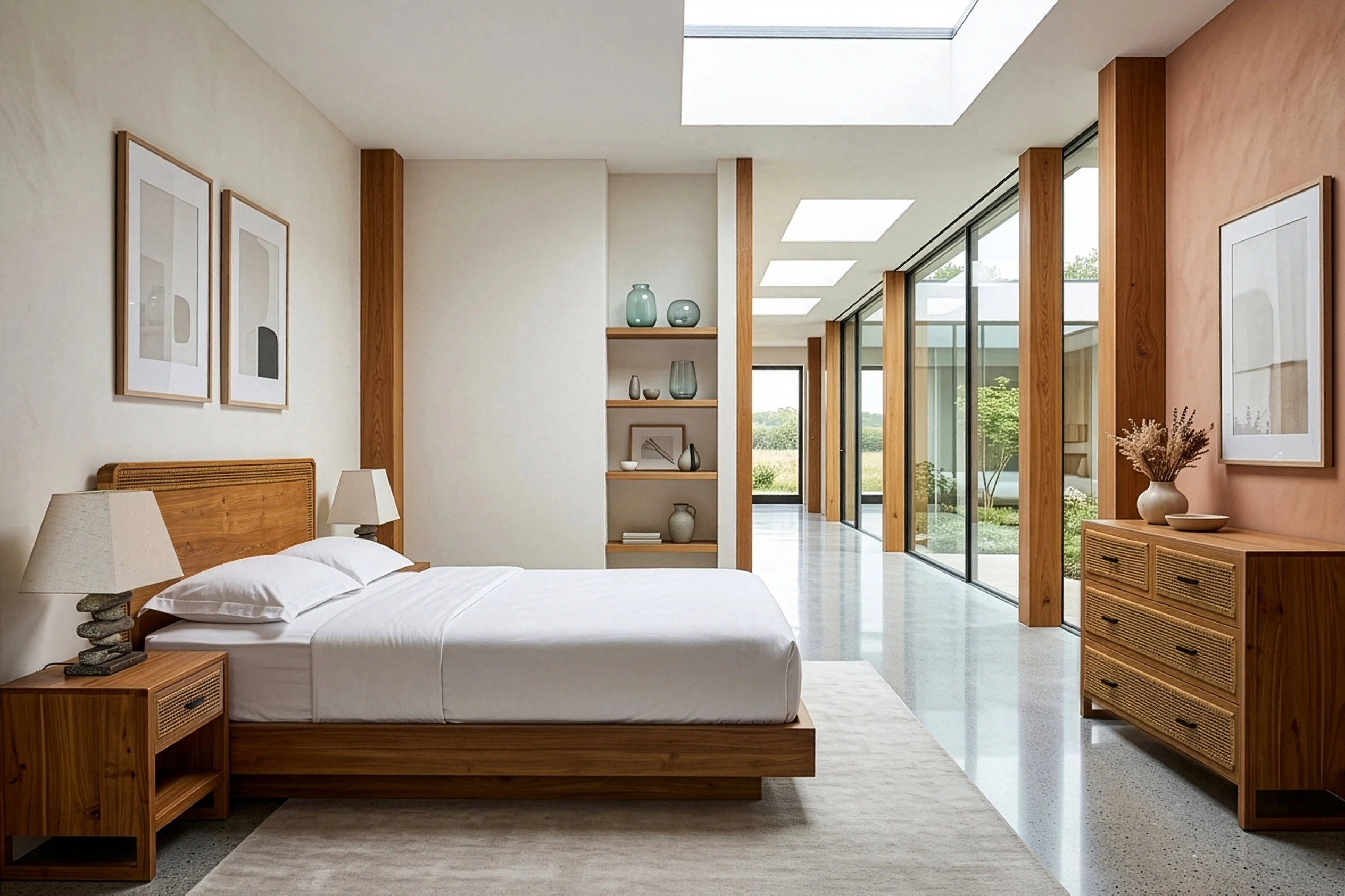
In Australia, all too often, people talk about sustainability in the hotel sector in pretty much the same way. It’s all solar panels, smart HVAC systems (heating, ventilation, and air conditioning), signs encouraging linen and towel reuse, water-saving fixtures, and refillable bathroom amenities replacing disposable plastic ones.
All important, no doubt.
But there’s a pretty big piece of the carbon puzzle that rarely gets mentioned in hotel design briefs: the furniture, which is something we see firsthand at Nusantara Lifestyle.
How Does Furniture Affect a Hotel’s Carbon Footprint?
Furniture impacts a hotel’s carbon footprint through embodied carbon, material sourcing, and replacement cycles.
In Australian hotels, key sources of emissions include:
- Raw material extraction (timber, engineered boards)
- Manufacturing and processing
- Transport and installation
- Frequent replacement during refurbishments (every 5–10 years)
Because furniture is replaced multiple times, its total carbon impact compounds over time—making durability and material choice critical to low-carbon hotel design.
The Blind Spot in “Sustainable” Hotels
In Australia, sustainability frameworks such Green Star from the Green Building Council of Australia have pushed the industry forward. That’s a good thing.
But they tend to focus heavily on operational performance:
- energy efficiency
- water use
- building systems
What often gets overlooked?
The materials inside the space.
Because if your hotel is filled with short-life furniture, you’re locking in future waste — and future emissions — from day one.
What Drives a Hotel’s Carbon Footprint (Beyond Energy Use)
Energy gets most of the attention. But when you zoom out, a big chunk of a hotel’s footprint comes from something else entirely:
what it’s made of.
1. Material Extraction
A lot of furniture in Australian hotel fitouts still relies on:
- plantation timber
- engineered boards (MDF, plywood)
- veneers designed to mimic solid wood
Plantation timber often gets sold as sustainable. But monoculture plantations come with their own serious issues — heavy water use, lots of chemicals, and reduced biodiversity. We’ve already explored the differences between plantation timber and recycled timber so we won’t go too deep into them here, but the main point to remember is that genuine sustainability should only be applied to using what already exists.
2. Manufacturing and Supply Chains
Most hotel furniture isn’t made locally.
It’s manufactured offshore, processed in energy-intensive facilities, and shipped to Australia as part of large-scale procurement packages.
That’s a lot of embedded carbon before the furniture even arrives on site.
3. The Refurbishment Cycle (This Is the Big One)
In Australia’s competitive hospitality market, hotels are often refurbished every five to ten years to keep up with design trends.
But here’s the question that doesn’t get asked enough:
What happens to all that furniture?
Most of it doesn’t get repaired. Most of it doesn’t get reused.
It gets replaced.
Which means the entire cycle — materials, manufacturing, transport — starts all over again.
The Problem With “Hotel-Grade” Furniture
Let’s call it what it is.
A lot of so-called “hotel-grade” furniture is designed for:
- cost efficiency
- speed of procurement
- visual consistency across rooms
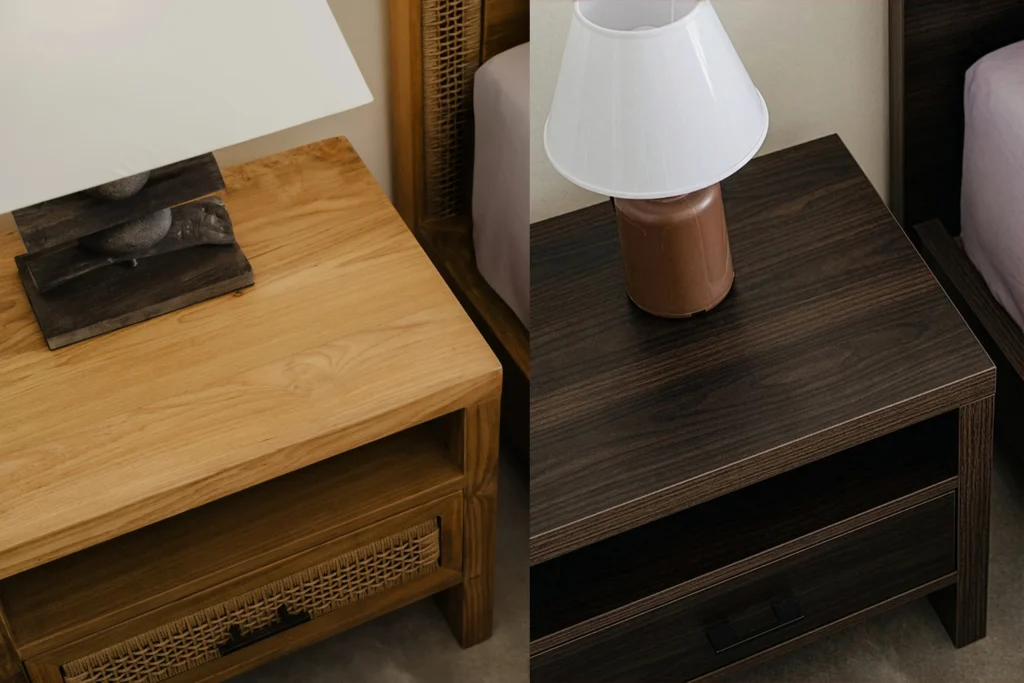
Not long-term durability. So after a few years of constant use — guests, luggage, cleaning, repeat — it starts to show its limits.
Why Material Choice Matters More Than You Think
If furniture is replaced multiple times over the life of a hotel, its carbon impact multiplies.
So the goal shouldn’t be just choosing something that claims to be sustainable on paper.
It’s choosing something that lasts.
Because the most sustainable piece of furniture isn’t the one with the best certification — it’s the one you don’t have to replace.
Why Reclaimed Teak Furniture Makes Sense for Hotels in Australia
This is where material choice shifts the equation.
Reclaimed teak has already:
- stood for decades (sometimes even close to a century)
- naturally dried and stabilised over time
- built up density and strength you simply don’t get with new timber
Reclaimed teak furniture and flooring handles guest use without the movement, cracking, or warping you see in newer, faster-grown materials.
And yes, of course furniture made by Nusantara Lifestyle does need to be shipped from Indonesia to Australia. But when you weigh that against the energy-intensive processing of plantation timber, engineered boards, and the repeated replacement cycles they often require, the transport footprint is minimal by comparison.
What Is Embodied Carbon in Hotel Furniture?
Embodied carbon refers to the total emissions generated before furniture is used.
This includes:
- Raw material sourcing
- Manufacturing and processing
- Transport and installation
Unlike operational emissions, embodied carbon is locked in from the start — and increases every time furniture is replaced.
You’re going to start hearing this term more and more: embodied carbon.
All it really means is this:
The emissions are already “baked in” before the furniture even arrives.
From:
- sourcing raw materials
- processing and manufacturing
- transport and installation
And every time you replace that furniture?
You start again from zero.
It’s Not Just Guest Rooms
When people think about hotel furniture, they think about beds, desks, and chairs. Beside tables too, perhaps, but that’s about it.
But look a bit closer.
In Australian hotel projects, furniture and timber elements include:
- lobby and reception areas
- restaurant and bar fitouts
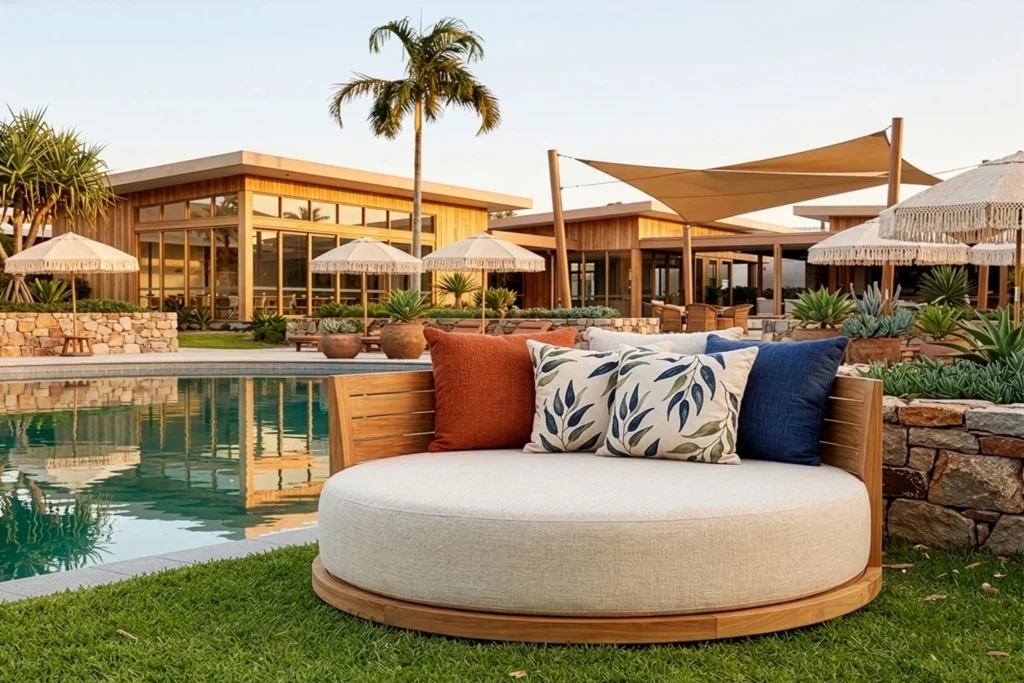
- poolside and outdoor furniture
- built-in joinery and cabinetry
These are high-use, high-impact surfaces.
If they’re built from short-life materials, they don’t just wear out — they drive ongoing carbon impact across the entire property.
Start With the Materials. Always.
In Australia, the push toward more sustainable hotels isn’t slowing down. But real impact doesn’t come from ticking boxes or chasing surface-level solutions.
It comes from the decisions made right at the start.
And the most sustainable piece of furniture? It’s the one that’s still there decades later.
If you’re keen to learn more about all the things that make reclaimed teak magic to work with, or ready to get started on your hotel project, get in touch with us now. We can’t wait to hear from you.