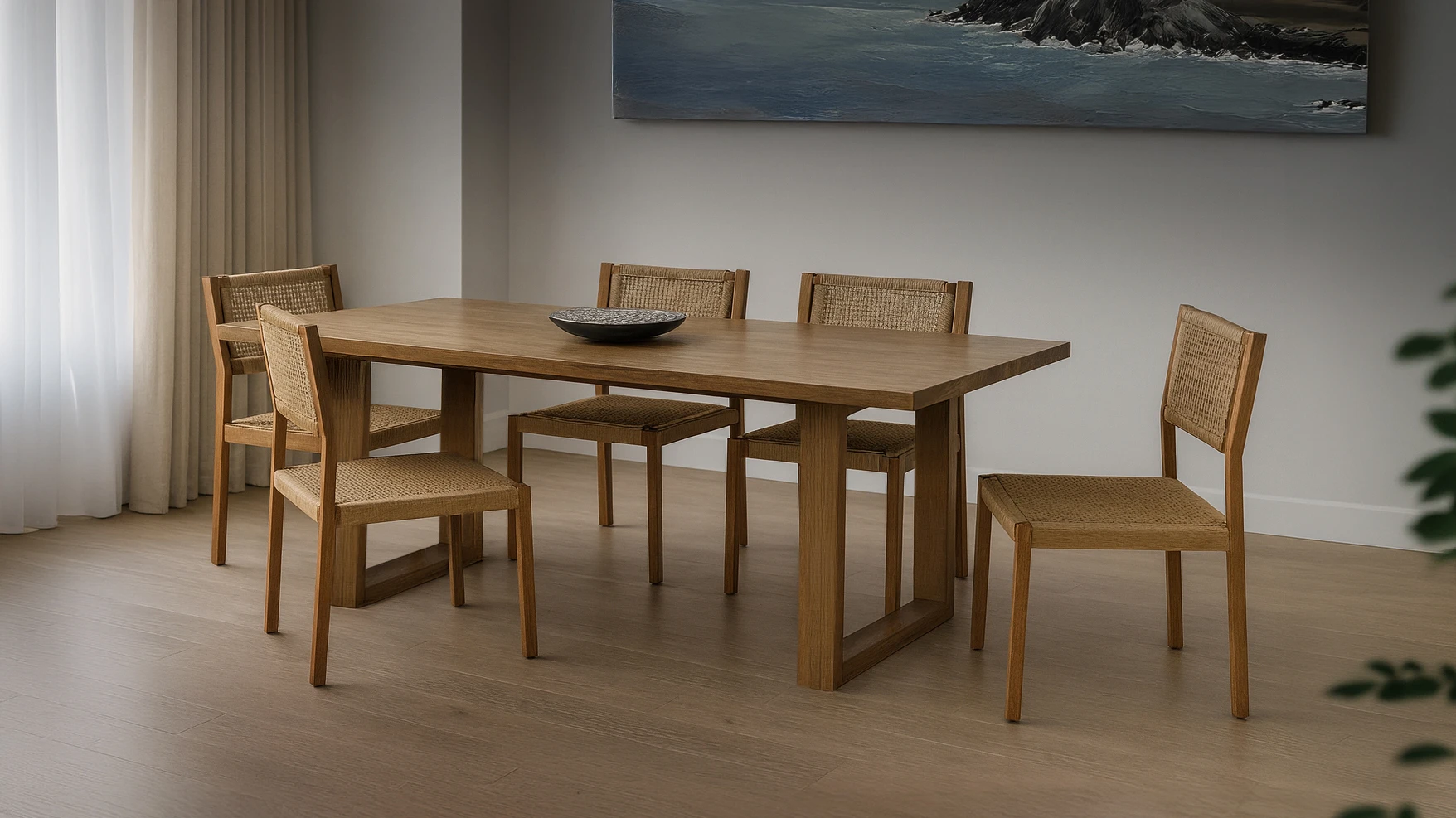
The Problem With “New”
Walk into most furniture stores and everything looks the same: clean finishes, uniform grains, perfectly matched tones. It feels new. That’s the point.
But “new” comes with a cost that rarely gets discussed.
Every newly made solid timber dining table begins with a tree being cut down. Even when it’s labelled sustainable, eco, or responsibly sourced, the reality doesn’t change—material is still being extracted.
And when you zoom out, that model doesn’t scale well.
Forests take decades to grow. Furniture demand moves much faster.
So the real question isn’t whether a dining table is well-designed.
It’s whether the material behind it makes sense.
The Case for Reclaimed Teak
Reclaimed teak flips the entire equation.
Instead of cutting new trees, it starts with what already exists—old-growth timber recovered from dismantled structures: traditional Javanese homes, joglo buildings, and other heritage architecture across Indonesia.
This isn’t scrap wood. It’s material that has already proven itself over decades:
- Structural beams that held entire houses
- Dense, mature teak with tight grain
- Naturally seasoned by time, not kilns
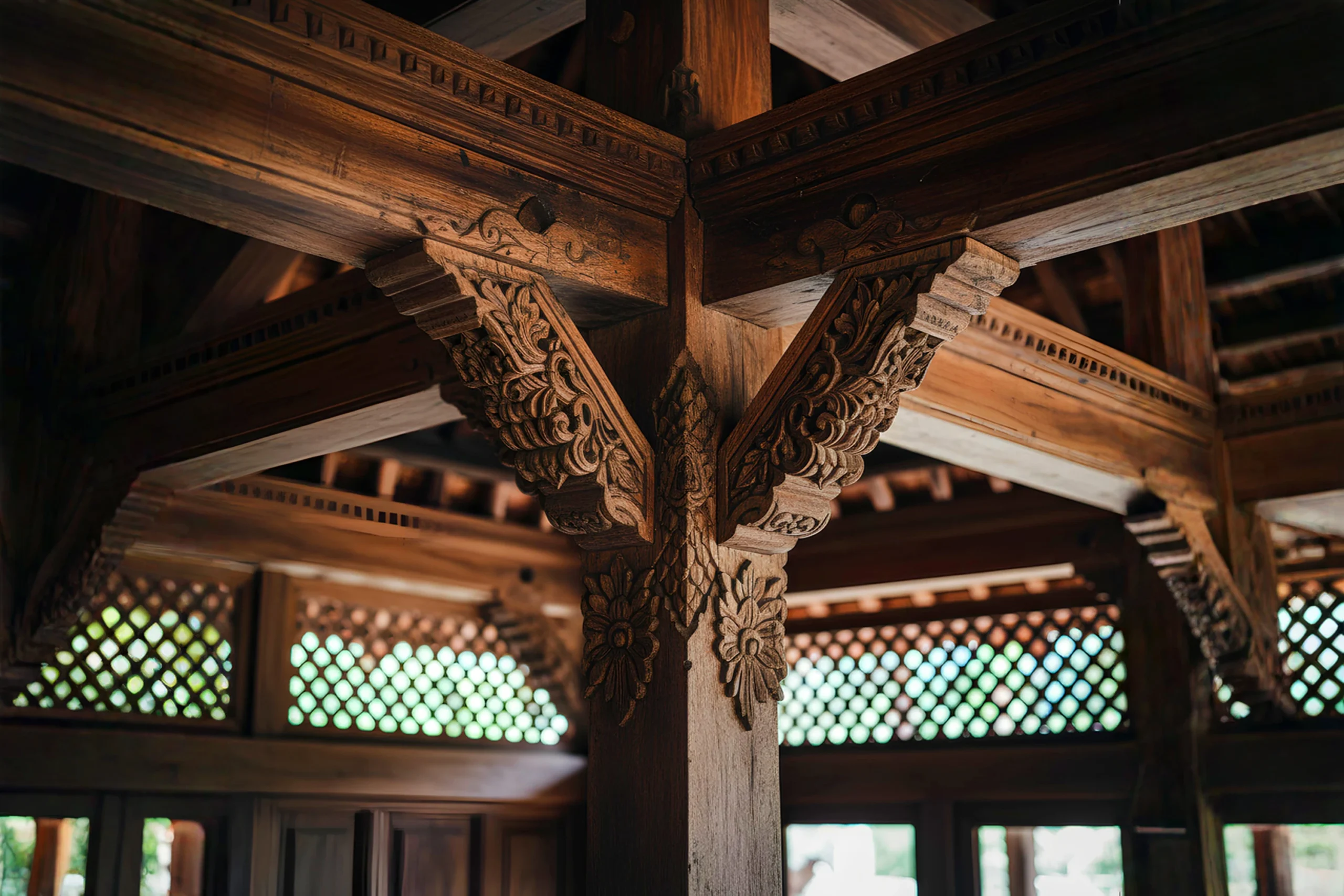
At Nusantara Lifestyle, this timber is re-milled and crafted into reclaimed teak dining tables that carry forward both durability and history.
It’s not about nostalgia. It’s about logic.
Furniture That Has Already Passed the Test
Most new furniture is unproven.
It looks good in a showroom, but its real performance only reveals itself years later—when panels warp, joints loosen, or finishes wear unevenly.
Reclaimed teak is different because it has already lived a full lifecycle.
It has:
- Expanded and contracted through decades of climate
- Stabilized naturally over time
- Developed a density and resilience younger timber simply doesn’t have
In practical terms, this means greater dimensional stability, less movement, and longer lifespan.
Or put more simply:
It has already passed the test most furniture fails.
Why Character Matters More Than Perfection
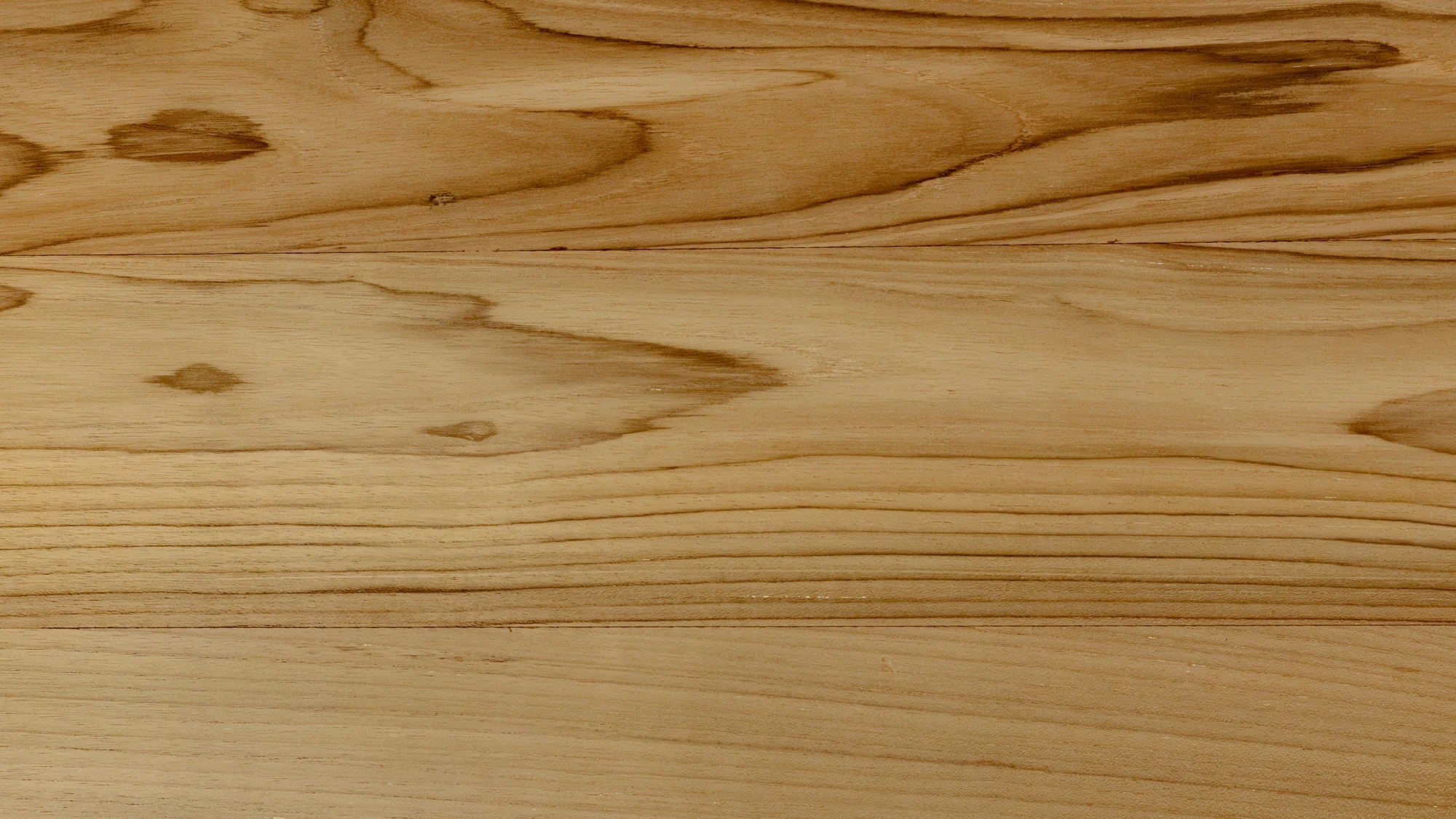
There’s a reason reclaimed teak feels different in a space.
It’s not flawless—and that’s exactly the point.
Subtle marks, tonal variation, and patina aren’t defects. They’re evidence of time. And in an era where most materials are engineered to look identical, that difference stands out.
In dining tables especially, this matters.
A table is something you interact with daily. You notice its texture, its edges, how it reflects light throughout the day. Over time, perfectly uniform materials tend to feel flat.
Reclaimed teak doesn’t.
It holds visual depth. It evolves. It becomes part of the space rather than just sitting inside it.
Not Rustic. Not Traditional. Just Honest.
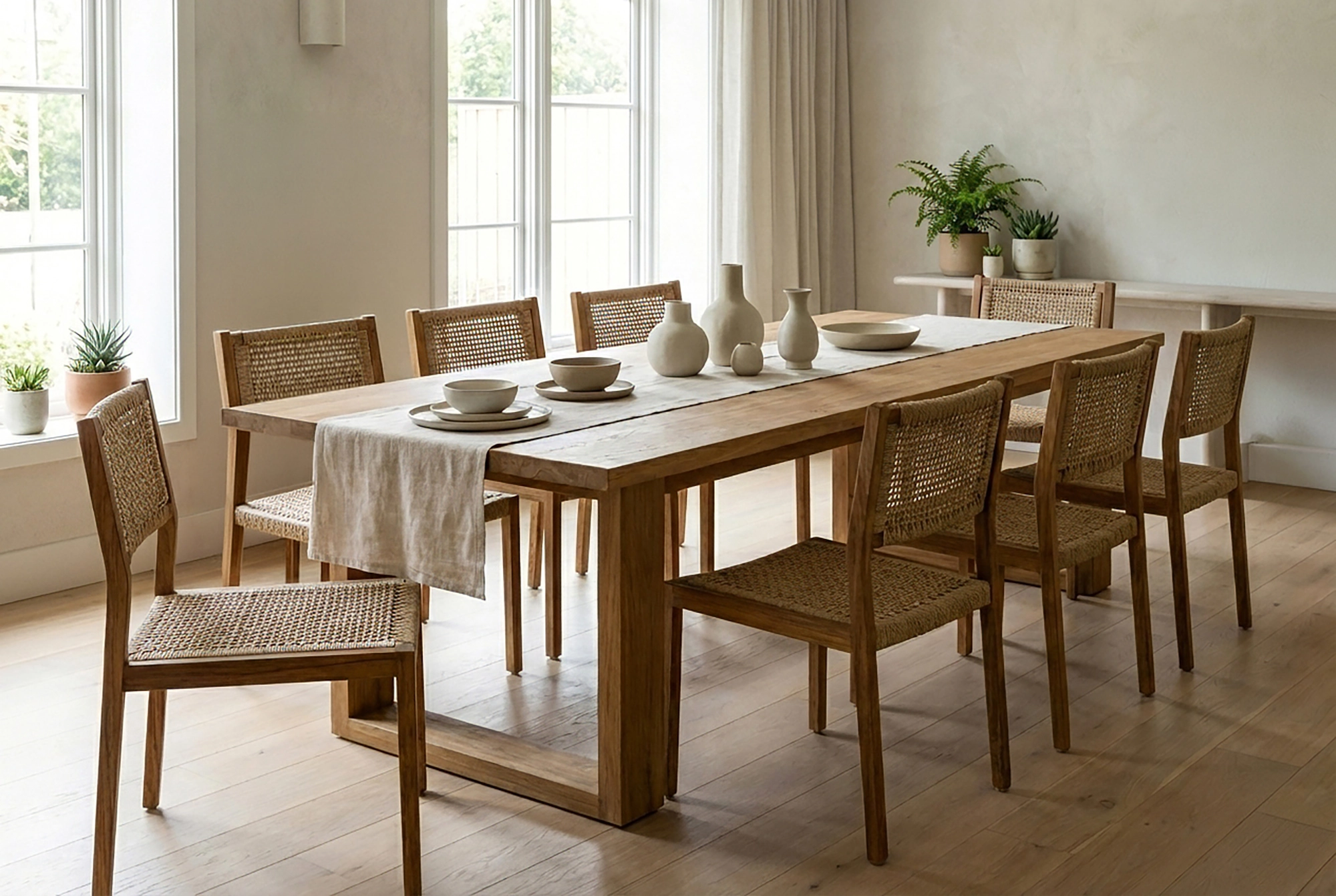
One of the biggest misconceptions about reclaimed wood is that it belongs in rustic or traditional interiors.
That’s outdated.
When handled with restraint—clean lines, balanced proportions, minimal detailing—reclaimed teak dining tables sit comfortably in contemporary environments:
- Modern tropical villas
- Japandi and Scandinavian-inspired homes
- Minimalist apartments
- Hospitality spaces where materiality defines the experience
The material brings warmth. The design keeps it current.
Sustainability Without the Marketing Layer
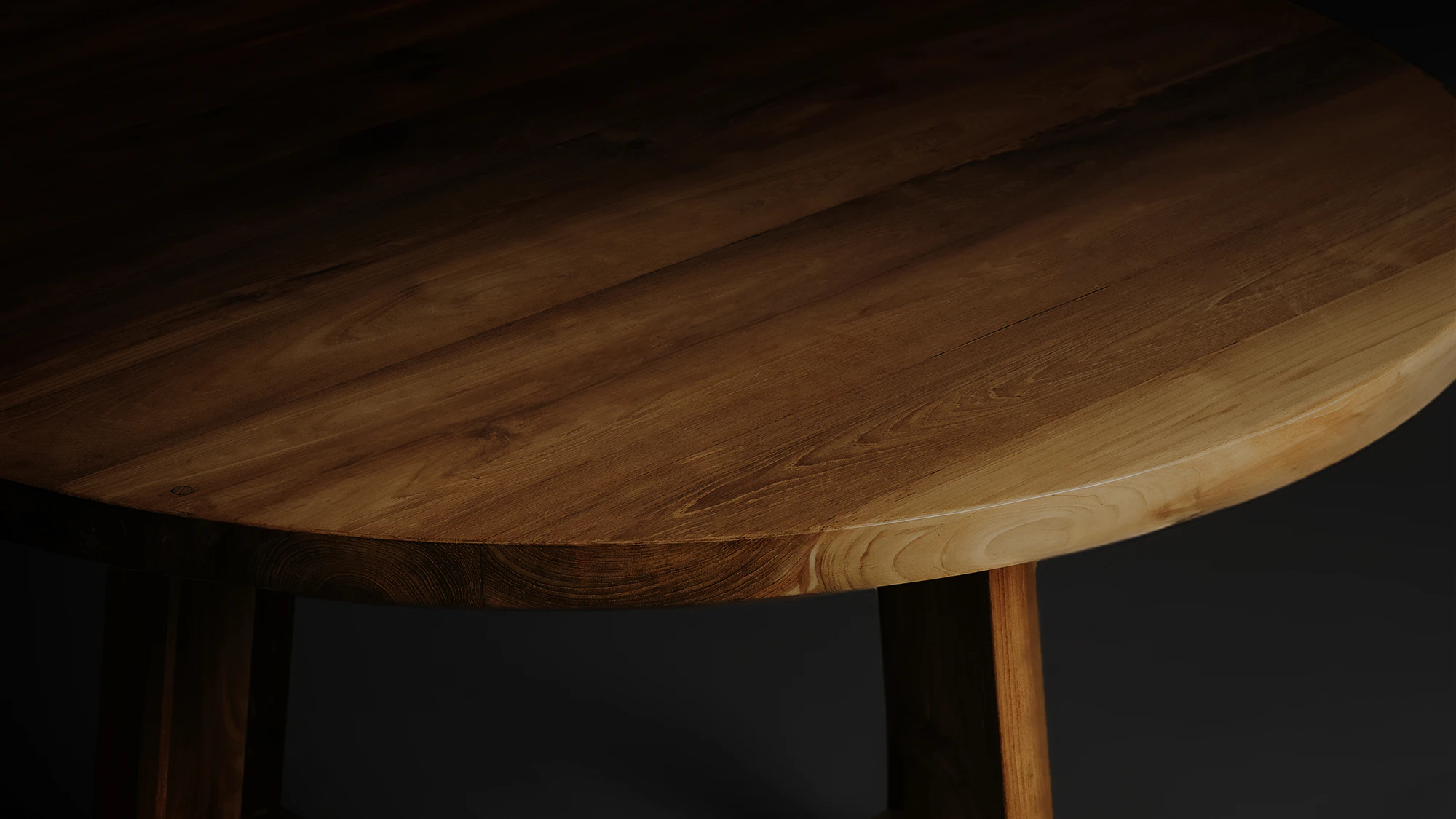
The word “sustainable” has been stretched to the point where it often means very little.
Plantation teak, for example, is commonly positioned as an eco-friendly solution. And while it can be better managed than uncontrolled logging, it still relies on harvesting trees.
Reclaimed teak removes that step entirely.
Nusantara Lifestyle’s approach focuses on:
- FSC® Recycled certification (where applicable)
- Sourcing from dismantled, existing structures
- Extending the lifecycle of high-quality hardwood
It’s a simpler equation:
No new tree, no new impact.
That doesn’t make it perfect—but it makes it one of the lowest-impact material choices available for solid wood furniture.
The Economics of Longevity
There’s a tendency to compare furniture based on upfront cost.
But dining tables aren’t short-term purchases.
When you factor in:
- Lifespan
- Maintenance
- Replacement cycles
The picture changes.
A well-made reclaimed teak dining table can last decades. Not years.
That shifts it from a purchase to an investment—one that doesn’t need to be repeated every time trends change or materials fail.
Custom, But Not Complicated
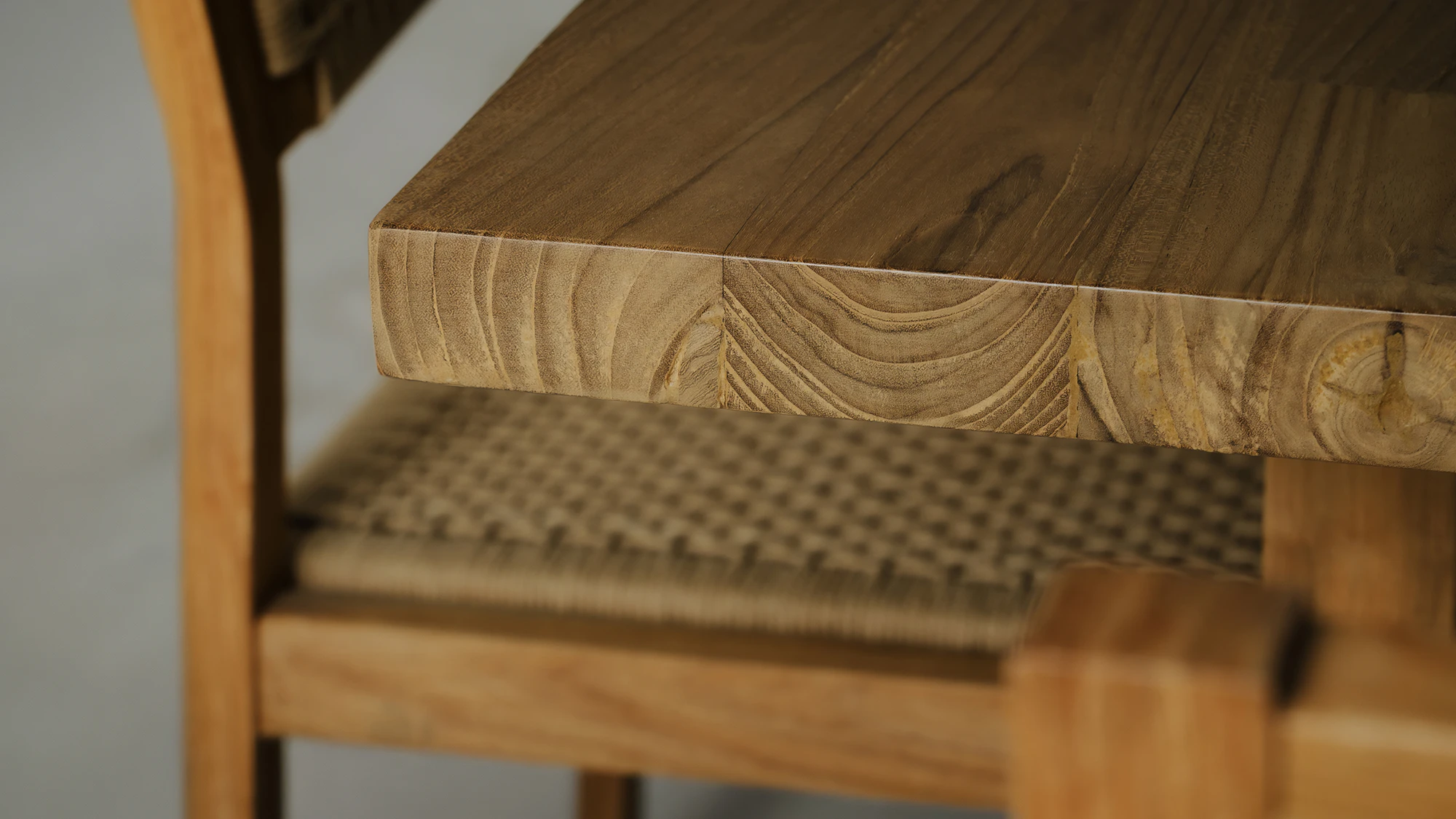
Another advantage of working with reclaimed teak is flexibility.
Because each piece is made to order, Nusantara Lifestyle can tailor dining tables to:
- Exact dimensions
- Seating configurations
- Leg and base designs
- Finish tones that suit the space
This allows the material to integrate naturally into the project—whether it’s a private residence or a large hospitality setting.
Customization isn’t about excess. It’s about fit.
A Better Starting Point
If you’re designing a dining space today, the default assumption is often to start with something new.
But that assumption is worth questioning.
Because in the case of teak—especially old-growth teak—the best material has already been used once.
Reclaimed teak dining tables don’t just reduce impact.
They start from a stronger position:
- Proven durability
- Established character
- Lower environmental cost
And that combination is hard to replicate with anything newly produced.
Conclusion: Choosing What Already Works
There’s no shortage of dining tables in the market.
What’s rare is material that makes sense both now and years from now.
Nusantara Lifestyle’s reclaimed teak dining tables are built on the idea that good design doesn’t need new resources—it needs better use of what already exists.
In a world pushing constant production, that shift matters.