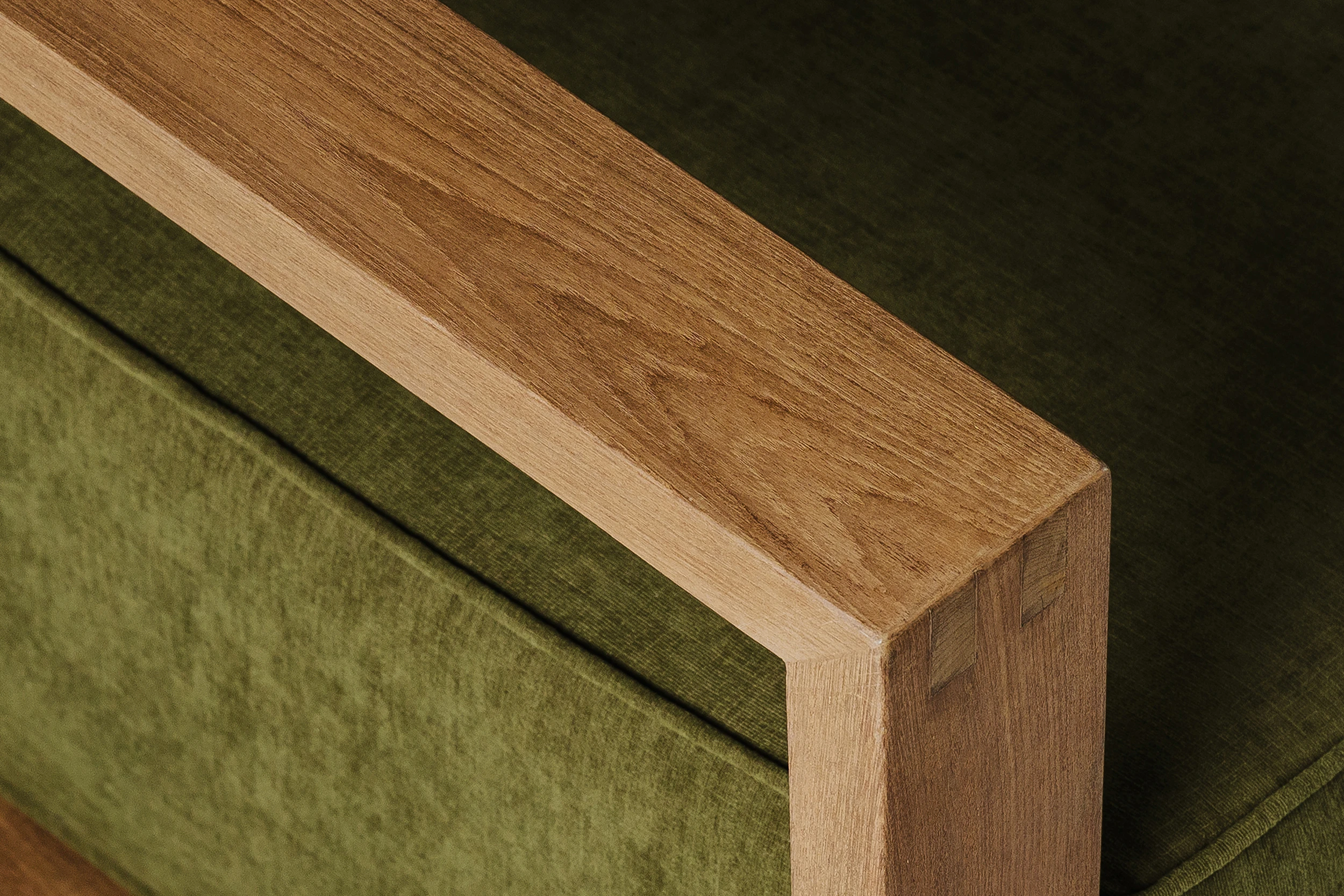
Look closely at reclaimed teak and you’ll notice something most modern furniture can’t offer: a story written on its surface.
We get it — marks, grain variations, and little imperfections can scare some people off. They’re looking for perfect — flawless finishes and factory consistency. But perfection like that only comes from something mass-produced, chemically treated, and stripped of soul.
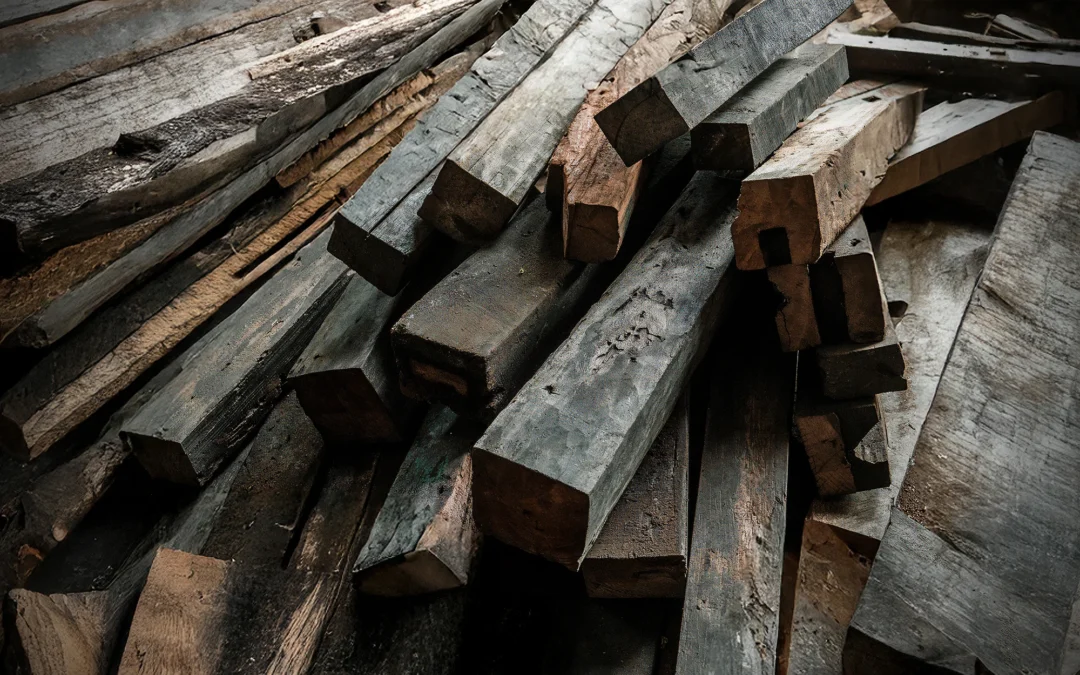
Reclaimed teak is different. The knots, grain, small marks, and weathered edges all hint at where that wood has been before; perhaps as a floorboard in a Javanese house, or part of a fishing boat from Sulawesi. Every detail is evidence of a past life.
When you bring reclaimed teak into your home, you’re not just adding furniture. You’re adding history, culture, and character that new, machine-made wood simply can’t replicate.
That’s why we call it the story in the grain.
A Living Record of Indonesia’s Heritage
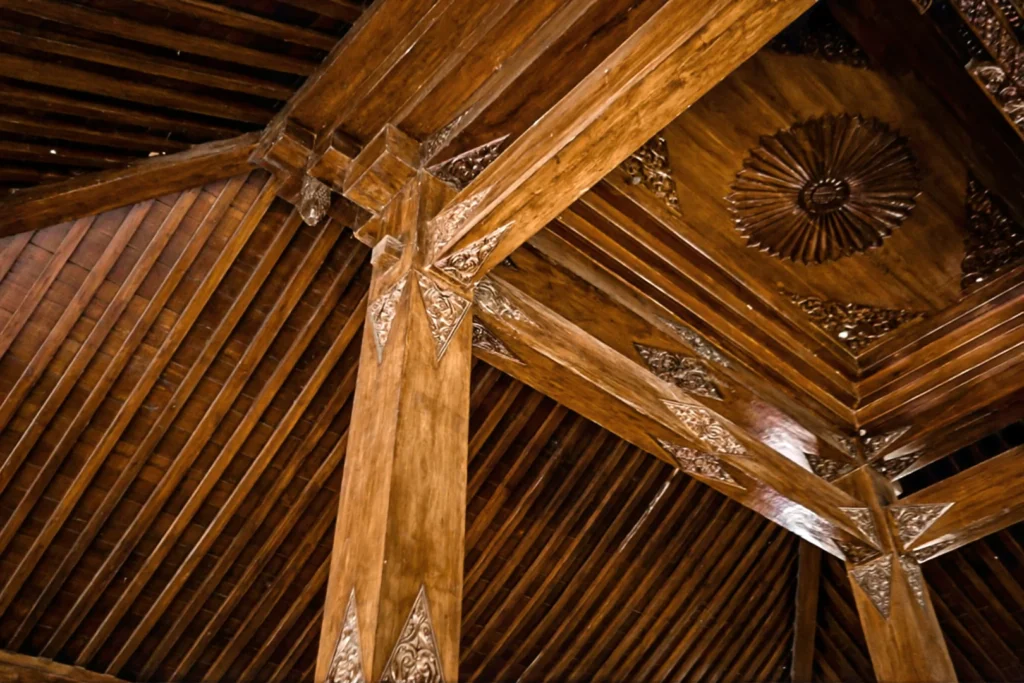
Teak has been central to Indonesian life for centuries. It was used in temples, homes, bridges, even royal palaces. In Java, entire houses were built from solid teak, as structures designed to last generations, with beams that could be dismantled and reused.
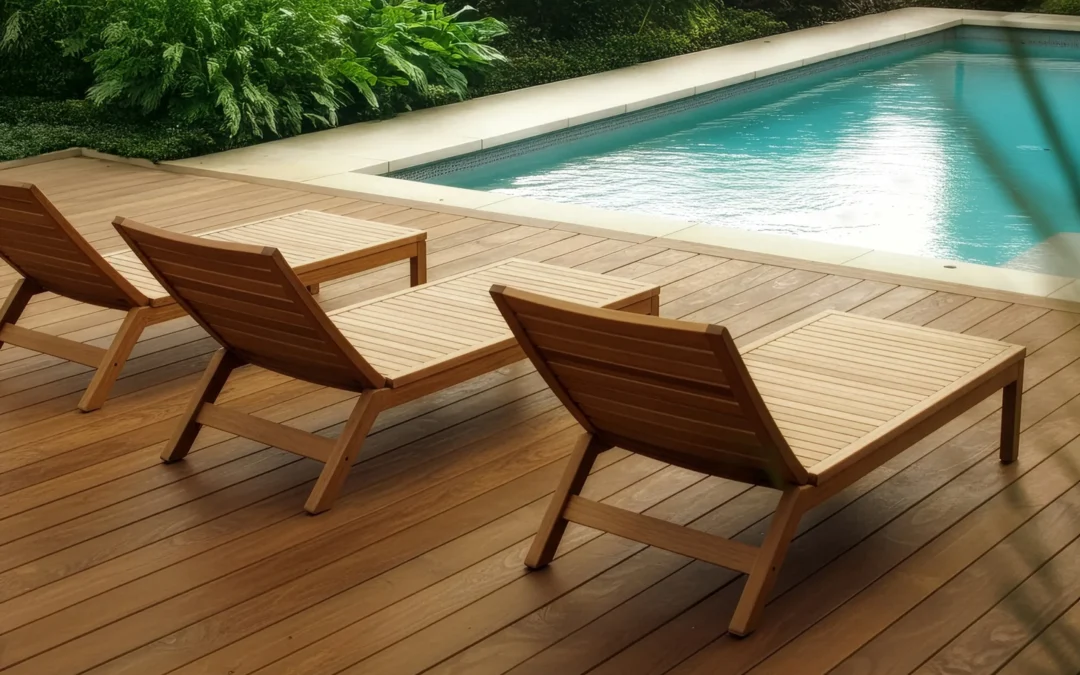
Today, joglos are symbols of Central and Eastern Javanese heritage and craftsmanship. New ones are built as villas, restaurants, and creative spaces that blend history with modern living. But as some families modernise and build concrete homes with air conditioning, many old wooden joglo houses are abandoned or dismantled. That’s where Nusantara Lifestyle comes in. We work closely with families and their communities to carefully take these homes apart and reclaim the best timber for our furniture, flooring, decking, and cladding.
That’s what makes reclaimed teak special: every piece of furniture carries echoes of Indonesian heritage. You can trace its past in the weathered patina (that rich, natural sheen wood develops over time), the softened edges, the slight variations of tone, and the unique marks left over from the traditional joinery.
The Marks That Matter
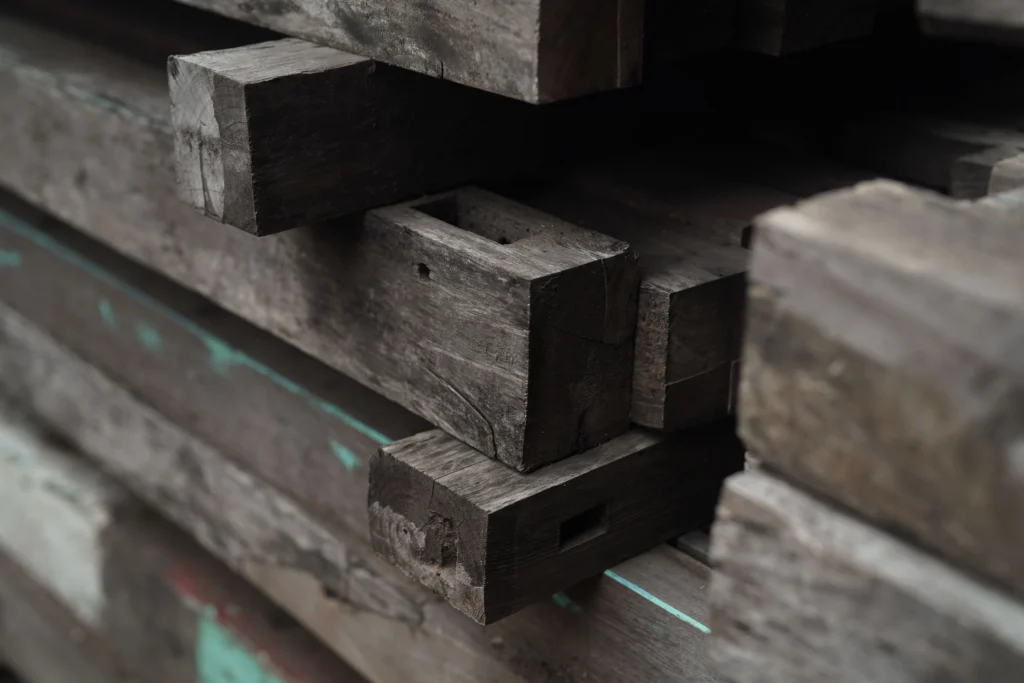
Traditional Javanese joglos were made entirely without nails or glue, using ingenious joinery that let the timber flex and breathe with the tropical climate. Each post and beam was fitted together with mortise and tenon joints (known as pasang-lubak) held in place by wooden pegs instead of metal. When you spot small mortise holes or peg marks in reclaimed teak furniture, you’re seeing history: traces of homes that once stood strong through generations, now given a second life in modern spaces.
So what exactly can reclaimed teak tell you?
- Knots and rings – Growth patterns that reveal the age of the tree it once was.
- Weathering and wear – Evidence of decades (or even centuries) exposed to the tropical climate.
- Old joinery marks – Mortise holes from when it was once part of a house.
- Colour variation – Golden browns deepened by air-drying and years of natural use.
Each of these features is impossible to fake. They’re signs of authenticity; proof that the wood has lived a full life before it became part of your home.
Why This History Matters
It’s easy to dismiss these marks as “imperfections,” but in reality, they’re the opposite. They’re what makes reclaimed teak powerful in design and sustainability.
- Authenticity – No two pieces are alike. Each one has a fingerprint of its past.
- Durability – Older teak is denser and stronger thanks to decades of natural aging.
- Sustainability – By reusing wood, we preserve rainforests instead of cutting fresh trees.
- Connection – Every piece brings a slice of Indonesian culture into your home.
When you buy reclaimed teak, you’re not just purchasing furniture. You’re participating in a story — one that connects your living room to a Javanese village, a family’s ancestral home, or a historic structure that once stood proudly in Indonesia’s landscape.
Fast Furniture Can’t Compete
Compare that to fast furniture. It’s built from particleboard, chemical finishes, and synthetic glues. No character. No history. No resilience.
Instead of a deep patina, it peels. Instead of lasting decades, it breaks after a few years. And instead of connecting you to heritage, it connects you to landfill.
It’s the difference between wearing a tailored jacket with history and meaning… versus buying a plastic raincoat from a bargain bin.
Design Benefits of Furniture With a Story
Here’s why interior designers and architects are starting to wake up to the magic of reclaimed teak:
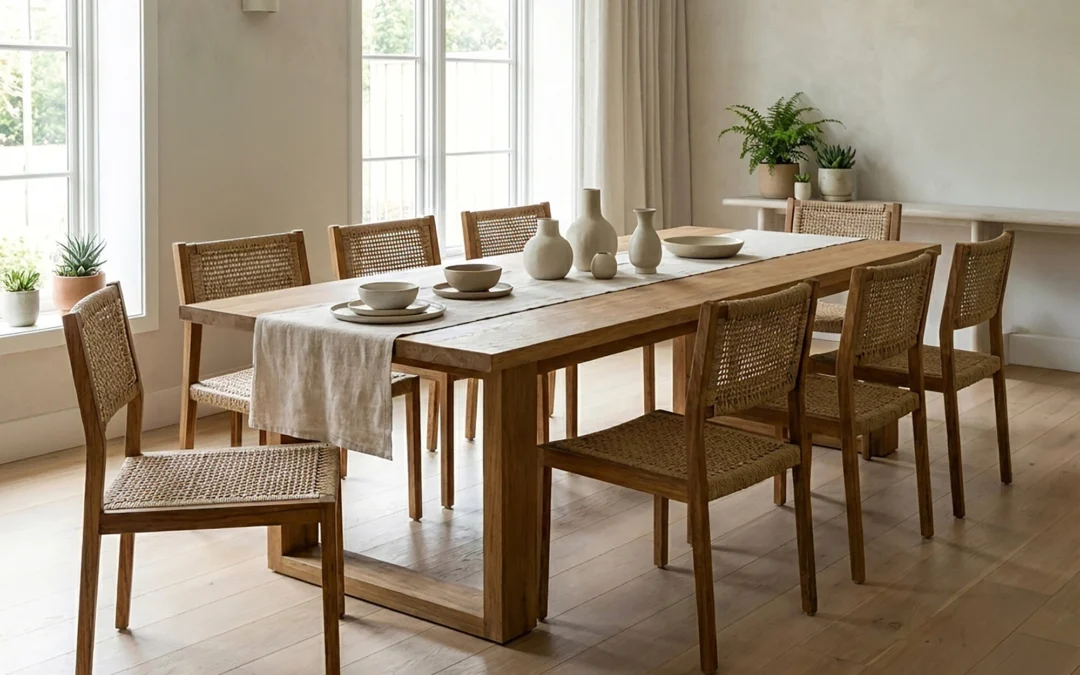
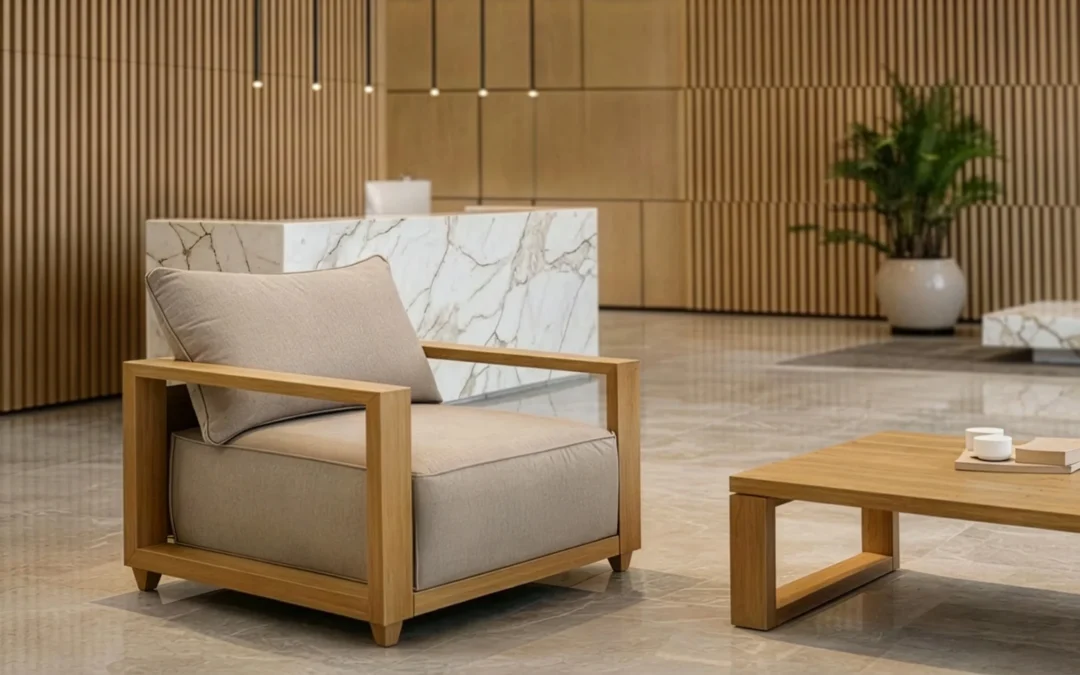
- Timeless appeal – Works in modern, minimalist, rustic, or tropical interiors.
- Warmth and depth – The natural grain instantly adds texture and richness to small or large spaces.
- Conversation starter – Every guest notices the character and asks, “Where’s this from?”
- Patina over time – Unlike fast furniture that degrades, reclaimed teak improves with age.
Caring for History in Your Home
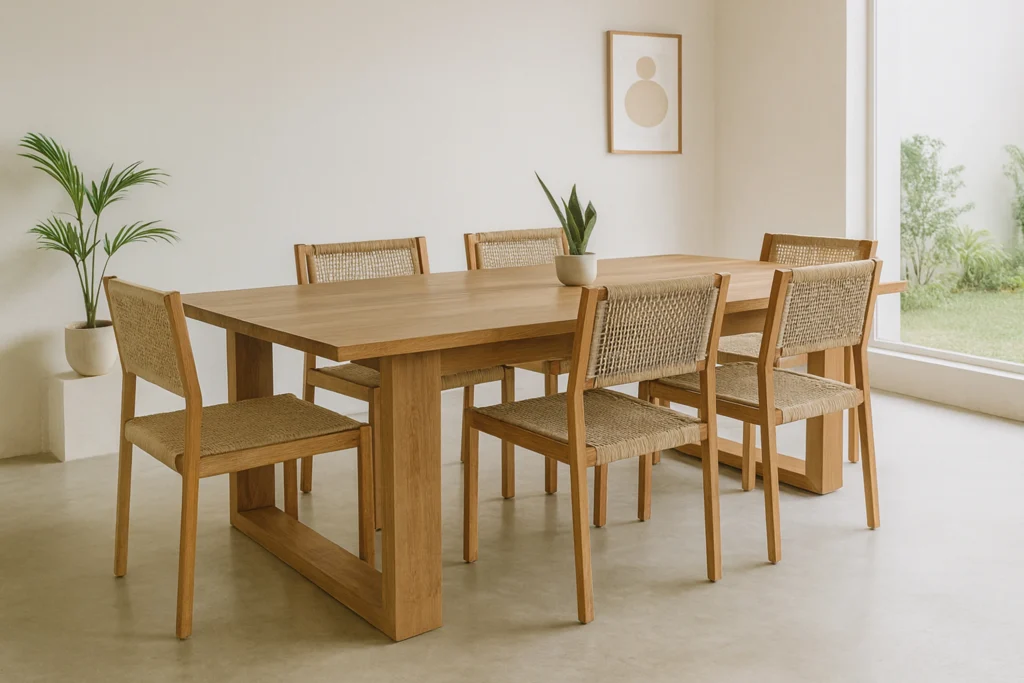
Owning reclaimed teak means holding on to something that you can pass on to your kids. Here are a few simple ways to care for it:
- Wipe with a damp cloth — no harsh chemicals needed.
- Let the patina develop naturally — don’t over-sand.
- Use natural oils if you want a richer tone, but it’s optional.
- Embrace the imperfections — they’re what make it unique.
The beauty of reclaimed teak is that it doesn’t need perfection. Its marks are reminders of where it’s been, and where it’s going.
What You Can Do
If you want furniture that carries more than function, here’s your checklist:
✅ Choose reclaimed over plantation or fast furniture
✅ Ask about the wood’s origins — good brands will tell you
✅ Support craftspeople who work with heritage materials
✅ Invest in fewer, better pieces that grow with you over time
Even small purchases matter. A reclaimed teak coffee table instead of a chipboard one can help make a difference.
Final Thoughts
Every mark, grain variation, and weathered edge is a page from the wood’s past life, carried into yours. It’s furniture that reminds us we’re connected: to forest, history, and each other.
At Nusantara Lifestyle, that’s what we believe. Each piece we create is carefully salvaged, lovingly restored, and reimagined, so that your home has more than style. It has a story.
Ready to bring history into your home? Explore our reclaimed teak collections now.