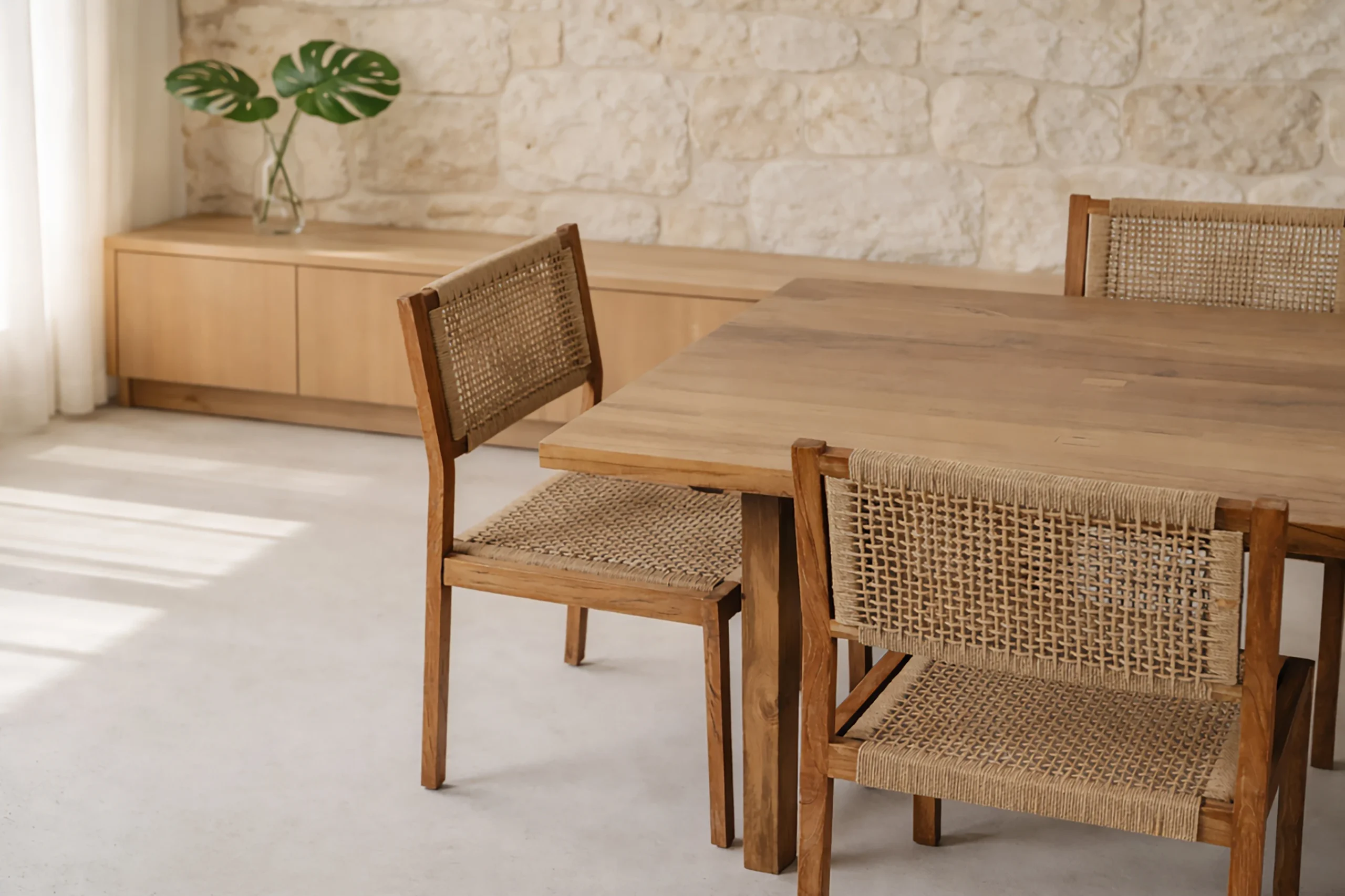
January is when most of us begin committing to at least one new thing. New year, fresh start, and for many, the realisation that the habit of buying things cheap, replacing them often, and calling it normal is getting old.
Fast furniture had a good run. Flat-pack, low prices, quick fixes. But the cracks are showing. Rising living costs, shrinking spaces, climate fatigue, and overflowing landfills should make us all rethink what we fill our homes with.
2026 should be a turning point. Not because of trends, but because of a shift in priorities we all desperately need.
Furniture should be re-evaluated for what it actually is: long-term infrastructure for daily life, not disposable décor.
And once you see it that way, fast furniture stops making sense.
Furniture Should be Seen as Infrastructure, Not Decoration
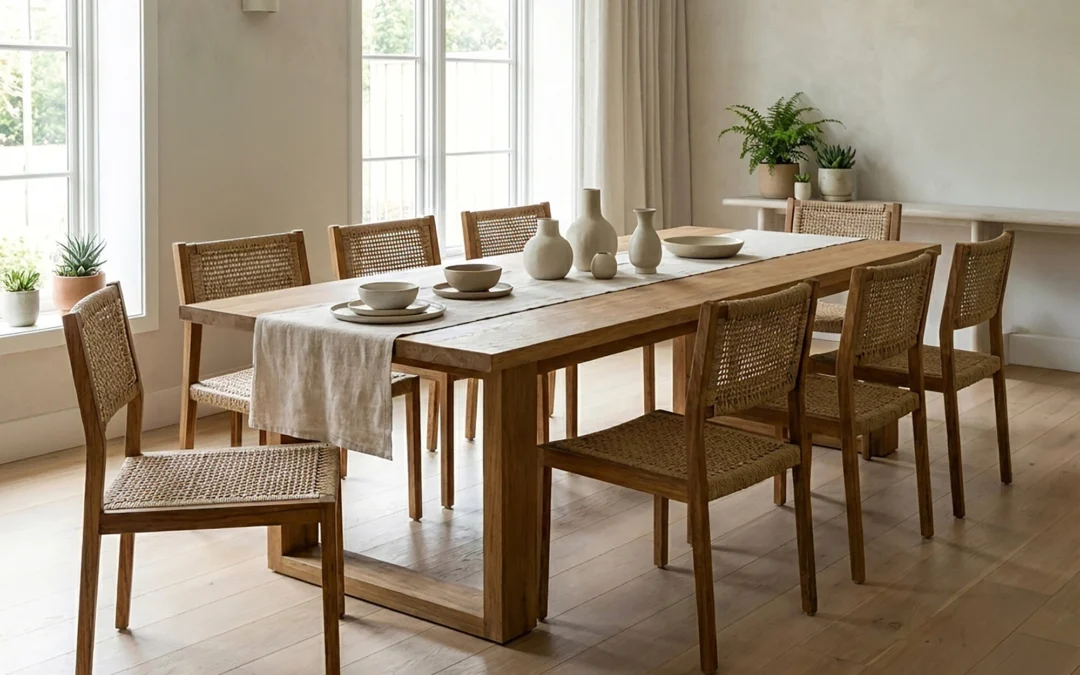
A Dining table is not an accessory.
A Bed frame is not seasonal.
A Chair should not feel like a short-term fix.
Furniture supports how we live, work, eat, rest, and gather. It takes weight, absorbs movement, and exists in our homes every single day. Treating it as something temporary is a relatively new idea, driven more by convenience and marketing than by logic.
For most of history, furniture was made to last because it had to. Timber was valuable. Creating it took time. Objects were repaired, passed on, and respected.
Fast furniture turned that completely on its head. Suddenly it became normal for a table to last five years, a bookshelf to sag, or a chair to wobble long before it should. All for the sake of a lower upfront price.
But when cost-of-living pressure hits, people start asking better questions. How long will this actually last? How often will I need to replace it? What am I really paying for over time?
That is where the idea of furniture as infrastructure comes back into focus.
The Cost-Per-Year Question Most People Never Ask
One of the biggest myths around fast furniture is affordability. Cheap upfront does not mean cheap overall.
A mass-produced MDF table might cost less today, but if it needs replacing every three to five years, the real cost adds up quickly. Add disposal, delivery, replacements, and the time spent re-furnishing, and suddenly the bargain looks less convincing.
Reclaimed teak works differently.
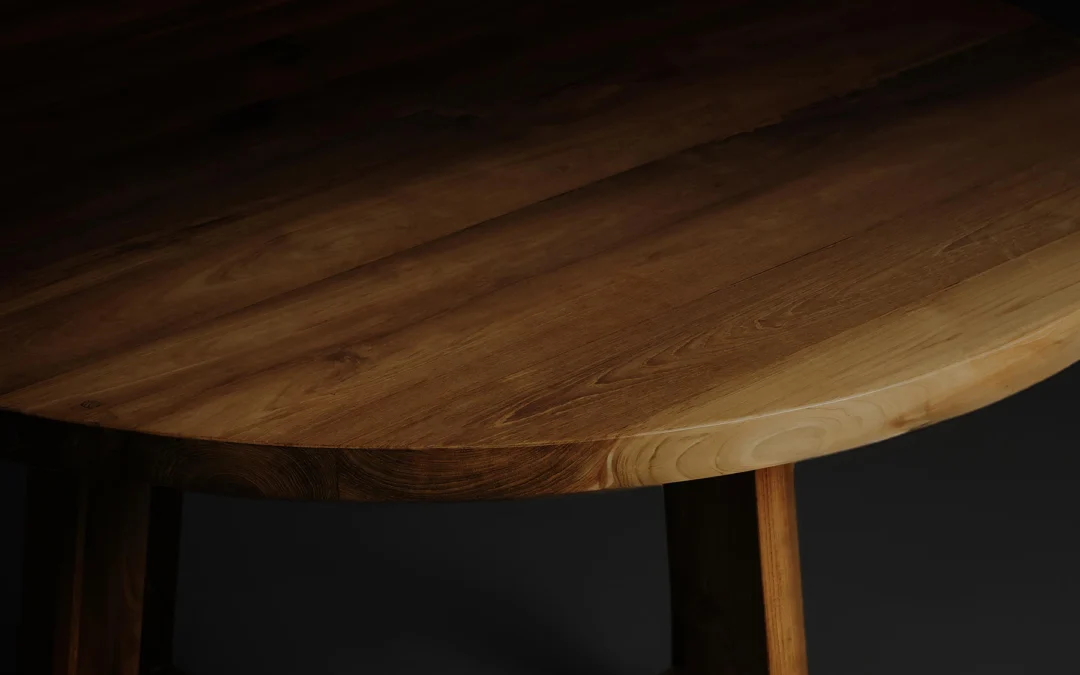
Because it is already dense, naturally seasoned, and structurally stable, it is built for decades of use. Sometimes generations. When you spread the cost across 20, 30, or 40 years, the cost per year often ends up lower than fast furniture that constantly needs replacing.
This is not about luxury. It is about value.
The same logic applies to many parts of life now. Fewer things. Better quality. Less waste. Less regret.
Furniture is no exception.
Emotional Durability Matters Too
Fast furniture is designed to be replaced, which makes it easy to stop caring about it. Chips, scratches, sagging planks and general wear feel inevitable, which encourages disposal rather than repair.
Reclaimed teak is different from day one. It already carries marks from its previous life. Peg holes from old Javanese homes. Variations in grain. Subtle imperfections that make each piece unique.
Instead of looking worse over time, it looks better.
The furniture becomes part of the home rather than something passing through it. People keep it longer because they feel connected to it.
That emotional durability is a powerful antidote to throwaway culture.
Why Fast Furniture Falls Apart So Quickly
There is a technical side to this conversation that often gets ignored.
Most fast furniture relies on engineered boards, veneers, and glues. These materials struggle in real-world conditions, especially in humid climates like Indonesia. Moisture causes swelling. Heat causes warping. Thin laminates peel. Joints loosen.
Our reclaimed teak furniture does not have those problems.
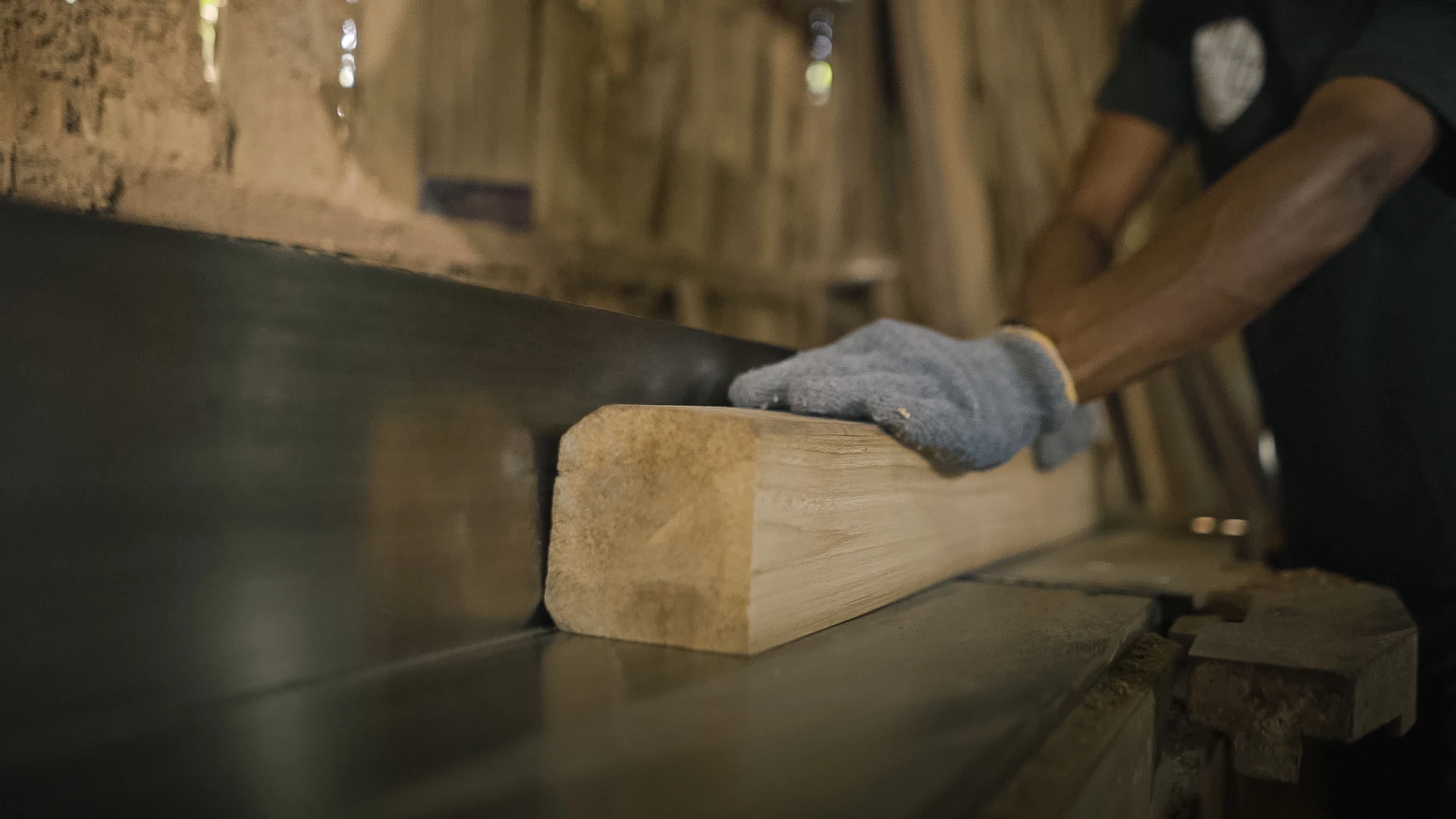
The wood we lovingly salvage has already spent decades exposed to sun, rain, and seasonal changes. It has dried naturally, slowly, and completely. The wood’s density and tight grain structure make it far more resistant to movement, cracking, and warping.
When furniture is expected to last, the material choice matters more than the design trend.
Sustainability Without the Fatigue
A lot of people are tired of being told to care. Sustainability messaging has become noisy, confusing, and often completely hollow.
Plantation timber is sold as sustainable. Flat-pack brands claim carbon neutrality. Labels pile up while forests continue to disappear.
The problem is that much of the industry focuses on appearances rather than outcomes.
Reclaimed teak is simple. No new trees are cut down. No plantations are expanded. No forests are converted to monocultures. The material already exists.
That simplicity is its strength. This is sustainability that just makes sense.
Where Nusantara Lifestyle Fits In
At Nusantara Lifestyle, we have always believed that the world does not need more furniture. It needs better furniture.
We work exclusively with reclaimed teak and other genuinely sustainable materials because they already exist and perform better over time. Most of our timber comes from traditional Javanese houses, dried naturally over decades.
We design and build pieces to last, whether they are custom or ready-made. No greenwashing. No shortcuts. Just honest materials, skilled hands, and furniture meant to stay put.

Fast furniture promised convenience and affordability. What it delivered was waste, disappointment, and constant replacement.
The alternative is not complicated. Buy fewer pieces. Choose better materials. Think long-term.
Furniture should support your life, not interrupt it.
2026 should be the year more people finally say enough.
If you’re done with furniture that’s built to be replaced, take a look at our Alami range, or chat with us about how we can create your custom pieces.