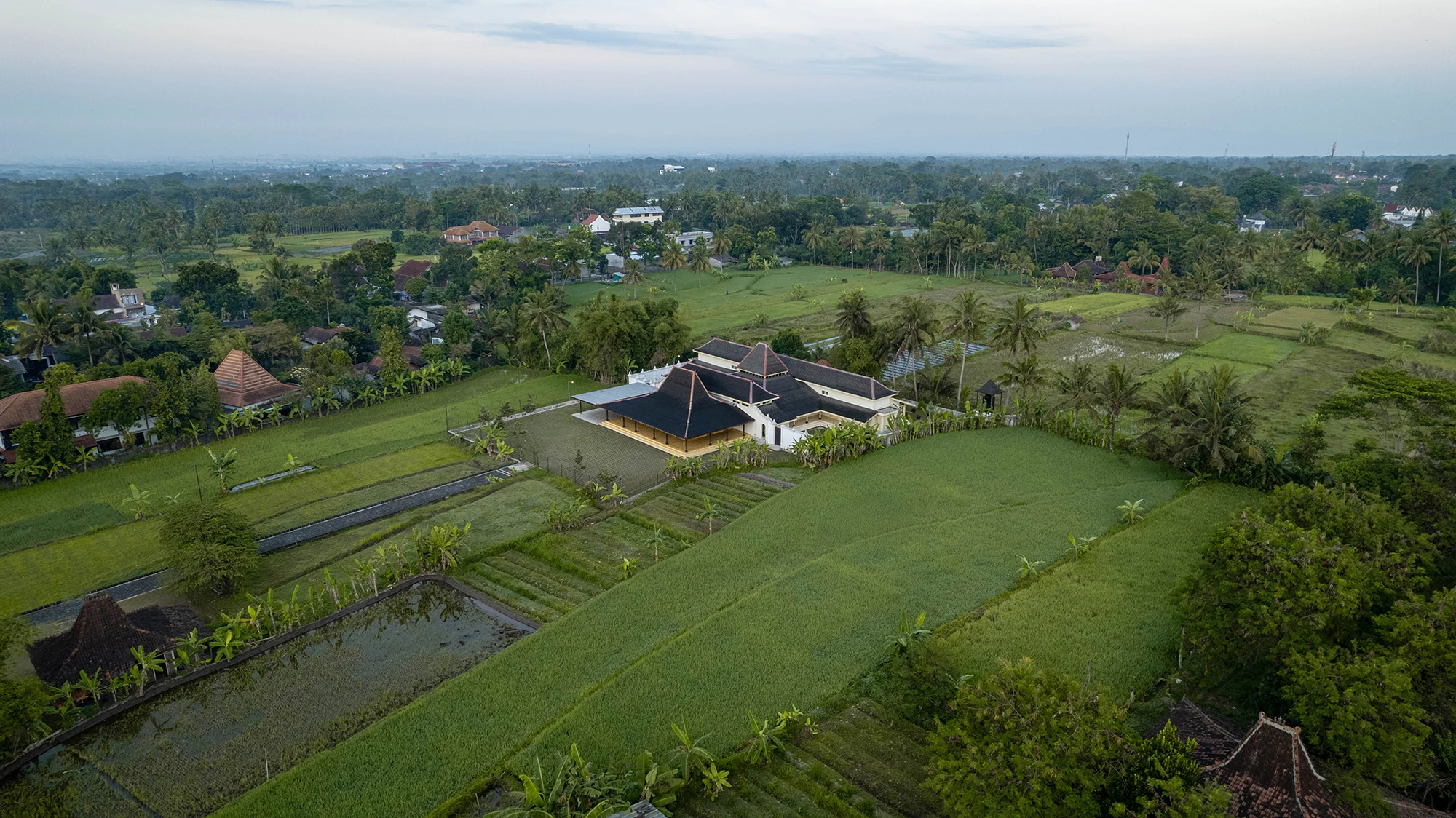
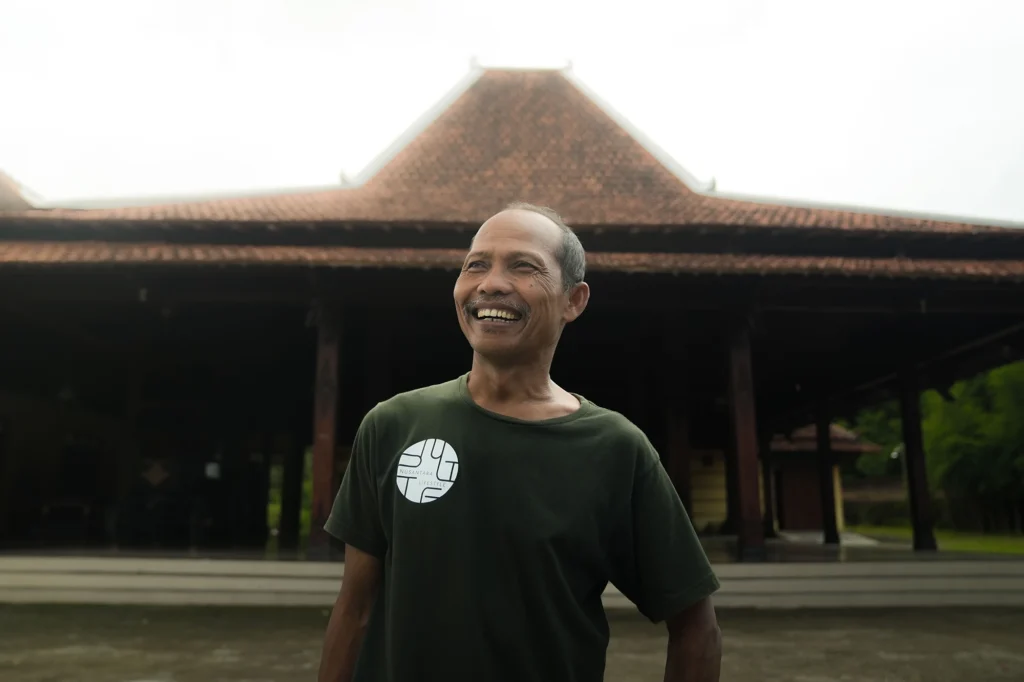
If you’ve ever stood beneath the roof of an omah kuno, or traditional Javanese home, you’ll immediately get a sense of just how much history and meaning they carry. The main type of traditional home in Java, the joglo, is the result of ancestors spending hundreds of years figuring out how to build a house that fits the way Javanese people live, think, and connect with the spiritual world.
The word joglo likely comes from tajug loro, which means “two joined tajug.” A tajug is a pointed roof shape often used for sacred buildings. Put two together and you get the steep, layered roof rising like a mountain made of timber and tradition. Over time, the word joglo came to describe the whole house: the large central hall called the pendopo, the hand-carved teak pillars, and the proportions that reflect Javanese cosmology and social order.
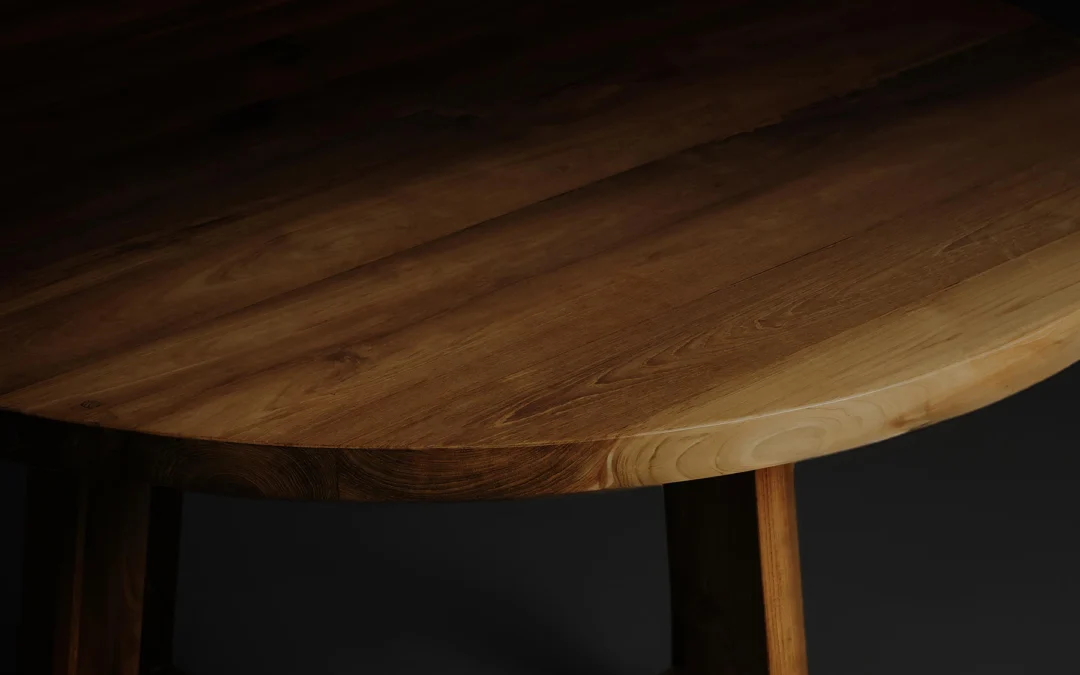
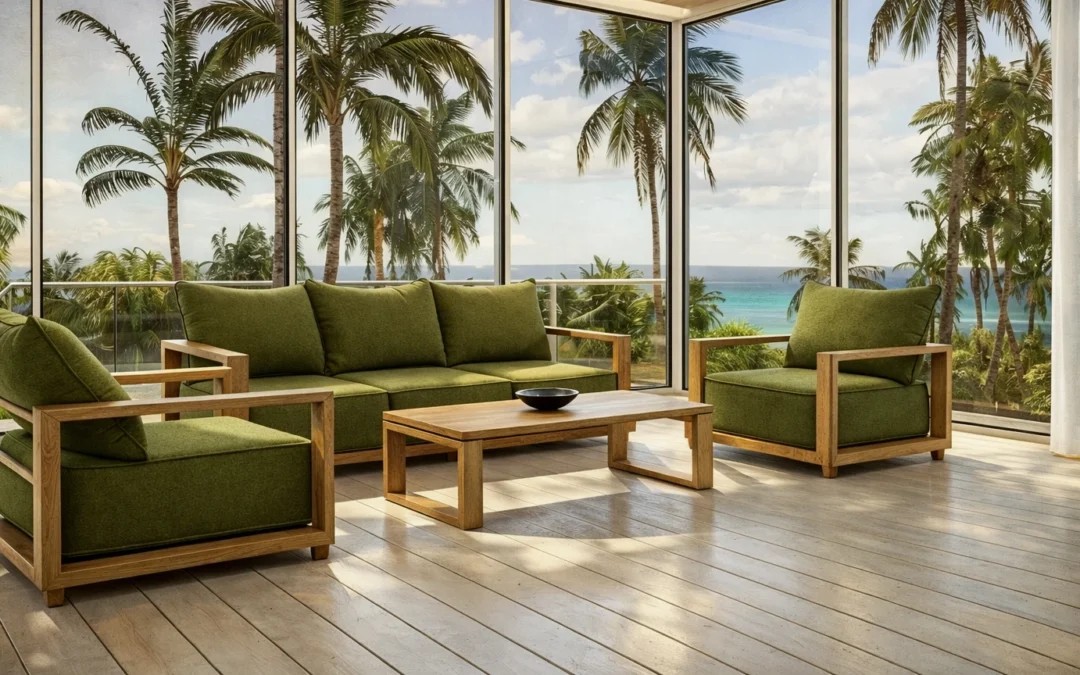
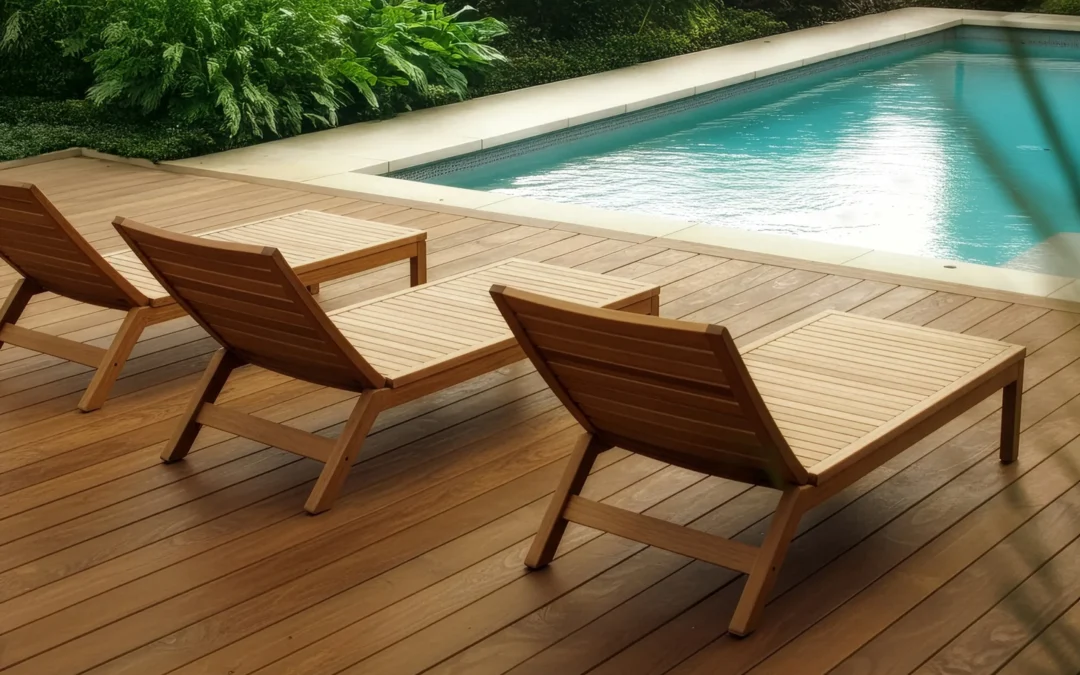
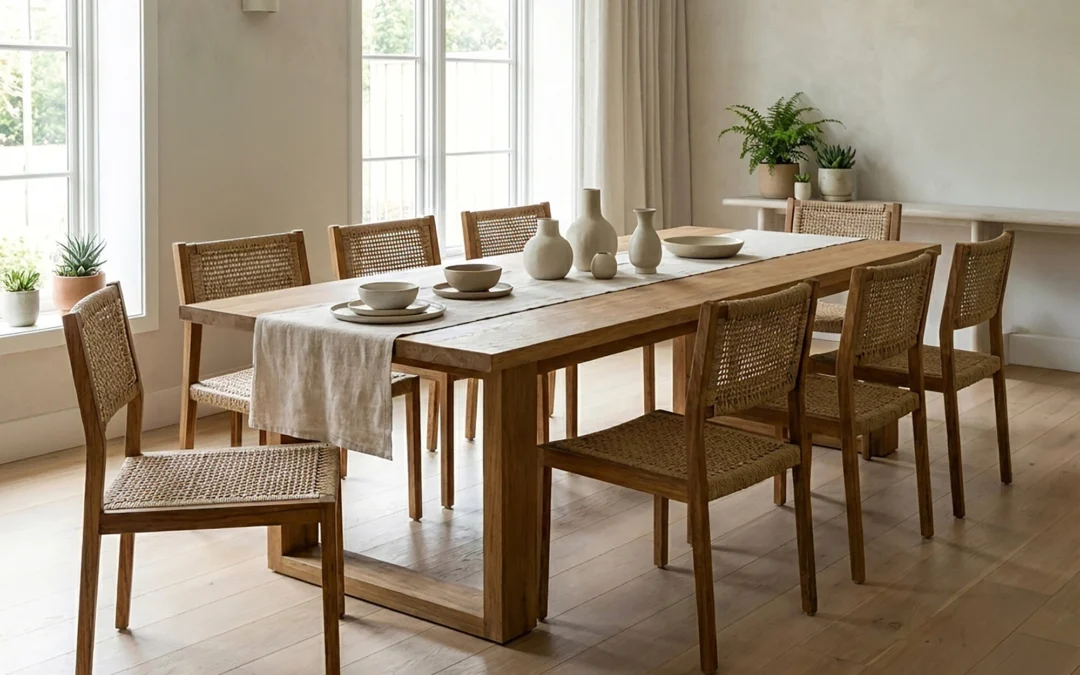
Today, joglos are symbols of Central and Eastern Javanese heritage and craftsmanship. New ones are built as villas, restaurants, and creative spaces that blend history with modern living. But as some families modernise and build concrete homes with air conditioning, many old wooden joglo houses are abandoned or dismantled. That’s where we come in. We work closely with families and their communities to carefully take these homes apart and reclaim the best timber for our furniture, flooring, decking, and cladding.
(If you’d like to see exactly how we do it, check out our film How We Reclaim Our Timber.)
A Home for Every Stage of Life in a Traditional Javanese Joglo
In traditional Javanese life, the home was at the centre of everything. You were born there, married there, and sent off into the next life there. Even your placenta was buried at the side of the house, tying you forever to the land.
A joglo was the physical backdrop to a person’s entire life story. The walls held the echoes of weddings, the footsteps of children learning to walk, and the quiet prayers of elders at dusk.
And these houses weren’t built to be knocked down in 30 years. They were designed to last for generations. The main framework of a joglo was almost always made from teak, and not just any teak. We’re talking old-growth trees that had been cared for as part of the community. Trees were given prayers before harvest, felled on auspicious days, and chosen for their density and resistance to pests.
The Sacred Logic Behind the Structure
Western buildings often focus on distributing weight. Javanese structures flip that thinking. A joglo stands because of weight; its stability comes from the heavy weight above pressing down.
The shape is human in concept: the roof is the head, the columns are the body, the floor is the feet. This is structural logic, deeply tied to cultural beliefs.
Inside the frame, each part has a specific name and role:
- Blandar: horizontal beams that tie the structure together
- Saka: the main posts, usually four central pillars that symbolise strength
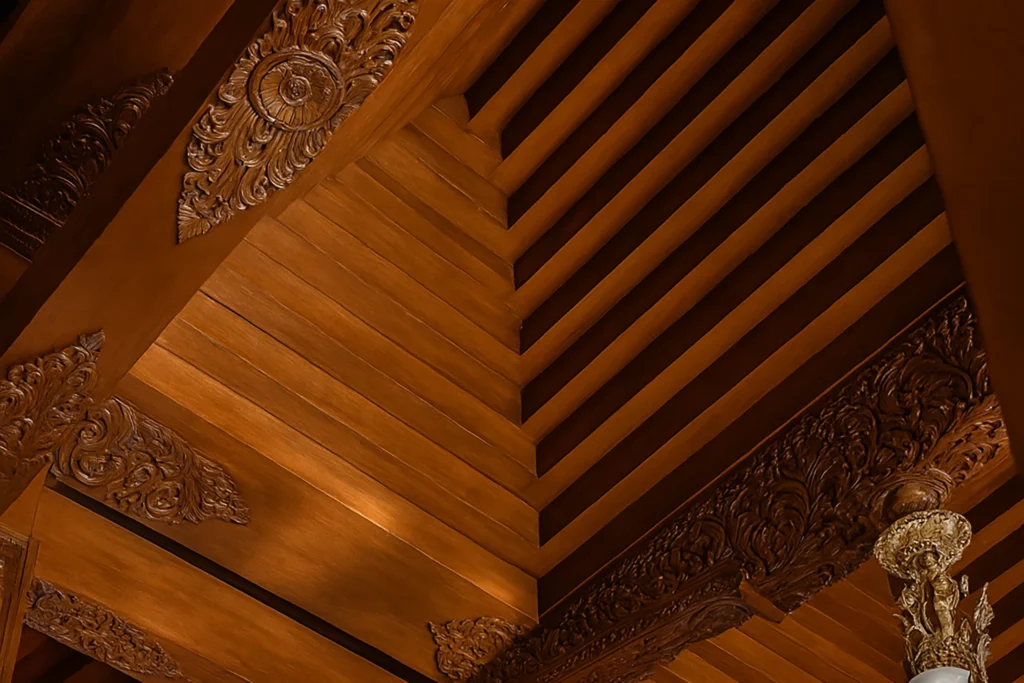
- Tumpang sari: layered beams near the roof, creating both strength and visual rhythm
- Uleng: the curved braces
- Molo: the crown of the house, often containing symbolic elements like gold nails to connect the structure to the divine.
The overall silhouette is mountain-shaped, because in the traditional Javanese belief system, mountains are sacred, strong, and home to the gods. Living under a mountain-shaped roof was a way to invite that strength and sacredness into daily life.
Building as a Community Act
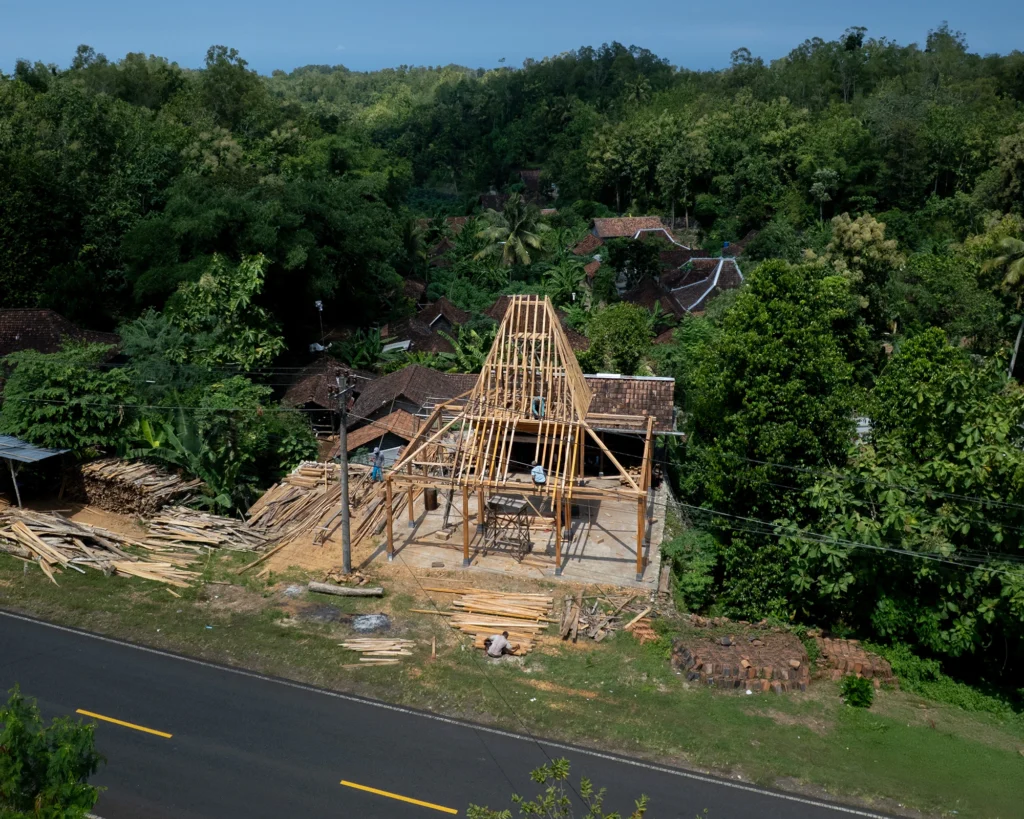
In the old days, if your neighbour was building a joglo, you didn’t wait for an invite. You just turned up. Hammer, chisel, hands, whatever you could offer. In Indonesia, that’s gotong royong: the spirit of working together for the common good, with no expectation of payment.
Before construction began, there were rituals: fasting, staying awake the night before, offering prayers for safety. This was a way of aligning the builders, the home, and the land into harmony before the first post went in.
The Value in Old Timber
The ancestors knew what they were doing when it came to material choices. They only harvested teak from trees over 100 years old. Slow-growing trees absorb nutrients gradually, creating dense, compact wood that resists termites and rot.
That’s why, even today, you’ll find joglo beams that are as solid as the day they were cut, despite enduring monsoon rains, tropical humidity, and decades of use.
At Nusantara Lifestyle, this is where our work comes in. We reclaim timber from joglo homes that can no longer be preserved in their entirety. Every beam, every panel tells a story; sometimes one we know in detail, sometimes one lost to history. Either way, the timber lives on, reimagined into new furniture or architectural features that still hold the spirit of the original home.
Why the Joglo Still Matters Today
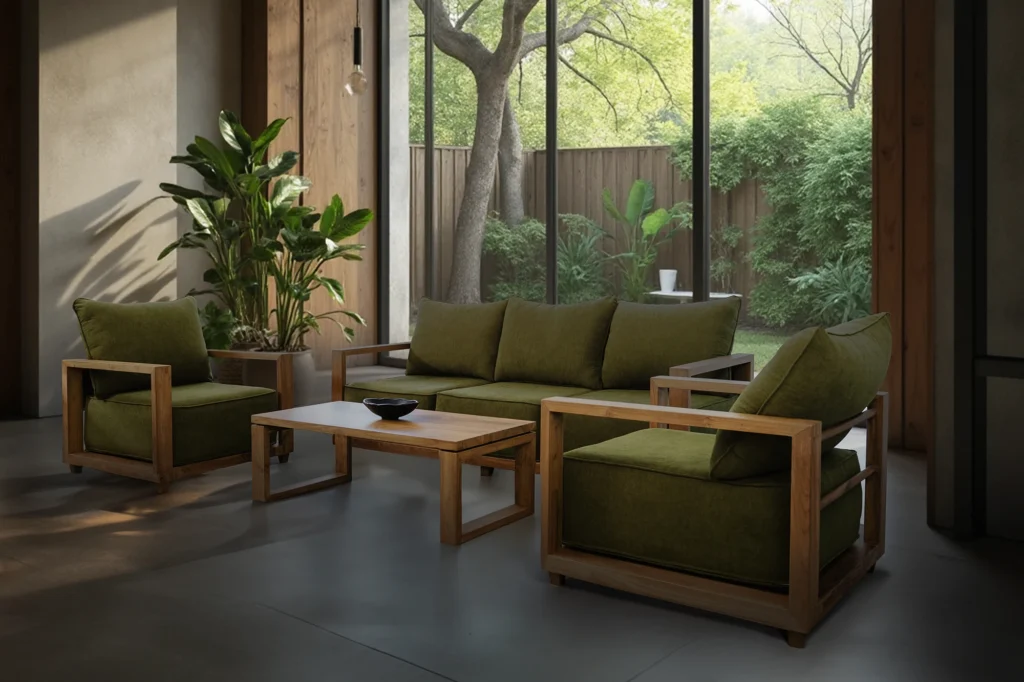
Some people see traditional Javanese architecture as old-fashioned, something that belongs in a museum perhaps. But there’s a growing movement, especially among young Indonesians, to reconnect with their cultural roots. They’re building modern homes with joglo-inspired roofs, incorporating reclaimed joglo timber into interiors, and keeping alive the craftsmanship their grandparents knew by heart.
Preserving joglos and the wood that made them is about preserving cultural identity. It’s about sustainable building before sustainability had a marketing department. And it’s about remembering that what we build today will outlast us, and should be worth passing on.
The Next Chapter for Omah Kuno
Traditional Javanese houses aren’t frozen in the past. People are blending them with other Indonesian design traditions, and finding fresh ways to use the old timber. The best part? This means joglos have a future.
For us at Nusantara Lifestyle, every reclaimed plank and piece of new furniture is part of that future.
If you want a deeper look at the full journey of these homes, from their construction and community rituals to the careful reclamation of their timber, watch our mini-documentary Omah Kuno. Produced by PORTRAY, it brings the history, craft, and spirit of traditional Javanese homes to life.