For architects who genuinely care about environmental impact, material choices are now one of the biggest parts of a design. This is why timber, which has long been promoted as a sustainable alternative to steel and concrete, now needs much more attention.
A guest might walk through the lobby and hallways of a new hotel built entirely in beautiful dark wood and think, “Nice, they’ve gone for something eco-friendly,” but it’s far less likely this guest would actually wonder where the wood actually came from — a plantation, or a dismantled decades-old structure.
This is not a stylistic debate, it’s an ethical one, because architects who claim they are serious about sustainability should always start with reclaimed timber. Plantation timber should really only enter the conversation when scale, regulations, or logistics leave them with no other option.
Key Takeaway: Reclaimed Timber vs Plantation Timber (2026)
Reclaimed timber is salvaged from existing buildings, requiring no new trees, no land clearing, and significantly lower embodied carbon, while offering higher density and longevity due to slow-grown wood.
Plantation timber is purpose-grown for harvest and commonly depends on land clearing and monoculture systems that significantly reduce biodiversity. Architects prioritising genuine sustainability choose reclaimed wherever possible.
Why Reclaimed Timber is Far More Sustainable Than Plantation Timber
Plantation timber is often described as sustainable because trees are replanted. But replanting does not erase the impact of these monoculture forests. It simply replaces them with another.
Most timber plantations are established by clearing existing landscapes, and these are definitely not empty to begin with. They are entire ecosystems! They might be secondary forests, or regenerating habitats, or grasslands, or mixed agricultural land, which are all frequently cleared to make way for single-species timber crops.
Once they’re properly established, plantations are on the whole monocultures, meaning biodiversity is reduced almost to zero. Corridors used by wildlife disappear, soil health drops significantly, and water systems are completely altered. The land becomes productive for just one species, but this means everything else that existed before is pretty much wiped out. Does that sound sustainable to you?
This is why Nusantara Lifestyle 100% believes that reclaimed timber is the only genuinely sustainable option for wood, as it entirely avoids all this destruction.
No trees are cut down. No land is cleared. No ecosystem is reduced to the bare minimum to support the harvesting of one tree species. When it’s reclaimed, which is the only timber we work with, the material already exists, and using it extends its life rather than just repeating the destruction.
If they’re completely honest with themselves, for architects who genuinely care about sustainability, the distinction between plantation timber and reclaimed timber should be the starting point.
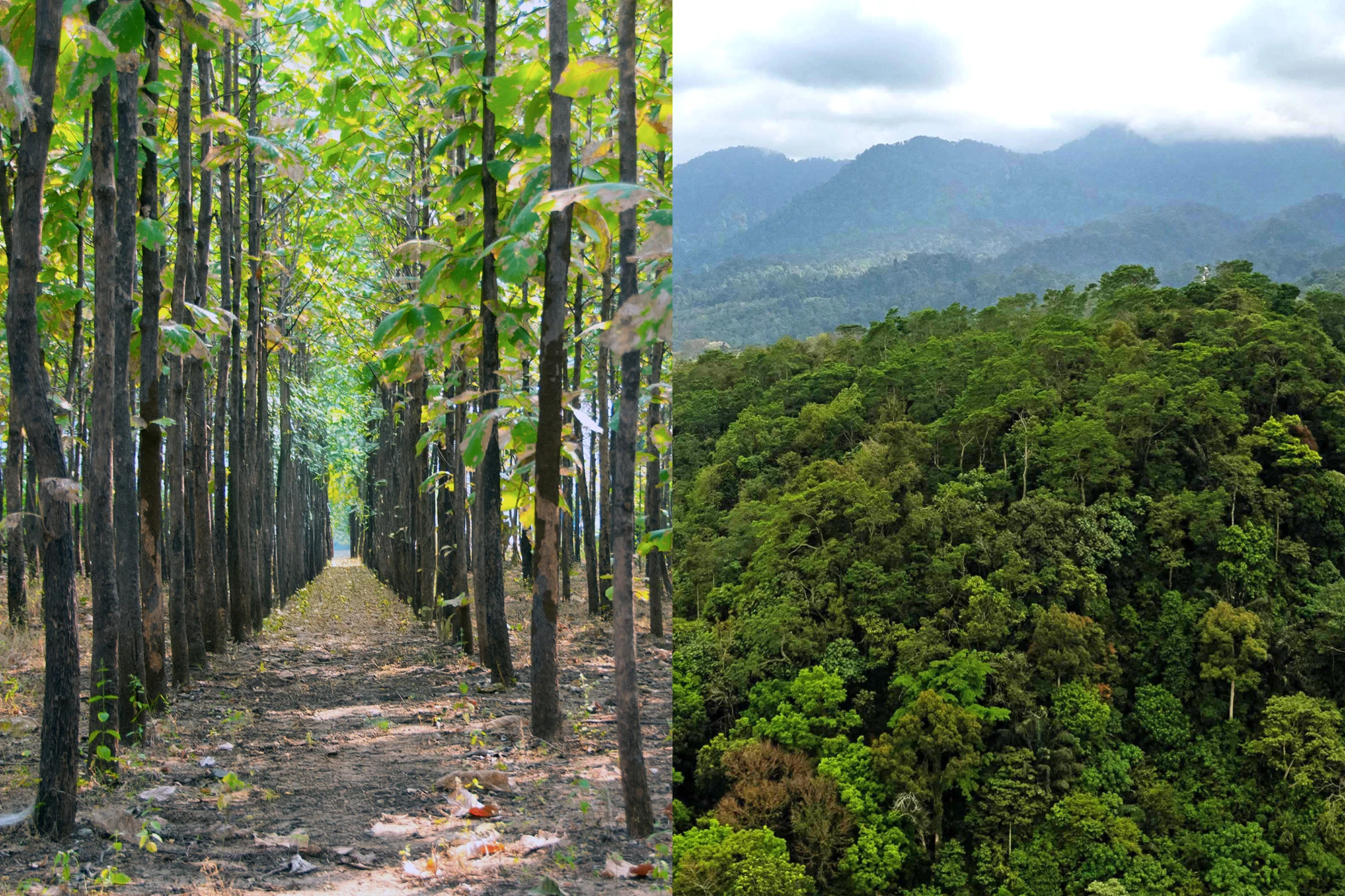
Reclaimed Timber Durability vs Plantation Timber Longevity
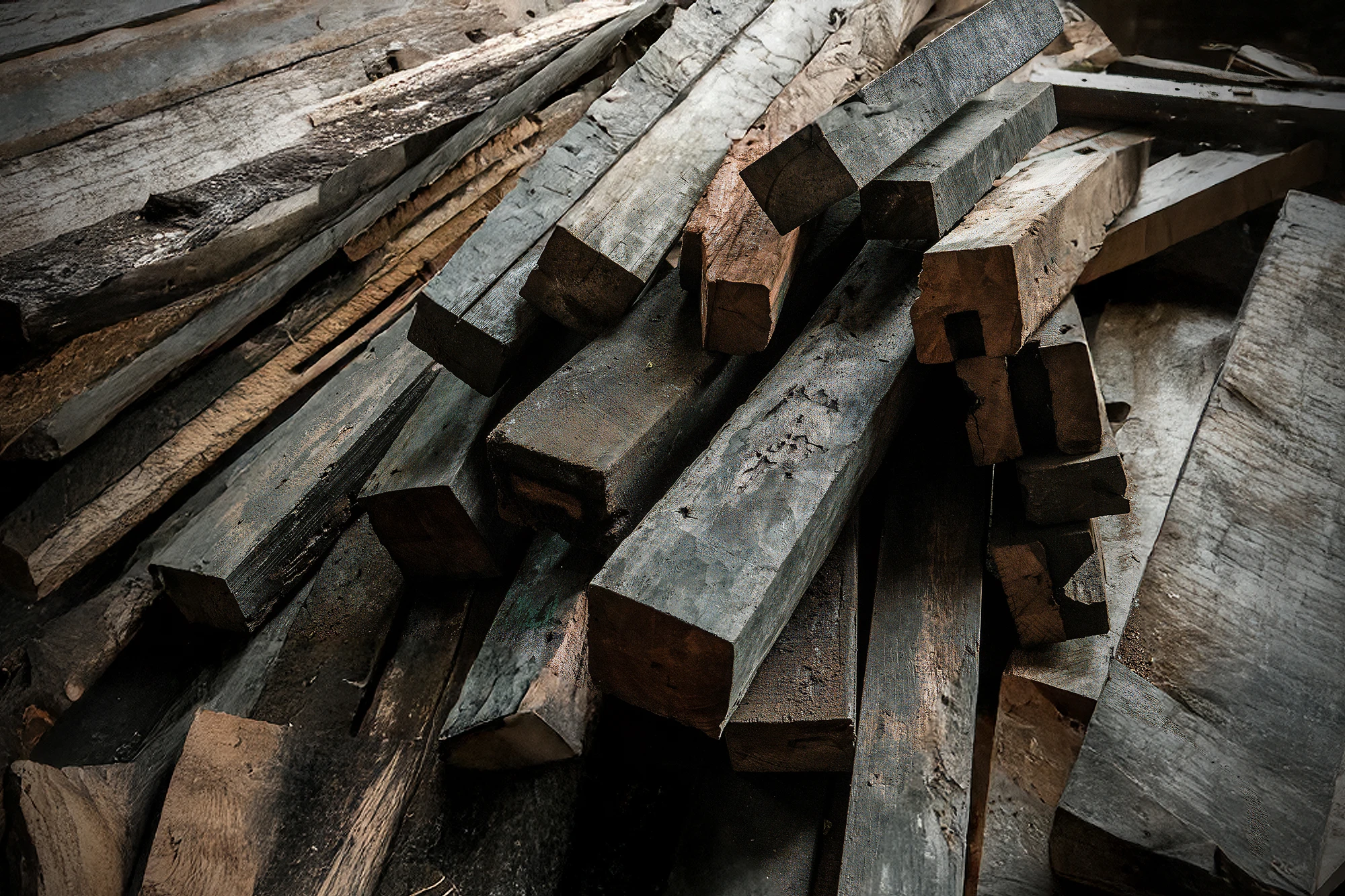
Most reclaimed timber available today comes from buildings constructed when timber was treated as a long-term resource, not a disposable one. Trees were allowed to mature slowly, producing tighter grain, greater density, and proven structural stability.
Plantation timber grows fast because it is designed to be harvested fast. That speed has consequences. Wider grain, lower density, and increased movement over time are common characteristics, not exceptions.
Architects designing for longevity understand that sustainability is inseparable from durability. A material that needs replacing sooner carries a higher environmental cost, regardless of how responsibly it was grown.
How Plantation Timber Monocultures Reduce Biodiversity and Design Quality
Single-species plantations produce uniform timber with limited variation in character and performance. This encourages construction systems built around speed, repetition, and standardisation, rather than adaptability, repair, and long-term use.
Reclaimed timber resists this logic as its natural variation demands more thoughtful design. The timber components must be considered individually, and repair and reuse become part of the architectural language, not tacked on as an afterthought.
Reclaimed Timber vs Plantation Timber: Consistency, Character, and Responsibility
We’ll admit it: plantation timber’s greatest advantage is consistency. Boards arrive in pretty much the same size, colour, and moisture content. This suits industrial workflows and shorter timelines.
Instead, reclaimed timber offers character, stories, history, and culture. Nail holes, old joinery marks, tonal shifts, and surface texture are not flaws to be sanded out, but memories of the past.
Designing with reclaimed timber does ask more of an architect. It means letting go of rigid specs, working closely with makers who actually understand the material, and accepting that real materials come with history and variation. But that’s the point. Genuine sustainability has never been the easy option.
The disposable mindset that shaped modern construction didn’t happen by accident — it happened because convenience was prioritised over consequence. If an architect truly wants their work to last, and to make less of an impact on the planet, then taking shortcuts with plantation timber shouldn’t be part of the plan.
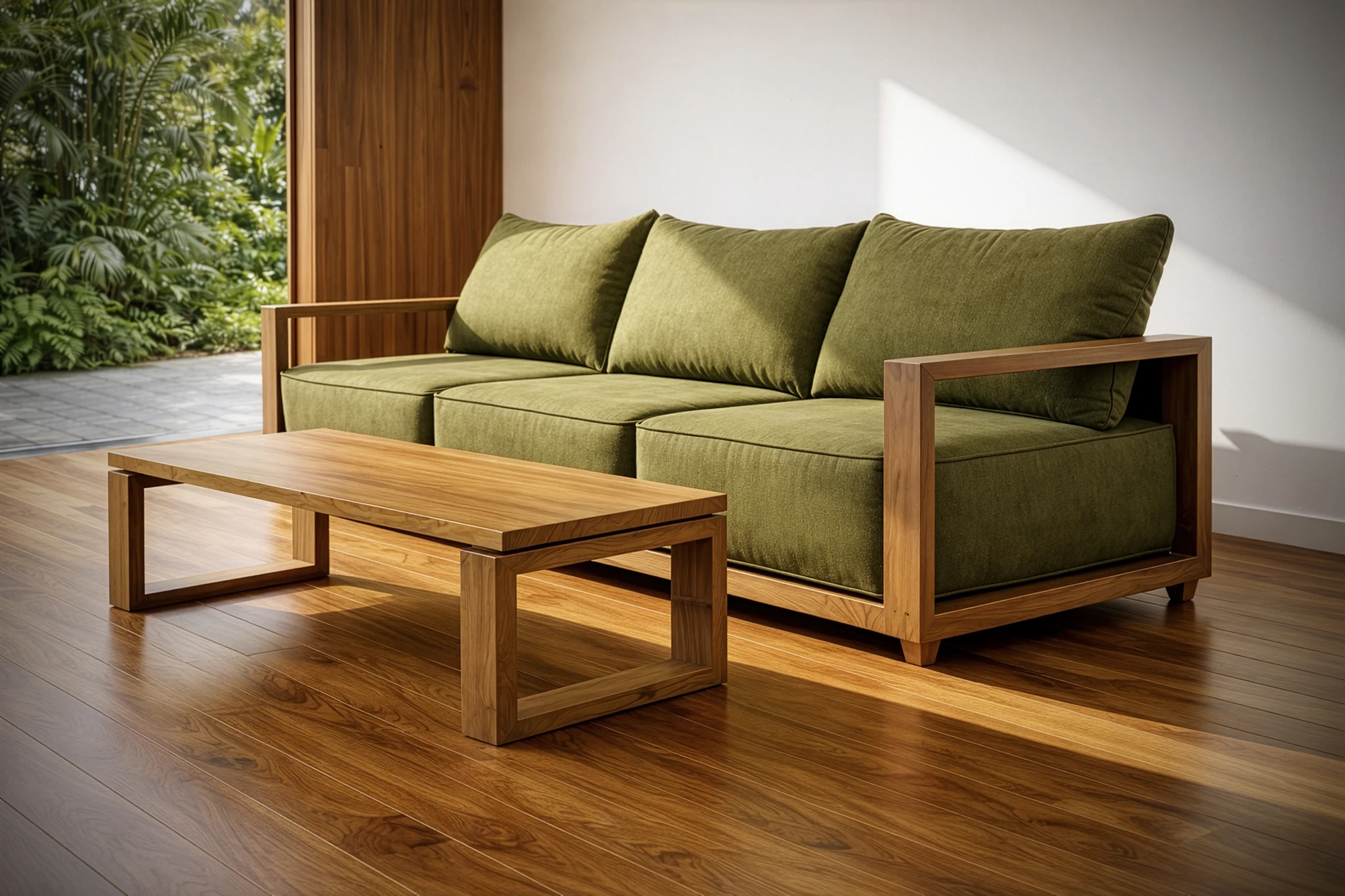
Waste, Yield, and Lifecycle Impact of Reclaimed vs Plantation Timber
Plantation systems are optimised for yield, but that yield depends on continual extraction. The model only works if land is repeatedly cleared, planted, and harvested. Sounds great for biodiversity, doesn’t it?
The reclaimed timber we use operates completely differently. We grade it, and then decide which planks and pieces are used for what. Large sections become structural elements, while smaller pieces become furniture components or joinery. Very little is discarded, but when it is, we turn it into beautiful homewares.
Plantation Timber Certification vs Reclaimed Timber Transparency
We’ll admit that certifications have improved forestry practices and play an important role in reducing illegal logging. But certification does not undo the impacts of land clearing, and it doesn’t bring back lost biodiversity.
Face it: a certified plantation is still a plantation. The certification we have is FSC® Recycled, which means we only use 100% recycled wood, which we’ve been doing since the beginning.
But architects who genuinely care about sustainability should look beyond certification logos and ask harder questions.
Why Architects Who Care About Sustainability Choose Reclaimed Timber
In 2026, the question should no longer be whether timber is sustainable.
The question should be whether we are willing to keep destroying ecosystems to plant monocultures, when strong, beautiful, character-rich, and sustainable material already exists.
Yes, it’s a bigger challenge, but it’s always worth it.
If you’re ready to design with reclaimed wood — or want to understand whether it’s right for your next project — let’s talk.