Let’s get straight into it.
If you care about forests, furniture choices matter more than most people realise. Timber in various forms can be found in countless homes of those who believe they’re making eco-friendly choices, yet the story behind these choices often gets reduced to a single word slapped on a label: sustainable.
Plantation timber is usually the hero of that story. It sounds good on paper. Trees planted on purpose, grown for use, harvested ‘responsibly’. On the surface, it feels like the obvious solution.
But when you dig a little deeper, the picture gets a hell of a lot messier.
The FSC Recycled certification — which Nusantara Lifestyle received late last year — takes a very different approach. It does not ask how well we can manage cutting trees down. It asks a simpler question: Do we need to cut them down at all?
This is where the comparison really begins.
Plantation Timber: The Industry Default
Plantation timber dominates the global furniture market. Teak, acacia, rubberwood, eucalyptus. Rows and rows of the same species, planted to be harvested on rotation.
From an industry point of view, plantations are efficient. Predictable supply. Uniform sizes. Faster growth cycles. Easier certification pathways.
But forests are not factories.
Plantations rely on monoculture systems. One species. One age group. One purpose. That approach strips ecosystems of complexity. It reduces biodiversity, weakens soil health, and disrupts water systems. In places like Indonesia, plantations have often replaced diverse natural forests or community-managed land. Take one look at the deadly floods in Sumatra last month and you’ll see just how destructive plantations can be.
Even when plantation timber is FSC-certified, it still starts with harvesting new trees. FSC helps reduce harm, but it does not eliminate it. Cutting trees down is still cutting trees down.
FSC Recycled: Working With What Already Exists
The FSC Recycled certification flips the logic entirely.
Instead of asking how to grow timber responsibly, it asks how to use existing timber better.
The FSC Recycled label applies only to products made from 100 percent recycled wood. That includes reclaimed timber salvaged from old buildings, bridges, boats, factories, and traditional homes.
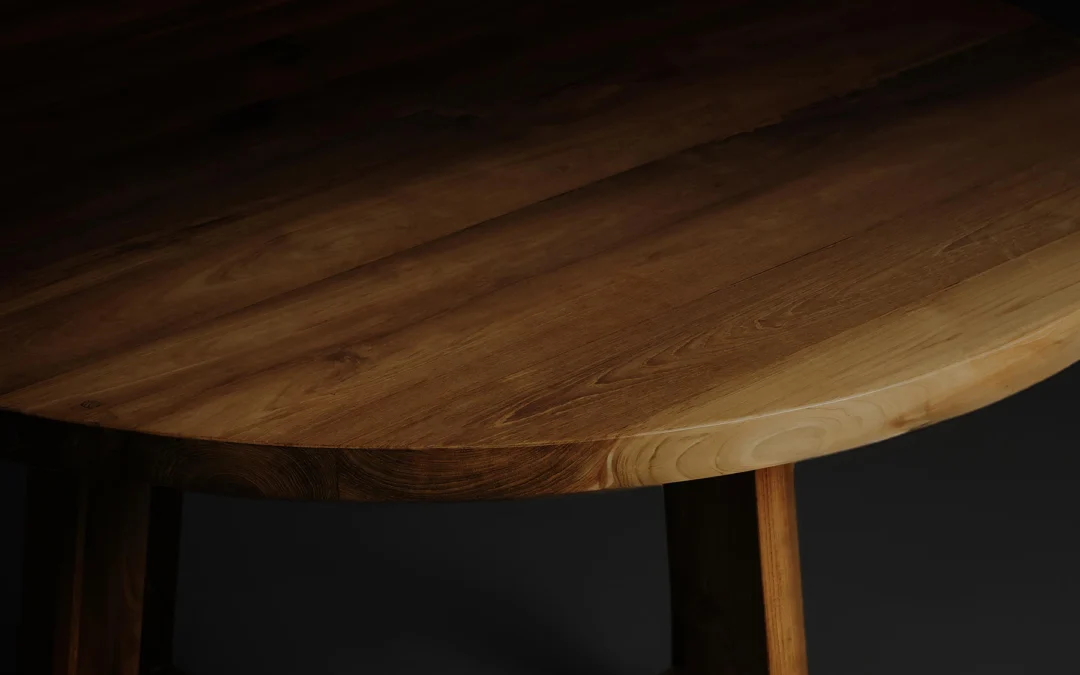
In our case, it is mostly reclaimed teak from old Javanese houses. Timber that has already done decades of work.
No new trees are cut down. No plantations expanded. No forests converted.
From a forest protection point of view, that difference is massive.
Using recycled timber directly reduces demand for new timber. Less demand means less pressure to clear land, less incentive to expand plantations, and fewer forests pushed closer to the edge.
This is why we put FSC Recycled front and centre. It aligns with the simplest sustainability principle there is: Use what already exists.
Forest Impact: Reduction vs Replacement
Plantation timber focuses on replacement. Cut a tree down, plant another one.
FSC Recycled focuses on reduction. Do not cut the tree down in the first place.
Replacement sounds responsible, but it ignores timelines and complexity. A newly planted tree does not replace a mature forest. Not in carbon storage. Not in biodiversity. Not in ecosystem function. Sometimes not even in our lifetime.
Reduction works immediately.
Every reclaimed piece used is one less reason to harvest new timber. If the question is what is actually better for forests, the answer becomes pretty clear.

Strength, Stability, and the Reality of Wood
There is also a physical reality that often gets overlooked in sustainability conversations:
Wood strength is not just about species. It is about drying.
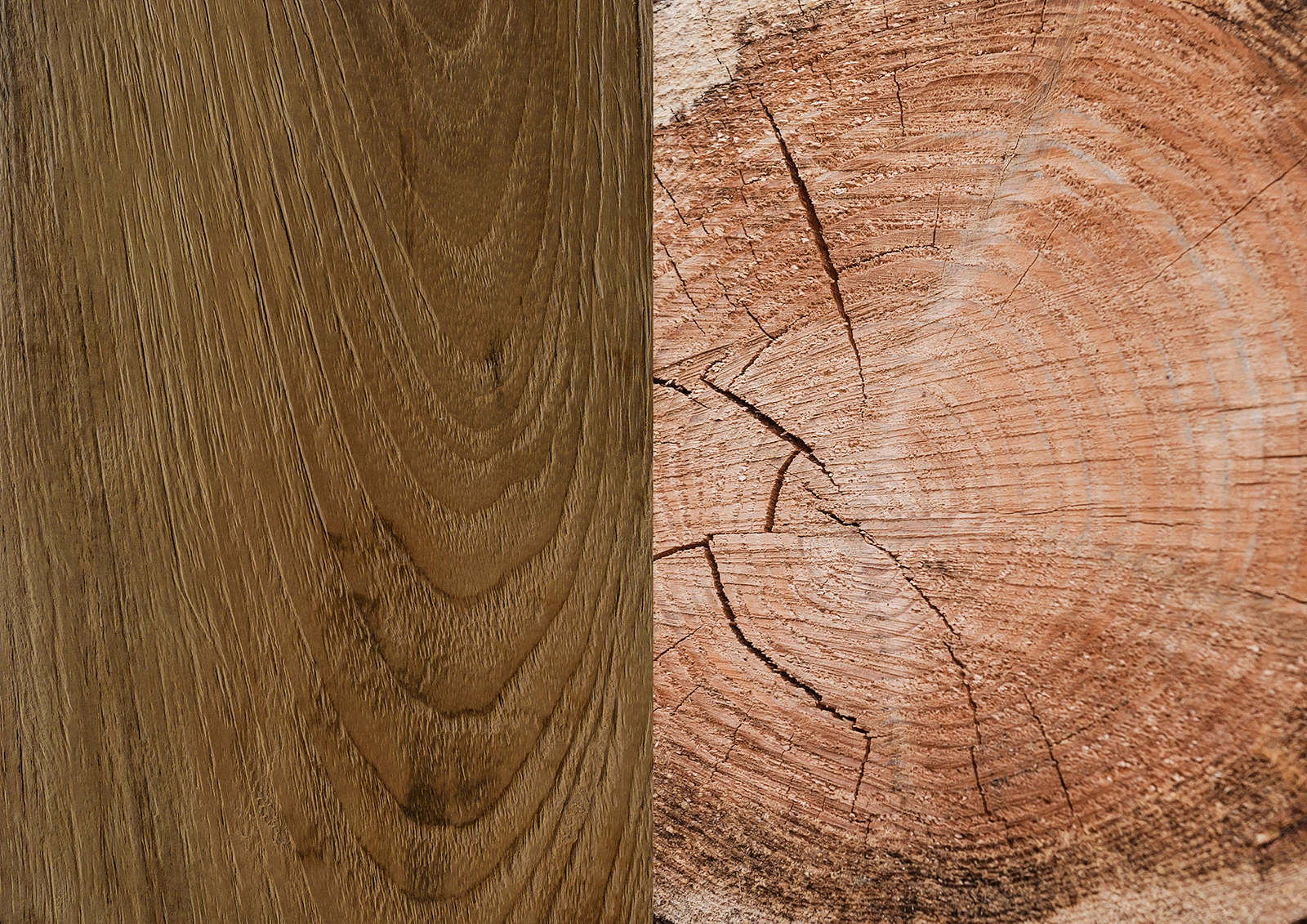
Plantation teak is usually kiln-dried over weeks. It works, but it is rushed by nature’s standards. Reclaimed teak has spent decades drying naturally in the elements. Sun. Rain. Wind. Time.
That slow, natural seasoning tightens the grain and stabilises the timber. The pores close up. Moisture movement reduces. Warping and cracking become far less likely.
This is not marketing bollocks. It is why reclaimed teak can be an absolute nightmare to process sometimes. It is dense. Hard. Bloody stubborn. But that is also why it lasts.
Furniture made from it is not just sustainable on paper. It performs better in the real world, especially in humid climates like ours.
FSC Certification as Proof, Not a Promise
One of the biggest issues in the furniture industry is greenwashing. Everyone says they are sustainable, and plantation timber brands lean far too heavily on that word.
FSC certification matters because it introduces accountability.
For FSC Recycled, that accountability is strict. Chain-of-custody verification tracks material from the source through to production. Audits confirm that the timber is genuinely recycled, not blended conveniently when it suits.
The Bigger Picture: What Kind of System Do We Support?
This comparison is not really about plantation teak versus reclaimed teak. It’s about systems.
Plantation timber supports a system that depends on continuous harvesting and land conversion, even when it is managed better than before.
FSC Recycled supports a system that values longevity, reuse, and restraint.
One system says growth is the solution. The other says enough is enough.
If more furniture brands leaned into recycled timber, demand would shift. Pressure on forests would ease. It’s as simple as that.
Why We Chose a Side
At Nusantara Lifestyle, this choice was never about certification. We have been using reclaimed teak since day one.
The FSC Recycled certification simply gave global verification to what we were already doing.
We are not perfect. Reclaimed timber is harder to source, harder to process, and sometimes harder to explain. But it aligns with our values and with what we believe real sustainability looks like.
No shortcuts. No greenwashing. Just working with materials that already exist and making them
So, if the question is what is actually better for forests, FSC Recycled clearly has the edge.
It reduces demand for new timber. It protects existing forests. It rewards longevity over extraction.
Sustainability is not about doing less harm than before. It is about changing the logic entirely.
For us, that logic is simple. Use what already exists. Treat it well. Make it last. Feel good about using wood.
If you’re curious about where your timber really comes from, or want furniture that doesn’t require cutting down a single tree, take a look at our Alami range, or get in touch. We are always up for a proper conversation about materials, making things well, and doing it all with absolutely zero greenwashing.